AI-Written Code Surges to 29% in US Software Development, Study Reveals



Generative artificial intelligence is transforming software development at an impressive pace. A study by the Complexity Science Hub published in the journal Science shows that the share of AI-written code in the USA has risen from 5 percent in 2022 to 29 percent by the end of 2025. The research team analyzed more than 30 million Python code contributions from around 160,000 developers on GitHub – the world’s largest platform for collaborative programming.
“We analyzed more than 30 million Python code contributions from around 160,000 developers on GitHub – the world’s largest platform for collaborative programming,” explains Simone Daniotti from the CSH and Utrecht University. The study uses a specially trained AI model to determine whether code sections were generated by AI tools such as ChatGPT or GitHub Copilot.
Significant regional differences in adoption
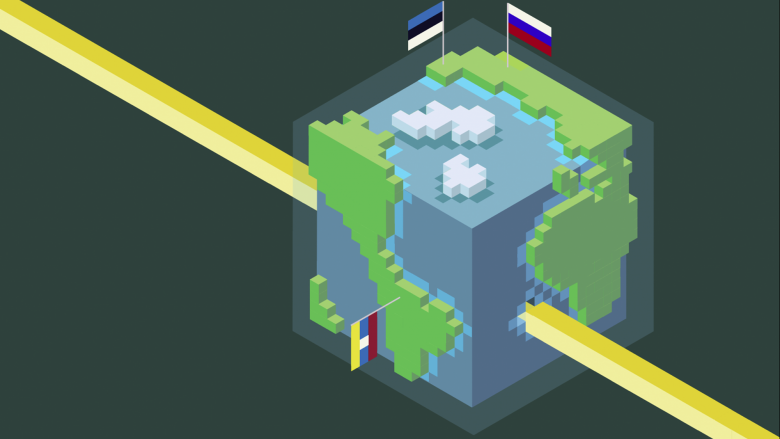
“The results show an extremely rapid spread,” says Frank Neffke, head of the Transforming Economies research group at the CSH. “In the USA, the share of AI-supported programming rose from around 5% in 2022 to nearly 30% in the last quarter of 2024.” However, the study reveals significant differences between countries: Germany reaches 23 percent, France 24 percent, while India has caught up significantly with 20 percent since 2023. Russia lags behind at 15 percent and China at 12 percent. Johannes Wachs, faculty member at the CSH and associate professor at Corvinus University Budapest, explains the differences: “It is not surprising that the USA leads this list, after all the leading LLMs also come from there. Users in China and Russia, on the other hand, face barriers to accessing these models, which are blocked by their own governments or by the providers themselves.”
The study shows that the use of generative AI increased programmers’ productivity by an average of 3.6 percent by the end of 2024. Between women and men, the study finds no differences in AI usage. However, experience plays a crucial role: although less experienced programmers use generative AI in 37 percent of their code and thus significantly more than experienced programmers at 27 percent, the productivity gains come solely from the latter. “Programmers with little experience benefit hardly at all,” emphasizes Daniotti. Experienced AI users also experiment more frequently with new software libraries and unusual combinations of them, suggesting that AI not only accelerates routine tasks but also helps experienced developers expand their skills.
Significant economic impact
The economic dimensions are considerable. Co-author Xiangnan Feng from the CSH has determined that the USA spends between 637 billion and 1.06 trillion US dollars annually on programming salaries. If 29 percent of code is AI-supported and productivity increases by 3.6 percent through AI, this means an added value of 23 to 38 billion dollars per year. “Although that is probably a conservative estimate,” emphasizes Neffke, who is also a professor at the Interdisciplinary Transformation University. “The economic impact of generative AI in software development was already considerable by the end of 2024 and is likely to have increased further since our analysis.”
What is emerging is a profound transformation of software development: generative AI is rapidly becoming an integral part of core digital infrastructures, increasing productivity and fostering innovation – but so far primarily where there is already considerable experience. “For business, politics, and education, the question is therefore less whether AI will be used, but how its potential can be made more broadly accessible without further reinforcing existing inequalities,” says Wachs. Neffke adds: “At a time when even a car is essentially a software product, we must understand the barriers to AI adoption as quickly as possible – at the enterprise, regional, and national level.” The study thus documents not only the current state of AI penetration in software development, but also raises fundamental questions about the future design of this transformation.