AMD Buys Fei-Fei Li’s World Labs for $8.2 Billion



Set Trending Topics as a preferred source on Google.
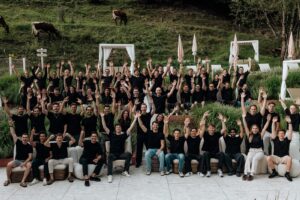
First an investor, now the owner: AMD is bringing AI pioneer Fei-Fei Li and her world model start-up World Labs in-house, paying roughly $8.2 billion (about €7 billion) in its own stock.
The U.S. chipmaker has just announced a definitive agreement to acquire World Labs. The all-stock deal is expected to close by the end of the year, subject to regulatory approval. Once it closes, Fei-Fei Li will become executive vice president and chief scientist at AMD, reporting directly to CEO Lisa Su. The World Labs team will keep working on AI model research.
What World Labs Does
San Francisco-based World Labs builds so-called world models: AI systems that can generate, reconstruct and simulate three-dimensional environments from text, images or video. The company also develops technology for training and simulating robots. Fei-Fei Li, who created the ImageNet dataset that laid one of the foundations of modern computer vision, calls the goal “spatial intelligence”: AI that understands the physical world and can act within it, going beyond predicting the next word.
Li founded the company in 2024 together with Justin Johnson, Christoph Lassner and Ben Mildenhall, all specialists in computer vision, graphics and generative AI. Its first public product is Marble, a multimodal world model that lets users turn a photo, several images, a video or a text prompt into explorable 3D worlds, edit them and export them as Gaussian splats or 3D meshes. Use cases range from gaming and visual effects to architecture and robotics simulation.
Just a few weeks ago, World Labs unveiled Atlas, a new “omni world model.” It handles text, images, video and 3D data in a single architecture and, according to the company, can generate videos of up to one minute in 1440p with precise camera control. Atlas is currently available only to select partners in early access and is set to power future versions of Marble.
AMD Was Already on Board
World Labs is familiar territory for AMD. The chipmaker took part in the start-up’s first financing in 2024, when World Labs raised around $230 million (about €200 million) from investors including Andreessen Horowitz, Intel and Nvidia. In February, AMD doubled down in the large round in which World Labs raised $1 billion (about €850 million), alongside Nvidia, Autodesk, Emerson Collective, Fidelity and Sea. Media reports put the valuation at the time at around $5 billion. At a price of $8.2 billion, the start-up has gained more than 60 percent in value within a few months.
There is a twist: Nvidia, AMD’s biggest rival, is also among World Labs’ backers. With the acquisition, AMD now secures exclusive access to know-how that both chipmakers had helped fund.
How AMD Justifies the Deal
AMD frames the purchase as a bet on the next wave of AI. As AI expands from chatbots into reasoning, robotics, simulation and physical AI, the demands on compute infrastructure are becoming far more diverse, the company says. World Labs’ expertise is meant to give AMD deeper insight into how AI workloads are evolving and help shape its future hardware roadmaps. AMD also ties the deal to its strategy of delivering AI infrastructure for an open ecosystem, a clear jab at Nvidia’s closed CUDA universe.
“Building the compute platforms for the next generation of AI requires a deep understanding of how models are evolving,” said Lisa Su. According to Su, Fei-Fei Li and her team bring exceptional research leadership that AMD wants to use to develop the hardware, software and systems for the next generation of AI.
Li sees the deal as an accelerator. The next generation of AI requires close collaboration across model research, systems and compute, she said, and joining AMD will give her team the resources and engineering depth to speed up its research and help define the infrastructure for the next era of AI.
Put simply, AMD is buying a frontier lab that knows early on which models will need to run on its chips. For World Labs, access to compute is a crucial lever, as training large world models is considered extremely compute-intensive.
AMD’s Biggest AI Acquisition Yet
The deal is the latest in a string of AI acquisitions through which AMD is trying to close the gap with Nvidia. In 2024, the company bought Finnish AI lab Silo AI for $665 million, then Europe’s biggest AI exit, followed shortly after by server specialist ZT Systems for $4.9 billion. On top of that comes a multibillion-dollar supply agreement with OpenAI that gives OpenAI the option to acquire around 10 percent of AMD. With World Labs, AMD goes a step further and brings its own frontier-level model research in-house.
The Race for World Models
The timing is deliberate, as a full-blown race for world models is under way. Nvidia offers its own open model family Cosmos 3 for robotics and autonomous systems and has gathered several partners in an alliance for open world models. Google DeepMind is working on real-time interactive 3D worlds with Genie 3. And in Europe, Meta veteran Yann LeCun’s start-up AMI Labs has raised around $1 billion for world models, the largest seed round in European history. By buying World Labs, AMD puts one of the most prominent figures in the field on its own side.