Apple to Integrate Google’s Gemini into Siri This February, Marking Major Strategy Shift

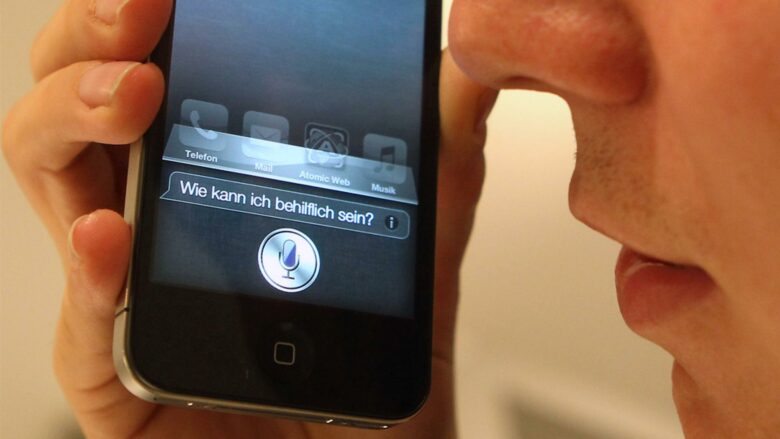


It was in October 2011 when Apple introduced “Siri” (short for “Speech Interpretation and Recognition Interface”), a then quite revolutionary intelligent assistant that “helps you get things done by simply asking,” on the iPhone 4S. Since then, much water has flowed under the bridge, and times have changed dramatically. After Apple attempted to bring Siri into the AI age with the help of ChatGPT starting in 2024, the next step is now coming soon: Google’s Gemini is ultimately supposed to ensure that the Siri assistant on iPhone and other devices actually works the way one would expect in 2026.
And that should happen faster than many thought. Apple plans to present the first version of Siri based on Google’s Gemini technology as early as February, just a few weeks away. With this, the company is responding surprisingly quickly to mounting pressure to make its voice assistant significantly more powerful. The plan to rely on proprietary language models is thus definitively abandoned. According to Bloomberg insider Mark Gurman, this step marks a significant strategic turnaround for Apple.
Originally, Apple had been working on an internal project called “World Knowledge Answers,” which was supposed to compete directly with ChatGPT and Perplexity. However, this project was scaled back in favor of a deeper partnership with Google. Instead of merely providing Siri as a separate chatbot, the Gemini-based version is to be deeply integrated into iOS’s core applications. Users can thus expect significantly smarter interaction in apps like Mail, Messages, Calendar, and Safari. The goal is for Siri to be able to perform complex tasks within these applications independently, rather than just answering simple web queries.
Time Pressure and Strategic Reorientation
The surprising February deadline makes clear that Apple is under considerable time pressure. While competitors like Microsoft and Google have already firmly integrated their AI assistants into their operating systems, Siri has increasingly seemed outdated in recent years. The decision for Gemini also follows personnel changes in Apple’s AI department, including the departure of John Giannandrea as Senior Vice President of Machine Learning, which may have paved the way for a new technological direction.
Other ambitious projects have been put on hold for now. A completely AI-driven overhaul of the Safari browser or special AI health features have been shelved by Apple, according to Gurman’s sources, to focus entirely on the new Siri experience. This shows how strongly the company has shifted priorities to avoid falling further behind in the competition for AI-based assistants.
Although the official presentation is scheduled for February, it remains unclear when the first users will be able to install the update on their devices. It is speculated that Apple will present the new Siri as part of a special event or a pre-release version of iOS 27. With the integration of Gemini, Apple is taking a risk: on the one hand, it brings one of the most powerful AIs to the iPhone, but on the other hand, it becomes dependent on a competitor in a core area.
However, since Apple and Google are closely intertwined economically on multiple levels—Google pays billions for the default search engine position in Safari—the Siri cooperation should ideally be implemented without significant problems. The coming weeks will show whether Apple can catch up with this strategy in the field of AI assistants and whether users will accept the deep integration of a Google product into the iOS ecosystem.