ChatGPT Is Getting Invisible Watermarks for Text


Set Trending Topics as a preferred source on Google.
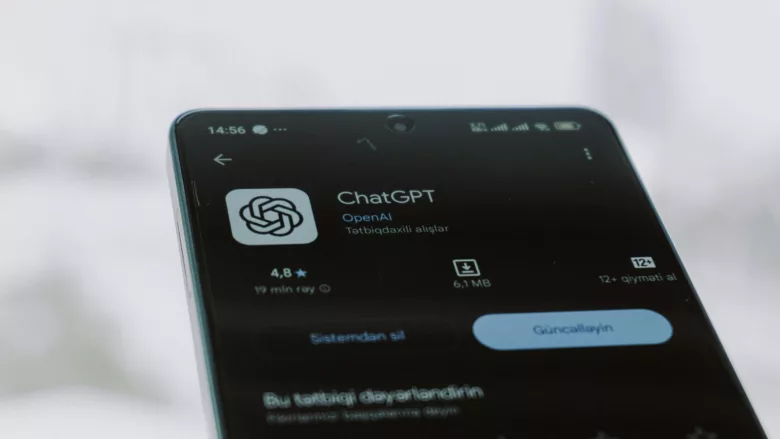
Anyone in Europe who has ChatGPT write for them will soon leave an invisible signature behind: OpenAI has announced that, in the coming weeks, it will watermark A.I.-generated text from ChatGPT and Codex in the European Union. The move brings the ChatGPT maker in line with Anthropic, which has been marking all text produced by Claude since early August. The driver is the transparency obligations of the E.U. A.I. Act.
Where and When the Labeling Arrives
According to OpenAI’s announcement, the watermark is being introduced in stages:
- ChatGPT and Codex: Text will be marked for all users in the E.U. in the coming weeks. Other regions are excluded for now, as OpenAI wants to learn from real-world use first.
- API: Developers worldwide can switch the feature on voluntarily in their project and organization settings starting now. It is turned off by default.
- Images and audio: Here OpenAI relies on C2PA metadata and SynthID watermarks licensed from Google DeepMind.
Since early August, the transparency rules under Article 50 of the E.U. A.I. Act have required A.I. providers to label generated content in a machine-readable way.
How the Watermark Works
Nothing about the label is visible. The technology, called textGrain, builds a statistical signal directly into the language model’s word choices: Wherever several words fit equally well, a secret key determines which one is picked. Across a longer text, this creates a pattern that can be detected only with that key. The text itself remains fully readable, and no hidden characters are inserted.
That means ordinary users have no way to check whether a text is marked. OpenAI is initially making its detector available only to selected researchers and expert organizations, with access granted case by case. There is no public version at launch, although OpenAI plans to eventually release the technology as open source.
The Limitations
OpenAI is remarkably candid about the limits:
- Text length: For passages of about 200 tokens, the detector finds the watermark roughly 80 percent of the time; for 400 tokens, about 95 percent. Short texts often go undetected.
- Rewriting: If 10 percent of the words are replaced with synonyms, the detection rate falls to 66 percent; at 25 percent, it drops to just 17 percent.
- Math: Detection works significantly worse for mathematical content.
- What it proves: According to OpenAI, the watermark says nothing about how much a person contributed, who owns a text, who created it or whether it is accurate. Conversely, a missing watermark does not prove that a human wrote the text.
Anthropic Is Further Along
Anthropic switched over its Claude models when the E.U. rules took effect, and it did so worldwide rather than only in Europe. According to Anthropic’s support page, text in all Claude products carries an invisible watermark, from the chat app and the API to Claude Code, including through cloud partners such as AWS, Google Cloud and Microsoft. Files such as images also receive C2PA metadata. Anthropic does not mention any way to turn the labeling off.
Technically, the approach is similar to OpenAI’s: Anthropic uses a variant of Google DeepMind’s SynthID Text, which likewise hides the signal in the choice between equivalent synonyms. A free Content Checker verifies the C2PA metadata in files, while the detection API for text is in a closed preview for authorities, media, fact-checkers, researchers and educational institutions. Anthropic, too, stresses that a detected watermark shows only that Claude may have been involved in a text.
Criticism and Counterarguments
At Anthropic, the rollout met with fierce resistance at times. Numerous paying users canceled their subscriptions, especially people who use Claude only to edit their own writing and developers who feared worse code, while Anthropic insisted it cannot track individuals through the watermarks. Even someone who only has a self-written text translated ends up with the watermark. OpenAI had also warned earlier that watermarks could disadvantage non-native speakers who use A.I. to polish their writing.
Supporters counter that labeling lays the groundwork for the transparency the E.U. A.I. Act explicitly demands. The detection tools are meant primarily to help researchers, media organizations and fact-checkers track A.I.-generated content at scale. Providers that violate the transparency obligations face fines of up to 15 million euros or 3 percent of their global annual revenue.