Controversial CLARITY Act to bring new crypto regulation to the US soon

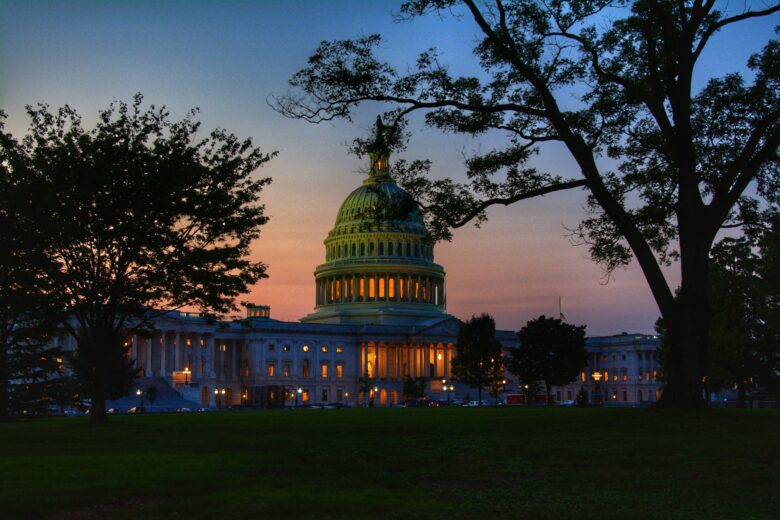


Following the GENIUS Act, which brought new rules for stablecoins to the US in 2025, the CLARITY Act is now set to introduce further and, above all, clearer laws for dealing with cryptocurrencies in 2026 – and has therefore been eagerly anticipated by the crypto sector for some time. In the night leading into Tuesday, the draft was published by the Senate Banking Committee, and on Thursday, January 15, a vote on the new DeFi regulations is scheduled.
Fundamentally, the CLARITY Act for reshaping the crypto market is essentially about which authority is responsible for what. Until now, it has been unclear in the US whether the US Securities Exchange Commission (SEC) or the Commodity Futures Trading Commission (CFTC) is responsible, because a fundamental question about crypto assets has often remained unresolved: should they be treated like securities (Securities), or rather like commodities (Commodities)? Former SEC chief Gary Gensler was notorious for viewing all cryptocurrencies except Bitcoin as securities due to lack of decentralization and the role of companies.
In any case, crypto companies that issue tokens or stablecoins will face new rules if the CLARITY Act is approved in its current form. The following points are planned:
-
Clear distinction between securities and commodities: The bill defines „Ancillary Assets“ (network tokens) and establishes when these are to be treated as digital commodities (Commodities) and not as securities (Securities), based on decentralization and control.
- An Ancillary Asset is a network token whose value depends on the entrepreneurial or managerial efforts of an Ancillary Asset Originator (the original issuer or creator) or a related person. The SEC is to be responsible for specifically defining when something constitutes an Ancillary Asset.
-
Disclosure requirements for crypto projects: Issuers of crypto assets must disclose comprehensive information to the SEC about the project, financial resources, and development until the network is certified as sufficiently decentralized.
- Strict measures against illegal financial flows: The „Bank Secrecy Act“ is explicitly extended to crypto service providers (brokers, dealers, exchanges) to combat money laundering and terrorist financing, including stricter rules for crypto ATMs.
- Protection for pure software developers: The draft clarifies that persons who merely develop code, publish it, or operate validation services (without control over assets) should not be regulated as financial intermediaries.
- Integration into the banking system: Banks and credit unions are permitted to offer crypto custody services, issue stablecoins, and use distributed ledger technology for their operations, provided this is done in a security-compliant manner.
- Regulation of stablecoins: Rules are established for „Payment Stablecoins,“ including a prohibition for service providers from paying interest solely for holding stablecoins, to preserve their character as a means of payment (not investment).
- Establishment of a regulatory „sandbox“: The SEC and CFTC are to jointly create a „Micro-Innovation Sandbox“ that allows companies to test innovative blockchain products under supervision and with limited regulatory exemptions.
- Legal certainty for NFTs: A „Safe Harbor“ is created for Non-Fungible Tokens (NFTs), clarifying that NFTs are generally not securities when they constitute art, collectibles, or access rights.
- Customer protection in insolvency: The draft amends insolvency law to ensure that customer crypto assets are protected as customer property in the event of a failure of an intermediary (e.g., an exchange) and do not fall into the bankruptcy estate.
- Regulation of DeFi protocols: An attempt is made to regulate Decentralized Finance (DeFi) protocols by distinguishing between truly decentralized systems and those under „shared control,“ as well as by introducing voluntary cybersecurity standards.
The CLARITY Act has already passed the US House of Representatives but remains stalled in the US Senate because there are differing views between Democrats and Republicans. Some want more protection and control, while others see the risk that innovation in the blockchain sector will be stifled by overly strict regulations.
The planned crypto regulation is also controversial within the industry itself. Cardano founder Charles Hoskinson, for example, recently criticized US President Trump’s crypto policy very loudly in public. Hoskinson is sharply critical of the Trump administration’s crypto policy, which he describes as chaotic, „predatory,“ and through projects like the „Trump Coin“ as unstructured enrichment. He argues that Trump’s approach has heavily politicized the crypto industry and thereby destroyed bipartisan support for essential regulatory legislation like the „Clarity Act,“ as crypto is now negatively associated in public perception with Trump and „rip-offs.“ This development has led to massive losses for investors.