European Tech Unicorns Revive SPAC Trend to Access Public Markets





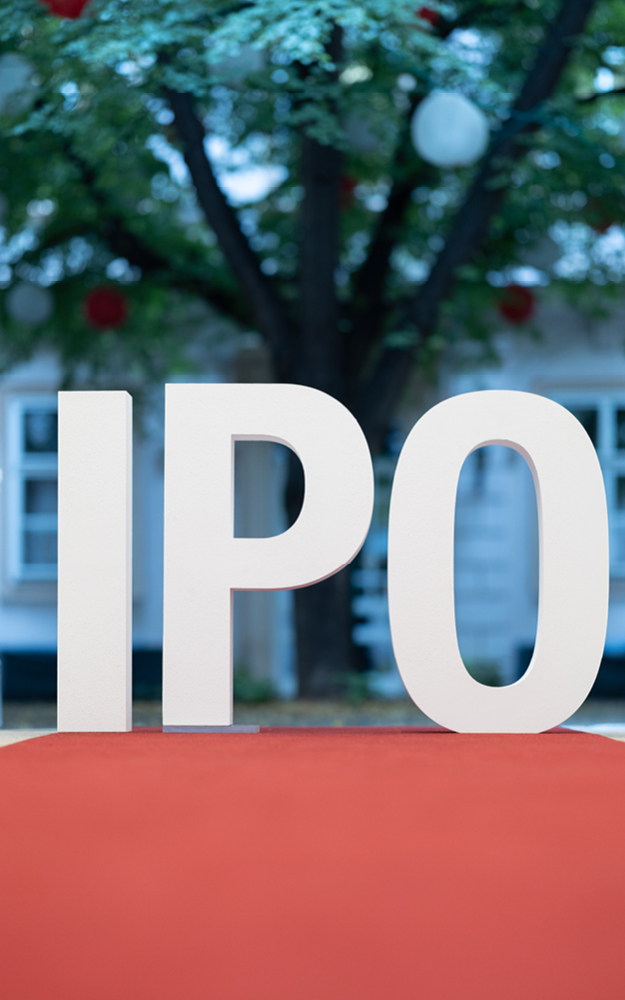
Lucid. Grab. Vertiv. DraftKings. Lilium. SoFi. Nikola. Fisker. And yes, the Trump Media & Technology Group also counts in this category: public offerings via a so-called Special Purpose Acquisition Company (SPAC), which as a shell company swallows a private enterprise, equips it with capital, and brings it to the stock market quickly. What reached its peak in 2021 with approximately 600 SPAC IPOs and faded away due to the US interest rate turnaround in 2022 is experiencing a revival in early 2026. This time, it is European tech unicorns that want to go public this way.
After a phase of skepticism, SPACs are experiencing a comeback in Europe. Three European tech scale-ups have announced their stock market listing via shell companies in recent weeks: the German-Finnish quantum computing company IQM, French quantum competitor Pasqal, and Swedish logistics scale-up Einride. This development raises the question of whether SPACs represent an attractive alternative to traditional IPOs or whether the risks outweigh the benefits.
What is a SPAC?
A Special Purpose Acquisition Company is a publicly listed shell company without operational business, founded exclusively for capital raising. Through merger with an operating company, it enables the latter to access the public capital market. This method offers a faster and more flexible alternative to the traditional IPO, but is also subject to less stringent regulations. SPAC deals were particularly popular between 2020 and 2022, especially among electric vehicle startups, but often ended with significant losses for investors.
Three Current Examples from Europe
IQM Quantum Computers: Finland’s Quantum Pioneer
The quantum computing company IQM, based in Espoo, will become the first European company in its industry to go public. The company has sold 21 systems to 13 customers and operates its own chip factory as well as a quantum computing center.
- Shell company: Real Asset Acquisition Corp. (RAAQ)
- Stock exchange: One of the two leading US stock exchanges (NYSE or Nasdaq), with additional dual listing at Helsinki Stock Exchange under consideration
- Valuation: $1.8 billion (pre-money)
- Capital: Over $450 million in liquidity after closing ($175 million from RAAQ trust account, $134 million from PIPE financing, $24 million from warrants, $172 million existing liquidity)
Pasqal: France’s Quantum Unicorn
Founded in 2019, the Paris-based company develops quantum computers based on neutral atoms and has already delivered seven systems. Pasqal was co-founded by Alain Aspect, who received the Nobel Prize in Physics in 2022. The company employs over 275 employees and operates production facilities in France and Canada, and now follows with a SPAC IPO.
- Shell company: Bleichroeder Acquisition Corp. II
- Stock exchange: Nasdaq, with preparatory work underway for listing on Euronext
- Valuation: $2 billion (pre-money), projected market capitalization of $2.6 billion
- Capital: Nearly $700 million in fresh capital ($289 million from trust account, $200 million from convertible bond, $158 million existing balance sheet, $200 million from equity financing)
Einride: Sweden’s Autonomous Logistics Platform
Founded in 2016, the Swedish company develops digital, electric, and autonomous freight solutions. Unlike failed SPAC deals of other electric vehicle startups, Einride does not produce its own vehicles but sources electric trucks from established partners such as PACCAR, Kenworth, and Peterbilt, focusing instead on the software and operating platform. Here are the key facts on the SPAC IPO:
- Shell company: Legato Merger Corp. III
- Stock exchange: New York Stock Exchange (NYSE) under the ticker symbol “ENRD”
- Valuation: $1.35 billion (reduced from originally $1.8 billion)
- Capital: Approximately $333 million in gross proceeds ($113 million from PIPE financing, $220 million from trust assets, plus already announced crossover financing of $100 million)
Advantages of SPACs
The path via SPAC merger offers several advantages over a traditional IPO. The process is typically faster and less complex than an IPO, since the shell company is already publicly listed. Companies can negotiate the valuation directly with the SPAC sponsor rather than having it determined by the market. Additionally, SPACs allow more flexibility in future projections, which are subject to stricter restrictions in traditional IPOs. The combination of SPAC trust account and additional PIPE financing can bring in substantial capital.
Disadvantages and Risks
Despite the advantages, SPACs carry significant risks. Less stringent regulations can lead to inflated valuations that do not hold up in the public market. SPAC sponsors typically receive 20 percent of shares as compensation, resulting in significant dilution for other shareholders. Investors also have the right to redeem their shares before the merger closes, which can reduce the actual available liquidity. The track record of SPACs is mixed, particularly in the technology and electric vehicle sectors.
Successful and Failed SPAC Deals
The balance sheet of SPAC mergers is mixed. Among the more successful examples is the US quantum computing company IonQ, which went public via SPAC in 2021 and has held its own in the market since then (up 224% to date). Other quantum computing firms such as Rigetti Computing, Infleqtion, and Zapata Computing chose this route, though with varying degrees of success.
Many SPAC deals in the electric vehicle sector turned out significantly more negative. In Europe, recent transactions such as those of health technology company Babylon or air taxi developer Lilium from 2021 ended in insolvency of once-promising firms. Many electric vehicle startups that went public via SPACs between 2020 and 2022 recorded significant share price losses and disappointed investor expectations.
The current SPAC announcements from IQM, Pasqal, and Einride show that this form of financing remains attractive for European tech companies despite the mixed track record. Whether this new wave will be more successful than its predecessors will become clear in the coming months and years. What will be decisive is whether the companies can commercialize their business models and justify the high valuations.