GymBeam, a fitness brand with €260 million in revenue, relocates HQ to Vienna

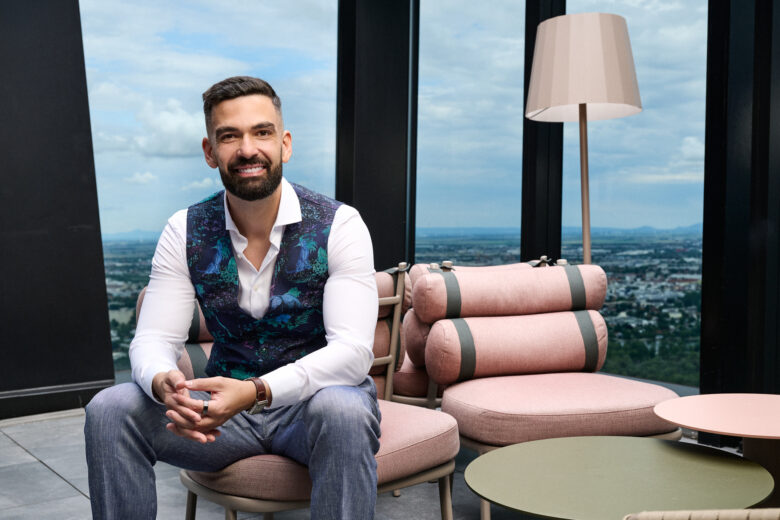


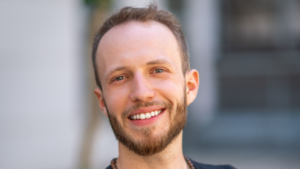
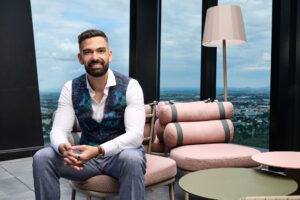
It’s a big win for Vienna: Dalibor Cicman, CEO and founder of GymBeam, announced today that he will be relocating the headquarters of his scale-up e-commerce platform for sports nutrition from Bratislava, Slovakia, to Vienna.
GymBeam is a major player in the fitness business, with annual sales of €260 million. The company recently raised €30 million in fresh capital to expand further in Europe from Vienna – and also to pursue an IPO.
In this interview, Dalibor talks about the move to Vienna, the business model, biohacking, possible stock market plans, and the expansion of the Vienna HQ.
Trending Topics: The fitness e-commerce space is incredibly crowded. What gap did you see that the giants were missing?
Dalibor Cicman: I’ve been in e-commerce for over 20 years, and when I founded GymBeam 11 years ago, we became one of the first direct-to-consumer companies in the region. We acquired a manufacturer in our first year, which meant we owned both the distribution platform and production. This allowed us to develop “digital-first” products specifically designed for online with different packaging and ingredients than traditional retail products. Today, we’re one of the biggest sports nutrition companies globally, with manufacturers in several countries, including a recent acquisition in Düsseldorf and a fulfillment center near Milan.
What drove GymBeam’s growth over the past decade?
Initially, being pioneers in the direct-to-consumer model was crucial. But now many competitors have adopted this approach. What makes us unique today is our range of over 10,000 SKUs. With trends like biohacking gaining popularity, people are searching for very specific products. We’re one of the few companies that can offer this variety, especially in niche categories where competition is limited.
Speaking of biohacking—you practice it yourself. What exactly is it?
Biohacking usually starts with lifestyle changes like workouts, cold plunges, and red light therapy. It’s connected to supplements, where biohackers order very unique products. The highest level involves longevity clinics—next week I’m going to Miami for blood plasma treatment, which is popular in the biohacking community.
You operate as both a retailer and producer. How do you balance promoting your own products versus third-party brands?
From day one, we’ve been a multi-brand store. Two years ago, we carried 126 resale brands, but now we’re down to about 20—mostly global bestsellers. Digital-first companies like GymBeam are taking market share from traditional brands focused on offline retail. Our approach is customer-centric: we want to offer the best products and services, and we’re humble enough to recognize when big international companies have great products worth carrying.
Your product development process sounds fascinating. What’s your secret sauce?
This might be our biggest competitive advantage. When I founded the company, I was studying for a PhD in data science. I developed crawling software that analyzes social media mentions and search queries from marketplaces, feeding everything into our data warehouse. The first ideas for products don’t come from industry experts – they come from the market data showing what’s trending.
Take ashwagandha, for example. Four years ago, it was a tiny market. We noticed it trending on TikTok, then saw people searching for it on Google and Amazon. We quickly developed the product and became one of the first major sellers in Europe. When demand is high but supply is limited, margins are excellent in those first months. By the time competitors catch up, we’ve accumulated profit and established market share. We’ve replicated this system across many categories.
So customers essentially tell you what the next big product will be through their online behavior?
Exactly. We collect massive amounts of data. When something trends for several weeks across multiple platforms—not just TikTok or Instagram, but also search bars—that’s our incentive to develop the physical product.
What’s the next big trend for 2026?
There isn’t one massive product like ashwagandha right now—we now sell millions of units of that. Instead, we’re seeing many smaller trends. The big categories are longevity, biohacking, nootropics for brain function, and gaming supplements. Gaming supplements have been around for about four years but are still growing significantly.
You launch about 50 products per month. Have there been failures?
Over 90% of our new products remain in our catalog for years. We’re very good at analyzing customer demand in that first phase. When we do have unsuccessful products, they’re usually very niche items that wouldn’t be familiar to most people.
You recently secured €30 million in Series A funding. How will you invest it?
When we started planning this round two years ago, the economic climate was very different. Back then, investors focused on growth; now they prioritize profitability. So instead of using the money for geographic expansion into France, Spain, or Germany, we’re investing in vertical integration.
We’re finishing a robotic warehouse near Milan that ships 10,000 packages daily with only 15 full-time employees—an incredible automation ratio. We’re also investing in robotic automation for our manufacturing facilities. This shift toward profitability over pure growth reflects what investors want today.
Will robots eventually replace all human workers?
I don’t think zero workers is realistic or cost-effective. Robots typically take over lower-wage logistics jobs but create new, higher-paying engineering positions. In our Italian warehouse, we employ only 15 people, but they’re engineers with higher salaries doing sophisticated work. I think this has a positive impact—people aren’t doing repetitive, simple jobs anymore.
Can you share some business metrics?
We’ve been profitable since our second year—I only lost money the first year when I invested from my previous businesses. Last year we generated €260 million in revenue with €22 million EBITDA. This year we’re projecting 27% revenue growth and 90% profitability growth.
Are you planning an IPO?
We’re interested, but we expect it would make sense once we exceed half a billion euros in revenue, possibly before 2030. As for being a unicorn—not yet. Based on this investment round where investors received 4% and 8% equity for €30 million, you can calculate we’re not quite at unicorn valuation. But we’re preparing for another funding round in 2026 or 2027.
This week you’re opening a fitness hub in Vienna and plan to move your headquarters there. Why Vienna?
Geography is the main reason. We have major offices in Bratislava (60 minutes away), Prague (three hours), Budapest, Milan, and now Düsseldorf. Vienna sits in the middle of all these operations, making it ideal for management to operate from. We also wanted to be in the DACH region. While Berlin or Munich might be more typical choices, Vienna works best for our specific needs.
How many people will you hire in Vienna?
We hired about 20 people in the last 12 months and plan to hire 30 more in the next 12 months, bringing us to about 50 team members in Vienna by year’s end. We’re focused on white-collar office positions here, while our major capital investments—millions of euros—go into production lines and logistics in Germany, Italy, and Slovakia.
What makes your fitness hub concept unique?
Many competitors have chains of small retail stores. We take a completely different approach: one large hub per capital city—Prague, Budapest, Warsaw, and now Vienna. It’s not just a shop—it’s a logistics point for quick-commerce apps like Wolt and Foodora, which we believe will be an important growing distribution channel.
It’s also a community space where we host about three events per week for different groups focused on sports and education. For us, it’s a marketing space where we invite content creators and influencers to create social media content. When we do something amazing offline with big content creators, it generates the best organic marketing for us.
Who is your typical customer?
That’s challenging to answer with over 10,000 SKUs, but generally they’re fitness enthusiasts, and we focus heavily on young people. Our strategy from day one has been targeting newcomers to the market, not stealing competitors’ customers.
When I founded the company 11 years ago, the market was 80% men and focused on hardcore bodybuilding. Now it’s about 50-50 men and women, and the main purpose is health, not just building muscle. From the beginning, we targeted women entering the supplements market. Today, our customers are more women than men, more health-focused “foodies” than hardcore bodybuilders.
Gen Z seems to prefer the fitness club over the nightclub these days. Is that your target audience?
Honestly, that’s more luck than strategy. When I decided to found this company, I analyzed reports from McKinsey and Gartner about online health trends, but those covered maybe three to five years, not 20 years. The fact that Gen Z doesn’t drink alcohol and is so fitness-focused has been incredibly fortunate for our growth.
The fitness sector has seen consolidation recently. Are you looking to acquire competitors?
We’re taking the opposite approach. Whenever we enter a market, we gain market share very quickly because we believe in our business model, process efficiency, and product quality. We’ve noticed that when we start acquisition negotiations with a company, our market share grows while theirs shrinks.
More importantly, customers today—especially young people—are increasingly less brand-loyal. They want to be constantly excited on social media with something new. We’re building a machine for social media content. Acquiring a company for its market share isn’t a sustainable approach for us.
With potential social media bans for people under 16 in Europe, would that affect your business?
When I talk about young people, I mean 18 to 25. We’re not focused on anyone under 16. Personally, I believe investing in education is better than banning things, but that’s just my opinion. A ban under 16 wouldn’t affect our business since we target 18-plus audiences.
Looking ahead three to five years, what’s the next big thing in your industry?
We’re seeing many trends that we can quickly add to our offering. One significant long-term trend is personalized products. We’re developing a system where customers send us their blood test results showing their vitamin levels, and we create personalized supplements for them. I do this myself—I adjust my supplement dosage based on blood tests every six months. It’s a data-driven approach creating supplements tailored to individual needs.
Dalibor, thank you for the interview and welcome to Vienna.