Inside the Battle Elon Musk vs. OpenAI: 20 Explosive Allegations and the Company’s Defense

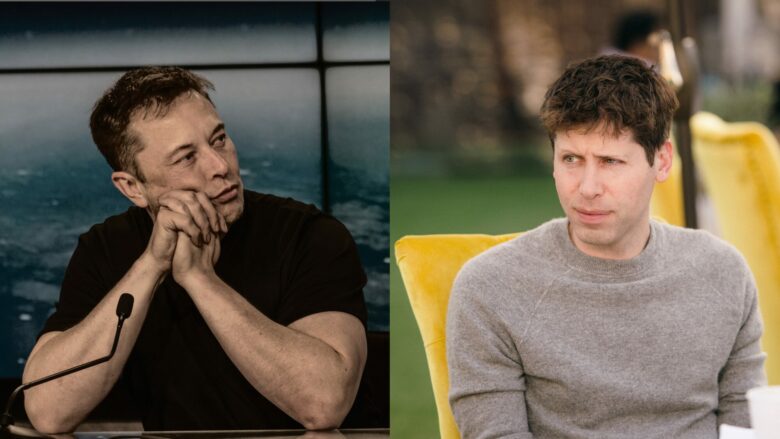


Elon Musk is demanding damages between 79 and 134 billion dollars in his lawsuit against OpenAI and Microsoft, as Bloomberg first reported. The Tesla CEO accuses the AI company of defrauding him by abandoning its original nonprofit mission. The demanded sum is based on an expert opinion from financial economist C. Paul Wazzan, who specializes in valuations and damage calculations in complex commercial litigation and claims to have served as an expert in numerous comparable cases.
Wazzan justifies the demand by arguing that Musk, due to his 38 million dollar initial investment when co-founding OpenAI in 2015, is entitled to a substantial share of the company’s current 500 billion dollar valuation. The demanded compensation would correspond to approximately a 3,500-fold return on Musk’s original investment. At its core, the lawsuit centers on the question of whether OpenAI betrayed its founding principles by transforming from a nonprofit organization to a for-profit enterprise.
From Elon Musk’s lawsuit against OpenAI CEO Sam Altman and a blog post from OpenAI in response to the lawsuit, one can read quite a few details from OpenAI’s founding history that cast a negative light on many of those involved:
The explosive details from the Musk lawsuit against OpenAI
1. Financial discrepancy among founders
Musk paid in 38 million dollars, while the other founders contributed hardly anything.
“In sharp contrast to Musk’s $38 million, Altman contributed only $3.8 million to OpenAI. […] Brockman never contributed anything.”
2. Accusation of a “get-rich-quick” scheme
Musk accuses the founders of transforming the nonprofit organization into a pure profit instrument after his departure.
“But once Musk left the nonprofit, his co-founders reinvented OpenAI as a get rich quick scheme, selling out the nonprofit for personal gain.”
3. Brockman’s secret diary entries
Internal records from Greg Brockman document the desire to make billions.
“[O]ur plan[:]… it would be nice to be making the billions. we’ve been thinking that maybe we should just flip to a for profit. making the money for us sounds great and all.”
4. Confession of moral questionability
Brockman was internally aware that the transformation was dishonest toward Musk.
“[I]t’d be wrong to steal the non-profit from [Musk]. to convert to a b-corp without him. that’d be pretty morally bankrupt.”
5. Transfer of intellectual property
Nearly all valuable assets were transferred from the nonprofit organization to the for-profit division.
“OpenAI transferred ‘substantially all’ its intellectual property to the for-profit and all its full-time employees.”
6. The illusion of profit caps
According to the lawsuit, the profit caps for investors are set so high that they have virtually no significance.
“OpenAI would have to hit a ‘home run’ for the nonprofit to receive its residual stake. […] investors would have to earn ‘north of 250 billion’ before the nonprofit received any residual.”
7. Microsoft’s secret internal skepticism
Microsoft employees internally doubted the nonprofit nature of the structure themselves.
“Given the cap is actually larger than 90% of public companies, I am not sure it is terribly constraining nor terribly altruistic if made transparent…”
8. Microsoft’s far-reaching control rights
OpenAI granted Microsoft extensive approval rights over strategic decisions.
“OpenAI granted Microsoft approval rights over all ‘major decisions.'”
9. Concealment of security deficiencies
Sam Altman allegedly concealed security process failures from OpenAI’s nonprofit board to avoid jeopardizing commercial objectives.
“Altman repeatedly concealed safety process failures from OpenAI’s nonprofit board to advance OpenAI’s commercial objectives.”
10. Hand-picked board after Altman’s return
After his ouster and return, Altman filled the board with loyal individuals.
“Altman then hand-picked a new board focused on loyalty and commercial priorities rather than AI safety.”
11. Microsoft’s influence on board appointments
Microsoft actively helped select the new board members.
“Microsoft actively participated in selecting those board members by suggesting candidates and opining on Altman’s proposals.”
12. “Charter 2.0”: departure from idealism
In an internal document, Brockman admitted that the original nonprofit idea was regarded as a “mistake.”
“over the past eight years we’ve grown to regard capitalism not as a constraint but instead as a positive force….”
13. Recruitment successes through Musk
Without Musk’s reputation, OpenAI could not have won key figures like Ilya Sutskever.
“Musk played a key role in recruiting top talent, such as OpenAI’s Chief Scientist Ilya Sutskever. […] Sutskever was ‘incredibly in awe [and] impressed with Elon Musk’s involvement'”
14. Secret negotiations with Microsoft shortly after Musk’s departure
As soon as Musk left, Altman was already seeking commercial partnerships.
“Altman reached out to Microsoft to discuss OpenAI’s plans for a ‘new commercial venture’ mere weeks after Musk left OpenAI.”
15. Musk’s “Teslas” as motivation aid
Musk personally donated vehicles to employees who later worked against the nonprofit’s goals.
“Musk personally donated the four Teslas (and a related upgrade) directly to OpenAI. […] [in] appreciation for what [they’ve] done to get OpenAI to where it is today.”
16. Downplaying toward Musk
Altman reassured Musk in 2019 by saying investors should never expect profit.
“We did this in a way where all investors are clear that they should never expect a profit.”
17. Plans for a trillion-dollar IPO
The lawsuit claims OpenAI is already planning a massive IPO for sometime in 2026.
“Even now, OpenAI is plotting a trillion-dollar initial public offering for sometime in 2026.”
18. Circumvention of tax exemption
Since OpenAI initially did not have 501(c)(3) status, YC.org was used as a “pass-through entity” for Musk’s funds.
“OpenAI directed donors to use that entity [YC.org] as a conduit because OpenAI had not yet obtained its own 501(c)(3) status.”
19. Microsoft’s role as “lifeline” for Altman
When the board fired Altman, Microsoft immediately intervened to secure control.
“Faced with the prospect of OpenAI disintegrating, nearly all of OpenAI’s independent board members were forced to resign.”
20. The “inversion” of the mission
Musk describes the process as a gradual reversal of all original promises.
“OpenAI, ‘by degrees, inverted the entire mission of the company, [went] from a nonprofit open source to a closed for-maximum-profit company by degrees.'”
OpenAI’s counterposition
OpenAI published a detailed blog post in response titled “The Truth Elon Left Out.” In it, the company presents court documents with additional context to refute Musk’s account.
The core points of OpenAI’s defense:
1. Elon wanted absolute control and majority stake
OpenAI claims that negotiations in 2017 failed because Musk demanded full control.
“Negotiations over an OpenAI for-profit with Elon fell through in September 2017 because we wouldn’t give him absolute control.”
2. Elon agreed to the for-profit structure
Contrary to his lawsuit, Musk had agreed to the for-profit structure that he is now fighting.
“Elon did not think that OpenAI needed to remain solely a non-profit. As the context shows, he agreed that OpenAI needed both a non-profit and a for-profit entity—the exact structure OpenAI has today, and that Elon is now suing OpenAI over.”
3. Musk’s children should control AGI
Musk surprisingly spoke of his children taking control of AGI.
“when we discussed succession he surprised us by talking about his children controlling AGI.”
4. 80 billion dollars for Mars city as motivation
Musk justified his demand for majority stake with his Mars project.
“Elon said he wanted to accumulate $80B for a self-sustaining city on Mars, and that he needed and deserved majority equity.”
5. Musk used OpenAI for Tesla Autopilot
Even before structure negotiations began, Musk had OpenAI employees work on Tesla’s Autopilot.
“Even before negotiations over OpenAI’s structure began, Elon leveraged OpenAI for the benefit of his for-profit ventures. For example, in early 2017, he asked OpenAI to send a team to help fix Tesla’s self-driving program, Autopilot.”
6. Musk proposed Tesla merger
After the for-profit negotiations failed, Musk tried to convince them that merging OpenAI into Tesla was the only path.
“he began trying to convince us that merging OpenAI into Tesla was the only path to the mission, and it seemed that he would pursue an AGI competitor within Tesla regardless.”
7. Musk gave OpenAI 0% chance of success
Upon leaving, Musk predicted that OpenAI could not succeed without him.
“On Elon’s way out, he said that he supported us pursuing the path we saw to raising billions of dollars—he just didn’t think we could succeed”
“By February 2018, Elon had decided that OpenAI would not be able to raise sufficient funding.”
8. Strategic harassment to benefit xAI
OpenAI accuses Musk of systematically favoring xAI through lawsuits.
“Elon’s latest variant of this lawsuit is his fourth attempt at these particular claims, and part of a broader strategy of harassment aimed at slowing us down and advantaging his own AI company, xAI.”
9. Musk himself created an OpenAI PBC
Ironically, Musk himself had created a for-profit structure for OpenAI.
“Shortly after this call, Elon actually created an OpenAI PBC (or ‘B-corp’).”
10. No one lied to Musk
OpenAI contradicts Musk’s claim that they concealed their for-profit plans from him.
“No one ever lied to Elon; no one ever told him they’d accepted his terms when they hadn’t.”
“Their preference was not a secret; the thinking was shared with Elon and his key staff.”
Context and background
OpenAI accuses Musk of “selectively choosing” diary entries from Greg Brockman that told a different story without context. The blog post provides the full conversation for several passages cited by Musk.
According to OpenAI’s account, the current lawsuit is Musk’s “fourth attempt” with these allegations. The company describes the lawsuit as part of a “broader harassment strategy” with which Musk wants to favor his own AI company xAI.