NFT Startup Dogami Winds Down After Total Investment of 14 Million Dollars


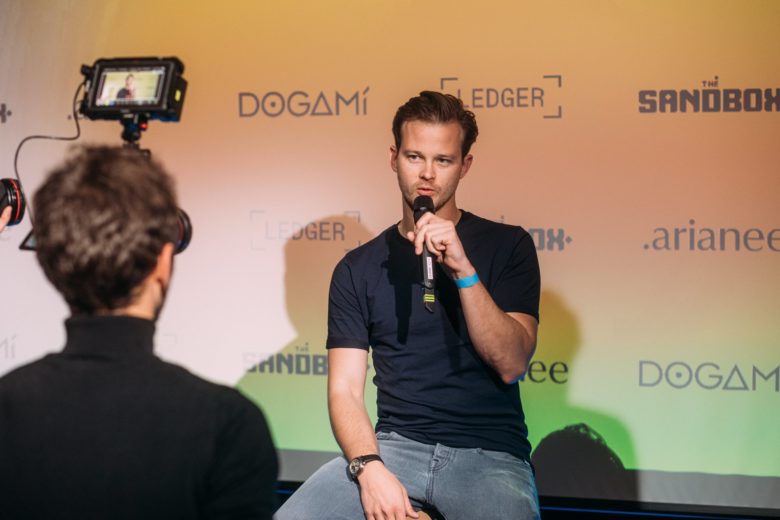


The Austrian-French NFT startup Dogami is ceasing operations. Founder and CEO Max Stöckl sold the brand rights at the end of December and is now winding down remaining business activities. The company, headquartered in Paris, developed a metaverse concept centered around virtual dogs based on NFTs and blockchain technology. After 4.5 years, this marks the end of a project that at times attracted considerable investor funding and built a six-figure community.
Dogami modeled itself on the CryptoKitties principle: users acquire crypto tokens representing virtual pets, raise them, and collect additional tokens in a digital world. The startup focused on NFTs depicting dogs and accordingly named its metaverse Petaverse. Unlike earlier projects, smartphone apps were intended to make access significantly more accessible. Technically, the NFTs were based on the Tezos blockchain, which was a natural fit given the investor structure and France connection.
Million-dollar funding and prominent investors
The company secured a total of 14 million dollars in capital. A seed round of 7 million dollars was followed by an expansion round of equal size. Funders included the venture capital fund XAnge, the French investment bank Bpifrance, the Blockchain Founders Fund from Singapore, and Wagram Capital from the Netherlands. Prominent names had already participated earlier: the globally renowned French game publisher Ubisoft, the blockchain firm Tezos, and the Hong Kong-based metaverse company Animoca Brands, which operates The Sandbox, among other ventures. A representative from Bpifrance praised the establishment of a strong community of over 200,000 people and saw it as the foundation for a global brand.
The team around founders Max Stöckl, Adrien Magdelaine, Kris Penseyres, and original co-founder Bilal El Alamy brought approximately 12,000 NFTs to market. The next milestone was the release of the smartphone game Doga House, which was to transform the NFTs into three-dimensional avatars using augmented reality. The developers wanted to enable NFT owners to experience the full functionality of their virtual pets and thus interact in the Petaverse.
Token collapse and business model problems
Reality proved disappointing. The DOGA token, introduced in March 2022 and intended to serve as an in-game currency for virtual items and game features, lost 95 percent of its value. The cryptocurrency is traded on only a single exchange, namely Gate.io. Stöckl acknowledges that despite strong revenue growth in the early years, the company was unable to develop a scalable and sustainably viable business from it. The limitations of the core product became apparent in combination with a difficult market environment.
The founder nonetheless expresses pride in the project’s ambition and the team spirit of employees who persevered to the end. Despite painful phases, Stöckl emphasizes he would take the same path again. He directs his thanks to the co-founders, remaining team members Benjamin Raaymakers, Andy O., and Christophe Hamel, as well as to investors, partners, and the thousands of engaged fans who gave the company trust and support over the years.