OpenAI Cuts Prices in Half With GPT-6 Sol and Luna


Set Trending Topics as a preferred source on Google.
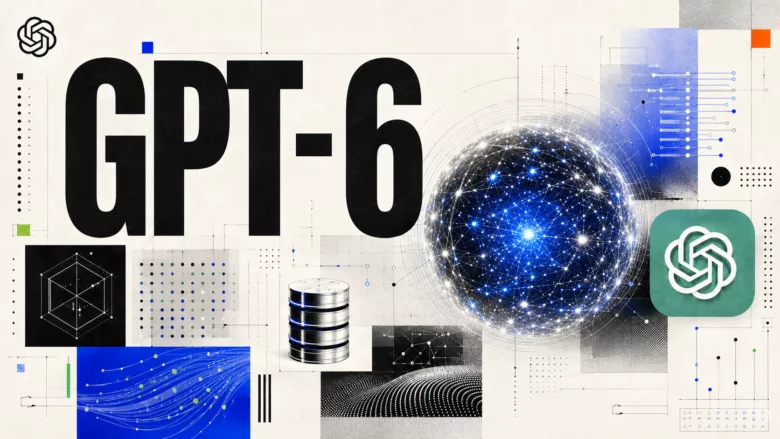
OpenAI has just released GPT-6 Sol and GPT-6 Luna, two new AI models built above all to be cheaper to run. Both models join the flagship GPT-6, also known as “Astra”, which OpenAI unveiled earlier this month, and cost half as much per token as their GPT-5.6 predecessors. According to OpenAI, Sol and Luna were trained with methods similar to Astra’s but are faster and more affordable. Independent benchmarks paint a mixed picture of their performance.
New Pricing: Sol and Luna Compared
GPT-6 Sol now costs $2 per million input tokens, down from $4, and $10 per million output tokens, down from $20. The smaller GPT-6 Luna costs $0.10 instead of $0.20 for input and $0.50 instead of $1.20 for output. OpenAI calculates the 50 percent reduction against the previous promotional pricing for GPT-5.6. Caching terms stay the same: reused content (cache reads) is discounted by 90 percent, while writing to the cache carries a 25 percent premium, according to Artificial Analysis.
For comparison, the flagship GPT-6 Astra costs $10 per million input tokens and $50 per million output tokens in the API. That makes Sol five times cheaper than Astra and Luna a hundred times cheaper. OpenAI still recommends Astra for the most demanding tasks. Yet in AutomationBench, according to OpenAI, even Astra at its lowest effort setting costs nearly four times as much per task as Sol at a high setting, while scoring lower.
OpenAI attributes the lower prices to improvements in caching and inference that make the models cheaper to serve, and says it is passing those savings directly on to users and customers.
What a Task Actually Costs
For developers, the cost of completing a specific task is often more telling than the price per token. Artificial Analysis puts the cost per task on its Intelligence Index at $1.06 for GPT-6 Sol at maximum effort, compared with $1.99 for its predecessor. GPT-6 Luna comes in at $0.07 per task instead of $0.18, a drop of around 60 percent. The savings come entirely from the price cut, since both models actually use slightly more output tokens per task than before. According to Artificial Analysis, the two releases allow OpenAI to occupy a large part of the so-called Pareto frontier, the set of models offering the best balance of performance and cost.
OpenAI itself puts cost comparisons with Anthropic front and center. In AutomationBench, which tests business workflows across multiple apps, GPT-6 Sol is said to outperform Claude Opus 5 at just 9 percent of its cost per task, or $0.27 per task. On the coding benchmark DeepSWE, Sol reportedly trails Claude Fable 5’s best score by only 1.1 percentage points at roughly 80 percent lower cost. Luna is said to match Opus 5 and Fable 5 at medium effort on the same test, at 93 and 96 percent lower cost per task respectively. For computer use (OSWorld 2.0), Sol reportedly reaches scores similar to Opus 5 at about a fifth of the cost. These figures come from OpenAI, which says the competitor scores were taken from publicly available reports.
Coding Agents Drive Up Costs
OpenAI illustrates how much costs matter under heavy use with figures from inside the company. Valued at API prices, the median OpenAI researcher uses more than $600 worth of tokens per day, and the top 10 percent use more than $7,000. As coding agents take on longer and more complex tasks, OpenAI argues, the price of sustained use becomes more important.
OpenAI has also reworked prompt caching for GPT-6. Higher cache hit rates are meant to let agents reuse more context and benefit more often from the 90 percent discount. A new dashboard and a diagnostics tool help developers monitor their caching performance. Developers can now also adjust reasoning effort and available tools without losing the cache. According to OpenAI, GitHub reports that these improvements have cut the share of prompt tokens that need fresh processing in Copilot by more than half.
Mixed Results in Independent Tests
On the Artificial Analysis Coding Agent Index, GPT-6 Sol gains two points to reach 57, with a coding task costing around $2.99, roughly half the previous cost. GPT-6 Luna drops two points to 41, at around 60 percent lower cost per task.
Both models make clear progress on hallucinations. In the AA-Omniscience test, Sol’s hallucination rate falls from 92 to 60 percent and Luna’s from 93 to 77 percent. Sol achieves this mainly by declining to answer more often: it attempts only 83 percent of questions, and its accuracy slips from 59 to 54 percent. In an internal evaluation, OpenAI reports that Sol makes about half as many factual errors as its predecessor.
Artificial Analysis also found regressions in traditional knowledge work. On GDPval-AA, a benchmark of economically valuable tasks across 44 occupations, Sol loses around 100 Elo points and Luna about 75. After manually reviewing hundreds of outputs, Artificial Analysis attributes this to weaker presentation and deliverables that leave out required elements. OpenAI, for its part, highlights that the new models give clearer and slightly shorter answers than their predecessors.
Box CEO Levie Sees Jevons Paradox at Work
The price cut coincides with an update from Anthropic, which has also introduced a new model, Claude Opus 5.5, along with a 20 percent price reduction. Aaron Levie, CEO of cloud content company Box, called it “an insane day in AI” on LinkedIn. In his view, the bigger headline for anyone building agents is that the models just became substantially cheaper.
According to Levie, the rate at which the cost per task drops on a like-for-like basis is unlike any other technology in history. Every time the cost of AI falls, he says, the range of use cases for AI agents expands dramatically. Levie describes this as the Jevons paradox applied to agents: lower costs lead to more usage rather than savings. As examples, he cites agents that process all of a company’s data, scan code for security issues, read through log data to make decisions, or work in workflows as entire agent swarms. The cost of tokens, he argues, is directly tied to whether these use cases can be opened up at scale.
Availability and the Price War
GPT-6 Sol and Luna are available now in ChatGPT Work and Codex for Plus, Pro, Business, Enterprise and Edu users, with a gradual rollout. Users on the free and Go plans can access GPT-6 Luna in the desktop app. In the API, the models are called gpt-6-sol and gpt-6-luna.
The launch adds to a growing price war among the leading AI labs. OpenAI had already promoted significantly lower costs compared with competitors when it launched GPT-5.6. For companies deploying AI agents at scale, the new prices are likely to have a noticeable impact on their budgets. Whether the regressions in knowledge work matter for a given use case is something users will need to assess for themselves.