OpenAI Launches Prism: AI Workspace for Scientific Work

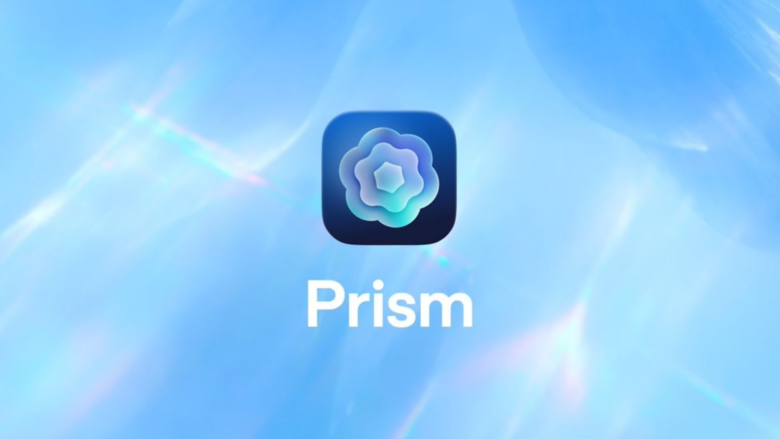


OpenAI has launched Prism, a new workspace for scientific writing. The platform is free for everyone with a ChatGPT account and integrates the language model GPT-5.2 directly into the workflow. Prism aims to unite text processing, literature research, and collaboration in a cloud-based environment. The tool builds on Crixet, a LaTeX platform that OpenAI acquired and further developed into Prism. This is how the AI company is responding to an average of 8.4 million weekly messages on natural science topics that come in via ChatGPT.
The software functions as an AI-based editor that allows researchers to verify claims, revise texts, and search specialist literature. Users can test hypotheses via chat, create equations and citations, and convert whiteboard drawings directly into LaTeX. LaTeX is a professional typesetting system used primarily for scientific publications.
The model is designed to understand the structure of a paper, including equations, figures, and overall argumentation. However, Prism is not designed to conduct research independently, but rather to accelerate the work of human scientists—similar to how coding tools like Cursor or Windsurf work in software development.
AI to Accelerate Scientific Research
“I think 2026 will be for AI and science what 2025 was for AI and software development,” said Kevin Weil, Vice President of OpenAI for Science, at a press conference.
According to OpenAI, academic researchers are already using AI for complex tasks. In mathematics, AI models have solved several long-standing Erdős problems through literature analysis and new applications of existing techniques. A statistics paper published in December used GPT-5.2 Pro to establish new proofs for a central axiom of statistical theory. Human researchers were responsible only for prompts and verification.
Unlimited Collaboration
Prism is designed to offer an improved workflow around established standards that surpasses currently available LaTeX tools. The visual capabilities of GPT-5.2 allow for assembling diagrams from online whiteboard drawings—a known pain point.
OpenAI also emphasizes the collaborative aspect of Prism. Since the platform runs in the cloud, local LaTeX installation is eliminated. Teams can collaborate in real time, with changes and comments immediately visible. Users can make changes directly in the document or optionally use voice-based editing.