planqc: “We have a historic opportunity to lead a revolution”

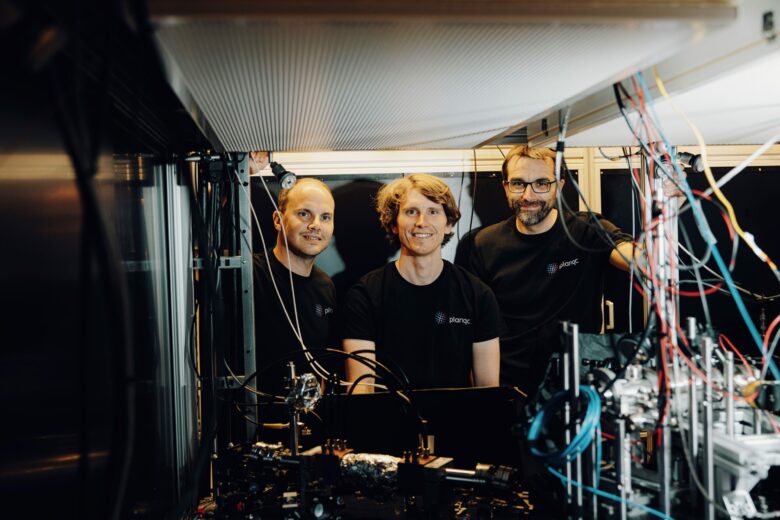


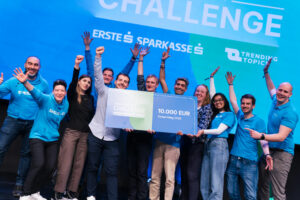
The quantum computer scale-up planqc, which has Alexander Glätzle as CEO and co-founder from Tyrol, won the German Founder Prize last year as the best startup of 2025. The young company is considered one of Europe’s great hopes in quantum computing and promises enormous impacts on areas ranging from Bitcoin to artificial intelligence. In an interview with Trending Topics, Glätzle explained his startup’s unique technology and why Europe now has a historic opportunity.
Exactly a year ago we had an interview. Back then Trump had just been elected US President and you said that’s a wake-up call for Europe. How has it played out from your perspective?
Alexander Glätzle: I believe the wake-up call was understood in many respects. 2026 has just begun and when it comes to technological talent, Europe is still at the absolute top. It’s a lot of fun to research quantum computers in Munich or Innsbruck. Of course, we still have a very different venture capital landscape in Europe. But there are also very exciting new developments here. So yes, there’s movement.
What developments did planqc experience in 2025? Quantum computers have definitely picked up pace in recent years. When will the big breakthrough year for the technology come? Has it already happened? Is it still ahead of us?
2025 was a very good year. It fell for us between two funding rounds. We raised around 50 million euros in 2024 and plan to raise additional capital this year. In 2025 we successfully completed our milestones and made continuous progress on all fronts. We’ve scaled to over 100 employees. International pressure remains extremely high, but I believe we’re very well positioned.
Why were such large sums of money pumped into the sector specifically in 2025? Were there special technological breakthroughs or is this a strategic issue? After all, quantum computers are one of the areas where Europe still sees itself ahead of China or the USA in some respects.
I think it became clear especially in the last year that quantum computers work. The question now is when they’ll have the performance to make a real impact. In the investor world, you can already see a certain shift from AI to quantum computers in some places.
In the AI sector, Google was long considered the hyperscaler. Then suddenly OpenAI burst onto the scene with ChatGPT and made life difficult for Google. Google took three years to reclaim the top position. Can something similar happen in the quantum sector? Can a startup lead the industry?
Yes, that’s absolutely conceivable and that’s what we’re betting on. Google invested together with Softbank in QuEra last year, a competitor of ours. This shows that startups are very relevant.
Let’s talk about planqc. What exactly makes your technology unique compared to others?
What all quantum computers have in common: they use the laws of quantum physics to perform calculations. For this you need the smallest particles or very low temperatures where these effects play a role at all. At planqc we’re perhaps building quantum computers in the most original way. We store information in individual atoms. That requires incredible precision. You have to trap individual atoms and manipulate them in laser fields. You can even make them visible now.
We can create a “chessboard” of individual atoms and let them interact with each other to perform logical operations. This has resulted in a very promising platform over the last few years. They are real qubits with extremely long coherence times that we can scale very quickly and very easily because all atoms are identical.
A red thread at planqc is traffic and logistics. For example, you’ve started partnerships with railway companies, airlines and in the logistics sector. How did that come about?
This is an area with very complex optimization tasks. From logistics to financial optimization, these tasks are extremely industry-relevant. It’s an extremely large market and there would be a lot to gain if we developed a quantum algorithm that really accelerates these problems.
In the EU Commission’s digital strategy, it says that quantum technologies will enable things in the coming years that are simply not possible today. What is the EU Commission talking about or dreaming of?
A very simple example: an aspirin molecule with ten atoms can simultaneously exist in 10 to the power of 48 vibrational or rotational states, where these different molecular groups rotate around each other. If I want to calculate on a computer how such an active ingredient unfolds its effect in the body, how it couples to other molecules, then I would have to include this entire space of possible states. 10 to the power of 48 is roughly the number of atoms that make up our planet Earth. It would be absurd to store the quantum mechanical information contained in a single aspirin molecule classically. With quantum computers, that would be possible for the first time.
What major problem could be solved this way?
Personalized medicine is one of the most fascinating examples. You could potentially reduce the development cycles of new drugs from ten to twenty years to just a few months and would have the ability to develop active ingredients for a specific person based on their individual DNA that are ideal for their body.
The EU is currently focusing heavily on quantum computers. Are we playing at the world’s top level here?
We are absolutely at the world’s top level when it comes to basic research and talent. And we need to build on that. We’re currently exporting quantum talent to the world. Of course, we don’t have nearly the venture capital market that the USA has, or the purely state-run laboratories and programs that we see in China. But I believe we can combine the best of both worlds. We now have the long-overdue EU Scale-Up Fund, which hopefully will become operational this year. I’m very optimistic about this.
Time is the most critical element here and every month until the quantum strategy is actually implemented counts. Internationally we’re currently seeing massive acceleration.
Is all this moving too slowly for you?
Not just for me, but also for the politicians I talk to. I sometimes wish there was more awareness that you really have a historic opportunity here to lead a revolution. On topics like AI or cloud technology we’ve done damn poorly. Here we now have major geopolitical, strategic dependencies that can become very dramatic. But there’s no reason why the dominance of classical computers from the USA should have any impact on the manufacture of quantum computers. We can really go full throttle here if we act faster and deploy the right resources.
You said Europe exports quantum talent. Put more sharply, you could also say the smart minds who know how quantum technology works are running away from us toward the USA or China. Is that a dramatic development?
I don’t see it as dramatic at all. What’s important is that they eventually come back and we support them in research, in companies or in starting their own. I think we’re on a pretty good path there.
Originally you’re Austrian but you went to Bavaria. Would you have stayed in Austria if there had been something like UnternehmerTUM like in Munich?
That’s a difficult question. We have incredible talent in Austria. But in Munich there was a real quantum wave. Several things came together. First, there are world-leading academic institutes, and second, Bavaria put 300 million euros into building quantum computers at the world’s top level. Additionally, Munich has a very strong industrial environment.
In the cryptocurrency sector, there’s repeatedly the prediction that quantum computers will crack Bitcoin in the future and break encryption, which would devalue Bitcoin. Is that correct or are these fears exaggerated?
That’s definitely a real threat. Quantum computers, once they’re strong enough, can solve encryption exponentially faster and thus the entire Bitcoin network would be vulnerable. However, there’s a twist—there are so-called post-quantum algorithms that are not crackable even for quantum computers. Already today you can and should protect yourself against quantum computers. But you would need to implement the corresponding solutions quickly.
When we talk about computing power, you can’t get around the topic of AI these days. When these quantum computers are finally really operational, what effects do you expect on AI development?
Right now it’s relatively unclear, but there’s concrete hope for how quantum computers can help with AI applications. There’s potential to reduce the resource expenditure of LLMs. It’s extremely exciting to search for synergies here. When it comes to computing power, a quantum computer needs many times less energy than a classical computer. Our quantum computer with roughly 100 qubits needs about the energy of three to four kettles.
That’s certainly very exciting. That should actually be a field that would strongly interest the world’s most valuable company, Nvidia.
Nvidia is very active in the quantum computing sector. But to my knowledge they don’t build their own quantum computers.
A closing question about 2026. What milestones do you want to achieve at planqc?
We definitely want to perform very good quantum operations. We want to make big steps toward quantum error correction. It will definitely be a very exciting year for planqc. We have really great results in the lab where now only the next step is missing to generate citable, publishable results at the world’s top level.