Search Engines Draw 20 Times More Traffic Than A.I. Chatbots



Set Trending Topics as a preferred source on Google.
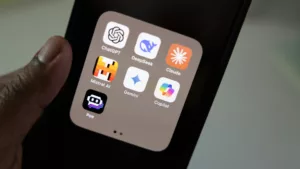
Reports of search’s death have been greatly exaggerated: Despite the hype around ChatGPT, Gemini and Claude, search engines still draw about 20 times as many web visits as A.I. chatbots. That is the finding of an analysis by the data provider OneLittleWeb, which examined estimated traffic across 10,171 websites in June 2026 for its dashboard of the most visited websites in the world.
The Key Numbers
- Search engines: 162.19 billion visits in June, or 57.2 percent of all tracked web visits.
- A.I. chatbots: 8.26 billion visits across more than 231 tracked chatbots, or about 2.9 percent of total traffic.
- The gap: Search engines drew roughly 19.6 times as many visits as all A.I. chatbots combined, a difference of nearly 154 billion visits.
- Google vs. ChatGPT: Google alone recorded 98.19 billion visits, compared with 5.32 billion for ChatGPT, a factor of 18.5. Google alone thus had almost 12 times as much traffic as the entire chatbot category.
- Decline: Both categories lost traffic compared with the previous month, search engines by 2.53 percent and chatbots by 5.78 percent.
ChatGPT Dominates the Chatbots
Among A.I. chatbots, ChatGPT is the clear leader, accounting for about 64 percent of chatbot traffic. It is followed by Google’s Gemini with 1.14 billion visits and Anthropic’s Claude with nearly 968 million. Search is even more concentrated: Google and YouTube together account for 150.41 billion visits, almost 93 percent of search-engine traffic. Notably, OneLittleWeb classifies the video platform YouTube as a search engine, which further widens the gap with chatbots.
“These numbers don’t tell us whether A.I. chatbots will eventually replace search. They show the scale of the two behaviors today,” said Sujan Sarkar, a co-founder of OneLittleWeb. The more interesting question, he said, is how the gap changes as people increasingly use A.I. chat for information discovery while search engines continue to integrate A.I.
What the Numbers Don’t Show
The study has an important limitation, however: It measures only browser visits, based on estimates from the SEO tools Semrush and Ahrefs. App usage is not included, and A.I. assistants in particular are heavily used through smartphone apps. Google says Gemini now has more than one billion monthly active users, and OpenAI also reports more than one billion users for ChatGPT. Much of that usage never shows up in a web-only traffic analysis.
On top of that, the line between search and A.I. chat keeps blurring. Google has long shown A.I.-generated answers above its classic search results and has rolled out its A.I. Mode in Europe as well. Anyone searching on Google today often gets an A.I. answer too, and that traffic counts as search in the statistics. The real question is therefore less whether A.I. will replace search and more where people choose to begin looking for information.