SpaceX vs. Google: The Race for AI Data Centers in Space
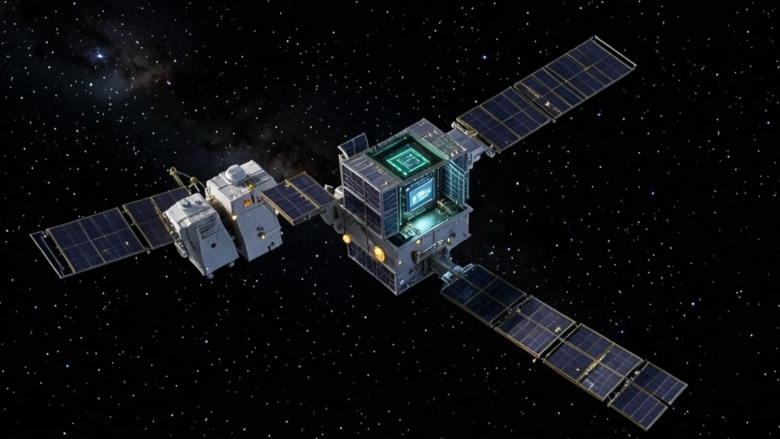


A new chapter has been written in the global competition for artificial intelligence and computing infrastructure: the vision of operating AI data centers not on Earth, but in space. This ambitious endeavor is currently being driven by Elon Musk and his space company SpaceX, which has just acquired xAI. But Google and Amazon founder Jeff Bezos are also exploring similar concepts. Yet how realistic is the idea of relocating data centers to orbit — both technically and economically?
The idea of shifting AI workloads to space is based primarily on one central advantage: energy supply. In orbit, sunlight is available almost continuously. Unlike on Earth, there is no night and no weather that impairs solar panels. This theoretically constant energy source could meet the enormous power demands of modern AI models without relying on fossil fuel plants or overloaded power grids. At the same time, shifting part of the computing load could significantly reduce the strain on terrestrial infrastructure — a point that both Google and SpaceX emphasize.
Musk Plans 1 Million AI Satellites in Space
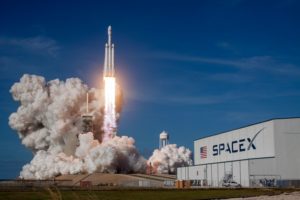
Elon Musk is taking things even further. In an ongoing filing with the US Federal Communications Commission (FCC), SpaceX is planning a constellation of up to one million satellites that would function together as an orbital data center. Powered by solar energy and connected via high-speed lasers, such a network could theoretically provide global computing power.
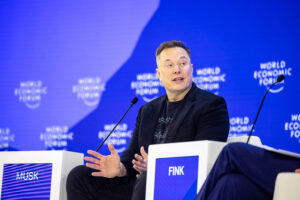
Musk himself sees this not only as an answer to Earth’s rising energy problems, but as a strategic way to make AI computing power more cost-effective and scalable. In a blog post, he wrote that this could be “the cheapest way to generate AI computing power” within “two to three years.”
In the course of the recent merger of SpaceX and his AI startup xAI, Musk emphasized the technological ambition of this undertaking. The vision of orbital AI data centers goes hand in hand with Musk’s desire for an expanded human presence in space.
Google Aims to Test by 2027
Google is pursuing similar goals under the name “Project Suncatcher.” Initial tests of small modular computing facilities in orbit are already planned for 2027, with larger systems to follow in the coming decades.
In November 2025, Google presented a conceptual framework for orbital AI computing and plans to launch two prototype satellites equipped with Tensor Processing Units (TPUs). “Project Suncatcher is part of Google’s long tradition of tackling ambitious scientific and technical challenges,” the company stated.
Jeff Bezos: “No Plan B for Earth”
Jeff Bezos, founder of Amazon and space company Blue Origin, is also advocating for the development of orbital data centers. In 2025, Bezos said he could envision data centers in space within the next 10 to 20 years. “There is no Plan B for Earth,” Bezos stated. He argues from an environmental perspective, seeking to relocate resource-intensive industries like data centers to space.
The Major Hurdle: Cooling in a Vacuum
As appealing as the prospect of continuous solar energy sounds — there is no air and no water in space to dissipate heat. AI clusters therefore cannot be cooled the way terrestrial data centers are. The only way to remove waste heat in space is through thermal radiation via large radiators. These would need to occupy enormous surface areas, are heavy, expensive to launch, and sensitive to solar radiation. Maintenance options and hardware upgrades are also limited, since every replacement requires a rocket launch.
This is a fundamental physical bottleneck: such radiator surfaces would need to be designed to continuously radiate away the waste heat from large computing loads. To date, there is no proven practical solution that could handle this at the scale of entire AI clusters—despite prototype tests and simulations within research projects like Google’s Project Suncatcher.
Conclusion
Initial proof-of-concepts for orbital AI data centers are technically possible, but still far from market readiness. Widespread infrastructure would require massive investments — and would also necessitate technical innovations in heat management and decades of development time.
SpaceX and Google are driving research forward, but this race is a marathon, not a sprint. In the coming years, hybrid approaches could initially emerge, in which terrestrial data centers are supplemented by orbitally supported nodes.
SpaceX kauft xAI: Kombiniertes Unternehmen soll 1,25 Billionen Dollar wert sein