Trump’s CLARITY Act Stalls: Inside the Battle for America’s Crypto Future



Actually, the US government wanted to make a big splash in 2025 with two crypto laws right away: the GENIUS Act for stablecoins has already passed, as is well known, but the far more important CLARITY Act, which is supposed to regulate the entire US crypto market – and thus the world’s largest crypto market – is still stuck in the US Congress and has not been passed.
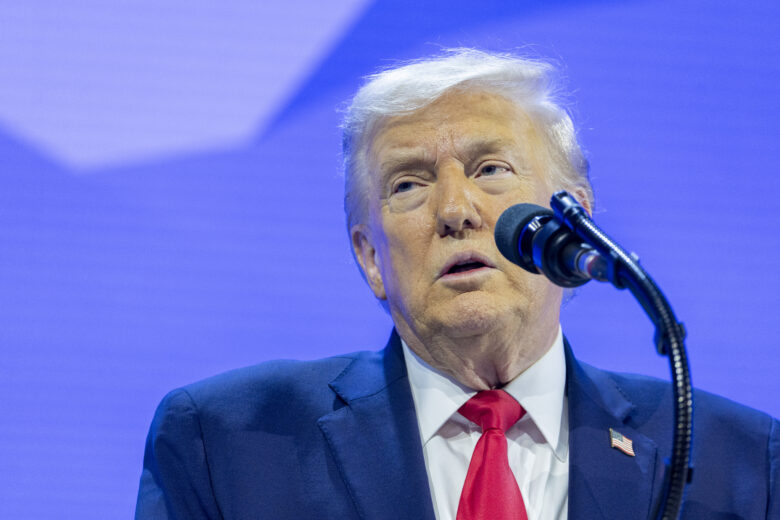
The fact that the CLARITY Act (short for “Digital Asset Market Clarity Act“) is enormously important to the US government prompted US President Donald Trump to address the legislative initiative directly in his expansive and self-praise-laden speech at the World Economic Forum in Davos.
“To unlock innovation and savings and financing opportunities, I am also working to ensure that America remains the crypto capital of the world. To that end, I have signed the groundbreaking Genius Act. Congress is working very hard on crypto market structure legislation that affects Bitcoin and all others. I hope to sign this very soon and thereby open new paths for Americans to financial freedom”, Trump said.
By “sign soon,” the US President means that the law must pass before the midterms (midterm elections on November 3, 2026) – otherwise, Republicans risk losing majorities in the US Congress, and that would spell the end of the CLARITY Act in its current form.
But even so: the CLARITY Act, which is supposed to clarify the market structure for digital assets, is currently stuck in the US Senate. A crucial hearing was cancelled at short notice, and the crypto industry itself is deeply divided. What appears outwardly to be a technical legislative process turns out to be a bitter power struggle between the old banking system and the new crypto economy.
From Euphoria to Blockade
A look back: In July 2025, the US House of Representatives passed the CLARITY Act with overwhelming bipartisan support: 294 to 134 votes. The law is supposed to finally create clarity about which agency is responsible for which tokens (SEC or CFTC) and how crypto exchanges are regulated (more on that here). But since then, the ball has been in the US Senate, and nothing has moved there.
The Banking Committee hearing scheduled for January 15, 2026 was postponed, with housing construction prioritized instead. This pushes the timeline for the crypto law to March. The likely real reason: a lobbying war that is splitting the entire industry.
The Coinbase Factor
The crucial blockade points:
- The stablecoin rewards ban: Traditional banks have successfully pushed through a clause that would prohibit crypto exchanges from distributing interest income or rewards on stablecoins to users. For platforms like Coinbase, these rewards are a central source of revenue. CEO Brian Armstrong called this a “red line” and withdrew Coinbase’s support for the law as a result. Without the support of the largest US crypto exchange, the entire legislative initiative is at risk. Many senators are hesitant to push through regulation against Coinbase’s stated will. The industry’s division is paralyzing the political process.
- Banks versus crypto platforms: The traditional banking system fears massive capital outflows. If regulated stablecoins are allowed to continue offering interest, trillions of dollars could flow from classic savings accounts into digital assets. Major banks are therefore demanding parity with bank deposits, including insurance requirements and interest bans.
- DeFi regulation in dispute: Senate Democrats are calling for stricter anti-money laundering (AML) rules even for decentralized finance (DeFi) protocol developers. Republicans and parts of the crypto industry are resisting regulation that they view as technically infeasible or innovation-hostile.
- The election year dilemma: With the midterm elections in November 2026, the window for bipartisan compromise is shrinking dramatically. Political strategists warn: if the law fails in spring 2026, it won’t be seriously discussed again until 2027 at the earliest.
- A divided crypto front: While Circle (USDC issuer) and Kraken still support the law, Coinbase has changed its position.
The most dramatic turning point came in January 2026: Coinbase, long one of the loudest advocates for clear crypto regulation, withdrew its support. CEO Brian Armstrong made clear that certain clauses in the current draft were unacceptable.
The core problem: the planned ban on stablecoin rewards would deprive Coinbase of one of its most important sources of revenue. Through its partnership with Circle on USDC, the exchange earns substantial sums from the yields that are passed on to users. A ban would destroy this model and disadvantage Coinbase compared to traditional banks, which are allowed to pay interest on deposits themselves.
What’s at Stake
The CLARITY Act was supposed to finally clarify the market structure for digital assets in the US. While the related GENIUS Act already came into force in July 2025 and regulates the basic issuance of stablecoins, comprehensive regulation for exchanges, token classifications, and agency jurisdictions is still missing.
Without this clarity, US crypto companies remain in a gray zone. At the same time, there is a risk that other jurisdictions (such as the EU with its MiCA regulation) will gain a competitive advantage because they create legal certainty faster.
Outlook: Will the Law Pass in 2026?
The coming weeks will be decisive. Political observers see three possible scenarios: First, a compromise could be found that brings Coinbase back to the table (for example, through exceptions to the rewards ban). Second, the Senate could push the law through without Coinbase and thus set a precedent where regulation occurs against parts of the industry. Third, the law could fail and be postponed indefinitely.
One thing is certain: the fight over the CLARITY Act is no longer a technical legislative process. It is a power struggle over the future of the financial system, and the crypto industry is fighting not only against external opponents but also with itself.