“AI Models may become interchangeable, but compute, data integration, and platforms are not”




The rapid development of artificial intelligence is causing upheaval in technology markets. While infrastructure providers benefit from massive investments, traditional software companies face valuation pressure. Malte Kirchner, Head of DACH at DNB Asset Management, analyzes the structural shifts and explains why blanket market reactions do not do justice to the complex reality.
Volatility as a Consequence of a Paradigm Shift
The pronounced volatility in software stocks in recent months reflects, according to Kirchner’s assessment, less weaker fundamentals than rather a technological paradigm shift. “The dynamics of the global technology and AI ecosystem can currently be best described as an interplay of massive infrastructure investments, structural shifts along the value chain, and a revaluation of classical software business models,” explains the expert.
The market increasingly discusses whether existing software models could come under structural pressure from AI and how sustainable current valuations are. This uncertainty has led to a noticeable revaluation of many securities, often blanket and little differentiated.
Hyperscalers as Structural Winners
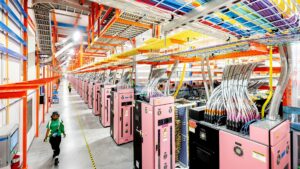
Kirchner identifies a growing decoupling between the quality of individual AI models and the earning power of the underlying platforms. Companies such as Microsoft, Amazon, or Alphabet benefit less from which AI model prevails, but rather from the fact that AI models are used on a large scale at all.
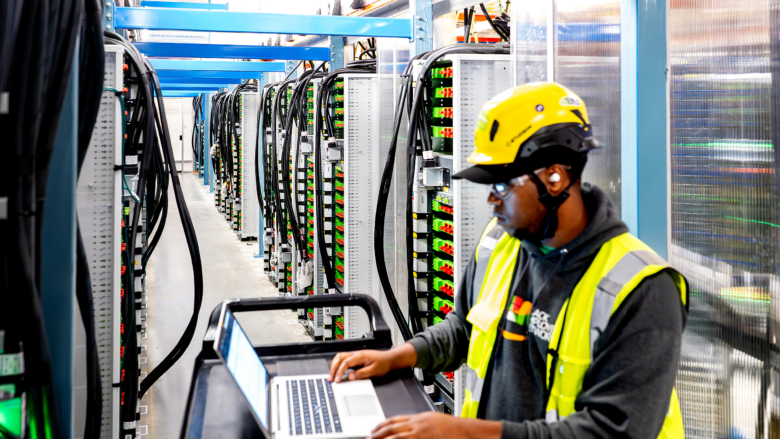
“Every application generates computational load. And computational load means demand for cloud infrastructure, networks, and data centers. Even if prices and margins come under pressure at the model level, structural demand for inference capacity remains.”
This is precisely why large cloud platforms proved to be robustly positioned despite high investments in the short term, according to Kirchner.
Capital Intensity as a Risk Factor
With the shift in value creation toward infrastructure, the investment cycle comes into sharper focus, according to the DNB expert. Particularly capital-intensive segments such as GPU producers, memory manufacturers, or semiconductor foundries react sensitively to changes in demand.
Companies like Nvidia have recently benefited greatly from the AI boom. At the same time, as capacity expansion increases, the risk of temporary oversupply rises if investment decisions are delayed or monetization proceeds more slowly than expected. “The capital cycle thus becomes a central determinant of earning power,” warns Kirchner.
Price Pressure Through Model Convergence
Another structural driver is the rapid convergence of model quality in large language models. Performance differences between commercial models and high-quality open-source alternatives are shrinking, while price spreads sometimes remain substantial.
This development increases pressure on model providers but simultaneously stabilizes demand for infrastructure. “Models may become interchangeable, but scalable computing capacity, data integration, and operational platforms are not,” emphasizes Kirchner.
Software: Differentiation Instead of Blanket Judgment
The software sector is currently the area where market sentiment and fundamental reality diverge most strongly. Broad selling movements sometimes suggest that software is structurally at risk. However, a differentiated analysis reveals a significantly more heterogeneous picture.
Kirchner identifies three levels of risk:
- Automation effects that can reduce the number of human users, primarily a pricing model issue
- AI-powered code generation that accelerates development processes but is not equivalent to building robust, regulation-compliant systems
- New, AI-native architectures that represent the greatest structural challenge in the long term, but whose implementation requires time
“An ERP system like SAP or complex engineering software embodies domain and regulatory knowledge that has grown over decades. This depth cannot be replaced in the short term by language models.”
This is precisely where the structural stability of many established providers lies, according to the expert.
Collaboration Software Remains Relevant
Companies deeply embedded in organizational processes also prove robust. Atlassian exemplifies collaboration and process software that remains relevant regardless of whether code is written by humans or autonomous agents. “Planning, documentation, coordination, and traceability remain central requirements,” explains Kirchner.
Classical technology providers such as Nokia and Ericsson also benefit from structural trends: lower competitive intensity, predictable cash flows, and growing importance of stable network infrastructure in the face of increasing data flows.
Conclusion: Differentiation as a Success Factor
The AI boom creates clear structural winners, particularly where business models are scalable, anchored in infrastructure, and deeply integrated into processes. At the same time, it forces investors to analyze value chains more carefully and assess risks more differentiatedly.
“Not every disruption is immediate, not every cycle is permanent. But where technology, data, infrastructure, and organization work together, long-term potential remains extraordinary, despite ongoing volatility.”
The essential risks lie less in the “whether” of the AI revolution than in the “how quickly” and “how evenly” value creation materializes along the AI stack, Kirchner concludes.