Gmail gets the Gemini treatment, will draft emails and filter your inbox



Much like Microsoft with OpenAI’s GPT models, Google has also begun integrating its Gemini AI into more and more of its existing services over the past six months. After Search, the Chrome browser, Android, and Google Sheets, it’s now the world’s largest email service, Gmail, that’s getting the treatment.
With Gemini 3 as the technological foundation, the email service transforms from a passive mailbox into a proactive digital assistant. The new features benefit both free users and paying subscribers of Google’s AI Pro and Ultra plans.
A central innovation is AI overviews that convert information directly into answers. Gmail automatically summarizes long conversations and highlights the most important points. Users can ask their inbox questions in natural language—for example, about the plumber who sent a quote for bathroom renovations a year ago. The system then searches through all emails and delivers the relevant details in compact form.
While conversation summaries roll out free for all users, the question-answer function remains exclusive to paid subscribers. Blake Barnes, Vice President of Product at Google, explained in a briefing that “Gmail thereby proactively clears the decks and shows what needs to be done and when”.
Help Me Write Goes Free – Correction Feature Takes on Grammarly
Google is significantly expanding access to writing aids. The Help Me Write function, which formulates emails from scratch or revises existing text, is now available to all users—previously it was reserved for paying customers. Response suggestions have also been refined: they analyze the context of the conversation and propose answers that match the user’s tone and style. If someone is coordinating a family celebration and is asked whether their aunt would prefer to bring a cake instead of a torte, they immediately receive suitable drafts.
The new correction feature for subscribers checks grammar, tonality, and style—positioning itself directly against established tools like Grammarly. Google is likely betting that users will increasingly turn away from third-party services or ChatGPT to optimize their emails.
AI Inbox Aims to Separate Important from Unimportant
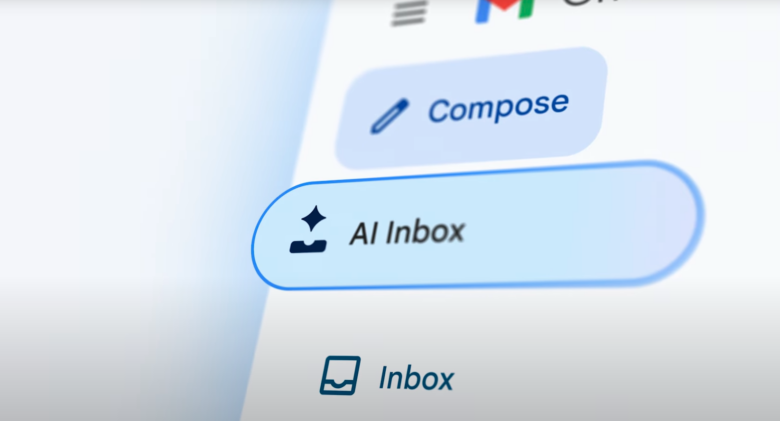
The new AI inbox is designed to structure information overload and set priorities. In two sections—Tasks and Topic Updates—Gmail shows what requires attention. Due invoices, doctor’s appointment reminders, or other time-critical messages appear at the top. The system identifies VIPs based on signals such as email frequency, contact list entries, and relationships it derives from message content.
Updates about orders, returns, or financial reports are grouped thematically and summarized. According to Google, this analysis is performed with strict privacy guarantees in isolated environments. The AI inbox initially rolls out to selected testers before becoming more widely available in the coming months. The traditional inbox view remains available in parallel.
Launch First in the US
The rollout of features begins in the United States and initially in English. Many features launch today for all Gmail users as well as Google AI Pro and Ultra subscribers. Over the coming months, Google plans to expand to additional languages and regions. Availability is staggered: while conversation summaries, Help Me Write, and response suggestions are free to use, the correction feature and advanced AI overviews remain exclusive to paying users.
Google emphasizes that all AI features remain optional and personal content is not used to train the underlying models. With this approach, the company is attempting to address privacy concerns while simultaneously increasing the appeal of paid subscriptions. The broad opening of previously exclusive features to all users shows that Google is feeling competitive pressure in the AI-powered productivity segment.