Meta acquires AI agent startup Manus, which recently reached $100 million ARR




Meta Platforms has completed the acquisition of Manus, a Singapore-based startup that provides autonomous AI agents for businesses. The acquisition marks a strategic move by the social media giant to monetize its massive investments in artificial intelligence. Manus sells its software as a subscription service to small and medium-sized businesses, potentially providing Meta with its first direct revenue from AI products. The purchase price is said to be more than $2 billion.
Neither party has disclosed financial details of the transaction, but the acquisition underscores the priority CEO Mark Zuckerberg places on AI. Meta has fallen significantly behind in the AI race. The Llama model series cannot compete with other LLMs (both closed source and open source). Zuckerberg purchased Scale AI for $14 billion, and recently former AI chief Yann LeCun left the company. With Manus, the company is attempting to buy an advantage in competition with OpenAI, Google, and others. It remains to be seen whether this will succeed.
Manus does not have its own AI models but builds on LLMs from Anthropic, Alibaba (Qwen), or OpenAI. It’s quite possible that the upcoming Meta LLM will be integrated into the software.
Rapid Growth in Eight Months
The acquired company has achieved a remarkable growth trajectory: just eight months after launching in March 2025, Manus reached $100 million in annualized revenue (ARR) from subscriptions—according to its own claims, faster than any other startup worldwide. The total revenue run rate now exceeds $125 million when including usage-based revenue. Monthly growth has consistently remained above 20 percent since the release of version 1.5. Millions of users worldwide already use the platform daily to delegate complex tasks.
The technical performance supports the commercial success: Manus has processed more than 147 trillion tokens and created over 80 million virtual computers since launch. The General AI Agent autonomously performs tasks such as market research, programming, and data analysis—without users having to specify every step. The company has set technical standards in the industry with concepts like Context Engineering for AI agents and the Wide Research function. The platform now even enables the development of mobile applications from natural language instructions.
Continuity for Customers, Integration at Meta
Despite the acquisition, Manus’s operational business remains unchanged for now. The company continues to sell and operate its subscription service through its own app and website and continues to operate from Singapore. CEO Xiao Hong emphasizes that nothing changes in the product’s functionality or decision-making processes. Long-term, however, Meta plans to expand the service to billions of users on its platforms and integrate the technology into Meta AI and other proprietary products. Manus’s talent is expected to help spread general-purpose agents across Meta’s entire consumer and business portfolio.
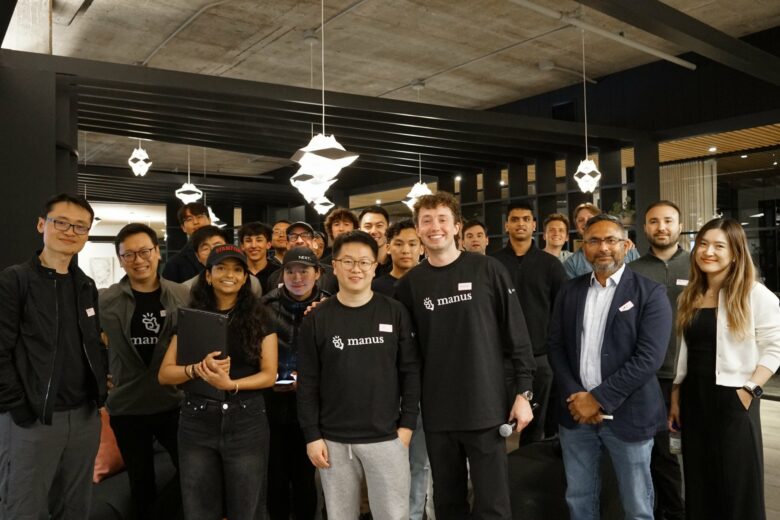
Before launch, Manus had raised $75 million in capital, led by Benchmark. General Partner Chetan Puttagunta sits on the board alongside founders Red and Pan. The team has grown to 105 employees in Singapore, Tokyo, and San Francisco, with a Paris office about to open. The company is actively recruiting across all locations and departments.
For Meta, the deal means more than just access to a growing revenue source. The company is positioning itself in the competition for autonomous AI systems that go beyond simple chatbot functions and can handle complete workflows. While the industry invests billions in Large Language Models, technology companies are looking for ways to transform these investments into profitable products. With Manus, Meta gains a functioning business model and proven technology that has already established itself in the market.