Meta and Others Restrict OpenClaw While Some Startups Embrace the Controversial AI Tool




When it comes to innovations, there are basically two approaches: either you embrace them, or you shut yourself off from them. Both can currently be seen in the aftermath of the OpenClaw hype on the market: while some companies claim to have recognized the potential and are beginning to experiment with the open-source AI agent, other companies have primarily issued bans against OpenClaw due to security concerns.
An unnamed manager at Meta has issued a clear warning to his team, according to a report by Ars Technica/Wired: the use of AI software OpenClaw on work devices is strictly prohibited. According to internal reports, employees who install the program anyway face termination. This ban is particularly interesting because Meta CEO Mark Zuckerberg is known to have experimented with OpenClaw himself and recently attempted to poach OpenClaw creator Peter Steinberger; however, Steinberger went to OpenAI instead.
Focus on Data Protection and Security
The decision reflects the company’s current strategy of prioritizing security and data protection over experimentation with new AI technologies. The background to this drastic measure involves the following concerns:
- Unpredictability: The software is considered difficult to predict in its behavior.
- Data Protection Risks: There is concern about potential security vulnerabilities that could lead to data breaches in protected corporate environments.
- Manipulation: Experts warn of scenarios in which the AI could be manipulated by external inputs (e.g., malicious emails) to disclose sensitive files.
Industry-Wide Trend Toward Caution
Meta is not alone in this restrictive stance. Companies such as Massive and Valere have also issued similar bans. The industry is following the principle of “mitigate first, investigate second.” While Valere is already searching for security solutions in isolated test environments, Meta is currently prioritizing the protection of internal infrastructure and customer data through a strict usage ban.
There is consensus in the tech industry that secure integration of tools like OpenClaw offers enormous potential, but the current risks to cloud services and source code databases are still considered too high.
Startups Embrace OpenClaw
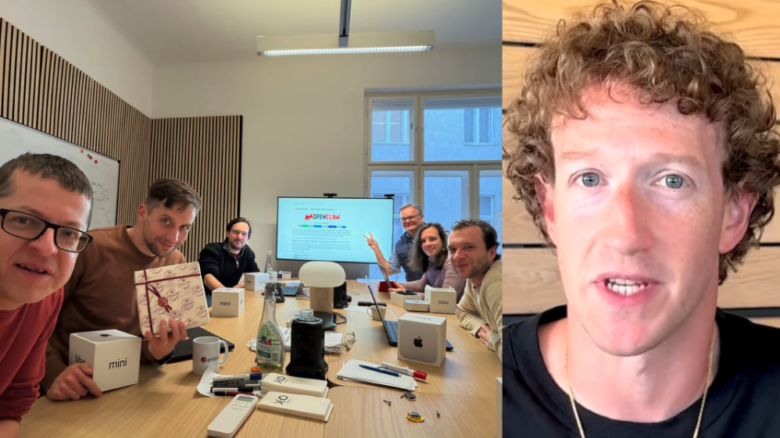
While there are restrictions and bans against OpenClaw in many places, the Vienna-based AI company EnliteAI is currently opening up to OpenClaw. All employees have been provided with Apple Mac Minis so they can install the AI agent. “EnliteAI is officially Clawd-native!” announced CEO Clemens Wasner recently. “Given the great enthusiasm for OpenClawd (and Peter’s move to OpenAI, which has the industry on edge), we decided to bring the power directly to the desks of our energy team.”
The Mac Minis serve as local infrastructure to run the OpenClaw bots. “We are fully committed to the idea that ‘build it and they will come’ applies both to energy infrastructure and to local LLM experiments.” OpenClaw is already in use at other startups as well; often in limited virtual machines to keep them separate from the company infrastructure.