Showdown in Oakland: Musk vs. OpenAI. What’s Really at Stake in the Trial of the Decade

Set Trending Topics as a preferred source on Google.
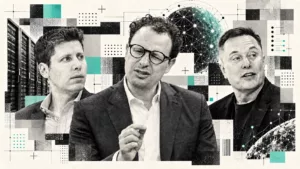
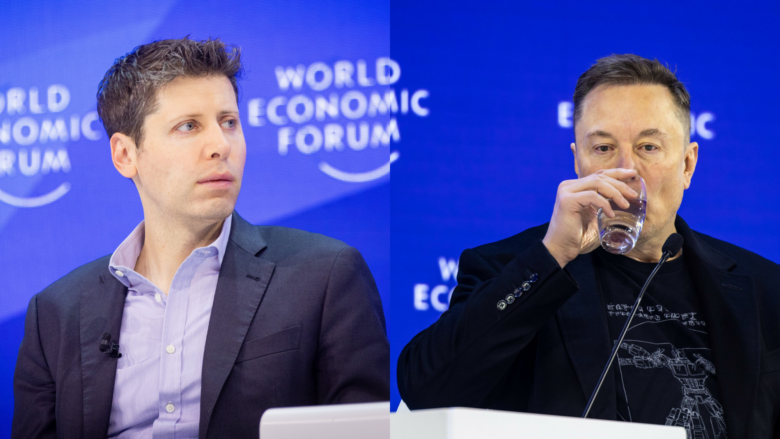
Today, on April 27, 2026, jury selection begins at the U.S. District Court for the Northern District of California in Oakland in a trial that observers are already calling the most important tech case of a generation. On one side: Elon Musk, the world’s richest man and head of Tesla, SpaceX, and xAI. On the other: Sam Altman, OpenAI President Greg Brockman – and, as a co-defendant, Microsoft, the most important investor and cloud partner of the AI heavyweight. The proceedings before U.S. District Judge Yvonne Gonzalez Rogers are expected to run through mid-May.
What began as a dispute between two former allies has long since evolved into a culture war over the question of who artificial intelligence should belong to – humanity, as OpenAI’s 2015 founding manifesto promised, or the shareholders of a planned trillion-dollar IPO.
1. How the Lawsuit Came About: From Co-Founder to Plaintiff
The story begins in 2015. Elon Musk, at the time concerned about Google’s AI dominance following its $500 million acquisition of DeepMind, joins forces with Sam Altman, Greg Brockman, Ilya Sutskever, and others. Together they found OpenAI as a non-profit research lab with the mission of developing artificial general intelligence (AGI) for the benefit of all humanity. According to the complaint, Musk contributes around $38 million in seed funding – explicitly under the assurance that the organization would never pursue commercial profit.
In 2018, Musk leaves the board after disagreements over strategic direction. In 2019, OpenAI sets up a for-profit subsidiary with a capped-profit structure, and shortly afterward the first billions begin flowing in from Microsoft. With the launch of ChatGPT in late 2022, OpenAI becomes a global phenomenon. In October 2025, the company officially converts into a Public Benefit Corporation – Microsoft now holds 27 percent, the OpenAI Foundation a stake worth around $130 billion. The most recent funding round valued OpenAI at $852 billion, with a trillion-dollar IPO planned for Q4 2026.
In November 2024, Musk files suit. His allegation, in one sentence: Altman and Brockman deliberately deceived him about their true intentions in order to secure his backing – and then left him out in the cold during the transition to profit maximization.
2. The Trimmed-Down Trial: What the Jury Will Actually Decide
The Oakland showdown is starting differently than originally announced. Of the original 26 claims, only two remain: breach of charitable trust and unjust enrichment. Judge Gonzalez Rogers had already dismissed breach of contract, RICO racketeering, false advertising, and antitrust claims. Punitive damages were ruled out at the end of March.
Surprisingly, on April 24 – just three days before the trial began – Musk also dropped his fraud claims himself. Reuters described the move as a strategic maneuver to focus the jury on the core question: Was charitable property unlawfully converted into a profit machine? What remains is narrower in legal terms – but sharper in strategic terms.
3. The Evidence: Brockman’s Diary and the Internal Chats
The plaintiffs’ strongest piece of evidence is Greg Brockman’s private diary entries. The OpenAI president and co-founder kept detailed notes on strategic considerations for years – firm in the belief that no one would ever read them. They have now been publicly unsealed and will be presented to the jury.
One of the cited passages reads:
“Our plan: it would be nice to be making the billions. We’ve been thinking that maybe we should just flip to a for profit.”
Another, earlier entry reflects on the ethical dilemma of the internal discussion:
“It’d be wrong to steal the non-profit from Musk, to convert to a b-corp without him. That’d be pretty morally bankrupt.”
This very step – the conversion without Musk – was carried out later. For Musk’s lawyers, it’s evidence that those responsible were aware of the moral problem and went ahead anyway. On top of that, there are unsealed text messages between Altman and Microsoft CEO Satya Nadella, as well as email exchanges with other tech heavyweights, all said to paint a picture of long-planned commercialization.
4. The Defense: Musk’s Mars, Tesla, and the Zero-Percent Forecast
OpenAI has three central arguments ready to undermine Musk’s narrative.
Argument 1: Musk Wanted to Commercialize Himself – Under His Own Control
According to OpenAI, in September 2017 Musk demanded absolute control over a potential for-profit OpenAI. His justification: he needed the money for his Mars colonization project – around $80 billion. When the other founders refused, because they didn’t want OpenAI to become a subsidiary of his Mars program, Musk allegedly walked away. A plan to merge OpenAI with Tesla – with the AI serving as the “brain” for Autopilot and the Optimus robot – was reportedly also rejected.
Argument 2: Musk’s Zero-Percent Forecast
In emails from 2018, Musk wrote that OpenAI’s chances of success were zero percent, not even one percent. He said he wished the project well but didn’t believe in it. OpenAI argues: Musk left voluntarily because he considered the project hopeless. Only after ChatGPT took off, the defense contends, did he retroactively assert claims.
Argument 3: The xAI Competition and the Statute of Limitations Problem
OpenAI characterizes the lawsuit as part of a broader pressure strategy in favor of Musk’s own AI startup, xAI. There is also a legal risk for Musk: if the jury finds that he missed the filing deadlines (two to four years), Judge Gonzalez Rogers could issue a directed verdict in OpenAI’s favor. Musk’s lawyers counter with the “ongoing breach” theory: each further step away from the non-profit structure resets the clock.
5. What Musk Is Demanding – and Why It’s Not About the Money
Originally, Musk sought up to $134 billion in damages, based on an expert report on “ill-gotten profits” – roughly 2,900 times his original investment. Judge Gonzalez Rogers called the methodology “not particularly persuasive” but allowed the expert testimony to be heard.
In April 2026, Musk reformulated his demands – a PR-savvy move:
- Any damages awarded should flow directly to the OpenAI Foundation, not to Musk personally.
- Sam Altman and Greg Brockman should be removed from their leadership positions.
- The for-profit conversion should be unwound – OpenAI should return to being a purely charitable foundation.
- The ties to Microsoft should be severed.
This positions Musk before the jury not as a wronged party seeking money, but as a trustee of the original mission. For jury perception in a Bay Area courtroom, that’s an advantage not to be underestimated.
6. The Heavyweights on the Witness Stand
The witness list reads like a who’s who of the AI industry. Each side has roughly 20 hours for its case, Microsoft an additional five. Nine jurors, no alternates. Expected to take the stand, among others:
- Elon Musk – possibly as early as Tuesday
- Sam Altman, OpenAI CEO
- Greg Brockman, OpenAI President
- Satya Nadella, Microsoft CEO
- Ilya Sutskever, former OpenAI Chief Scientist and co-founder
Opening arguments are scheduled for Tuesday. The jury’s verdict, by the way, is only advisory – the final decision, including any structural orders, will be made by Judge Gonzalez Rogers, who previously presided over the Epic Games antitrust case against Apple.
7. How the Trial Could End
On the day the trial begins, prediction markets show a near-classic coin-flip picture – with a slight tilt against Musk. On Polymarket, the probability of a Musk victory recently stood at 49 percent, on Kalshi at around 45 percent. Both markets have swung dramatically in recent months: after the Brockman diary entries were unsealed, Musk’s odds rose to as high as 60 percent; in the wake of the dismissed claims, they temporarily slipped to around 35 percent.
Three Plausible Scenarios
Scenario 1: Settlement before the verdict. Observers consider an out-of-court settlement realistic. Both sides have incentives: Musk could sell symbolic concessions (a donation to the Foundation, governance reforms) as a victory, while OpenAI would limit the looming reputational and IPO damage.
Scenario 2: Musk wins partially. The jury affirms unjust enrichment, and Judge Gonzalez Rogers orders structural adjustments – such as an increase in the non-profit’s stake, governance reforms, or stronger binding of the OpenAI Foundation to the original mission. The IPO would be delayed but not stopped.
Scenario 3: OpenAI wins outright. The jury follows the argument that Musk left voluntarily, is now retroactively trying to secure his share, and that the statute of limitations has expired. In that case, nothing would stand in the way of the trillion-dollar IPO – market conditions permitting.
A complete victory for Musk – with dissolution of the for-profit structure, removal of Altman, and severance from Microsoft – appears, by contrast, the least likely but most spectacular outcome. It would be an earthquake for the entire AI industry. The API continuity risks alone would hit thousands of companies that have built their products on OpenAI infrastructure.