OpenClaw: Peter Steinberger Already Has Offers from Meta and OpenAI on the Table


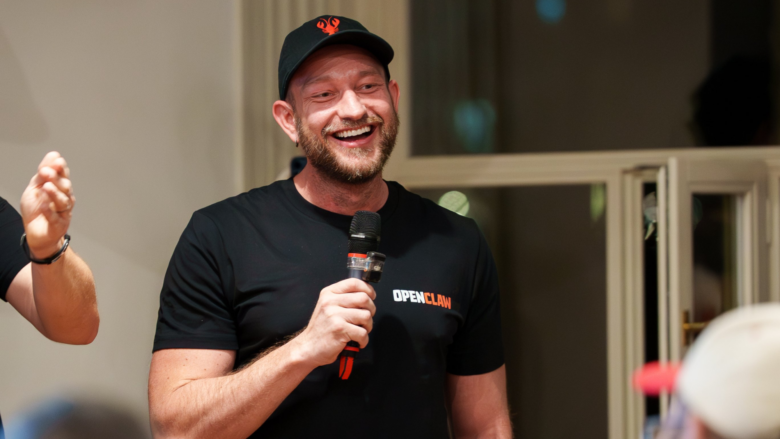


Developer Peter Steinberger, creator of a successful open-source project, faces an important decision: both OpenAI and Meta have expressed interest in collaboration. In an interview with podcaster Lex Fridman, Steinberger spoke openly about the various options that have opened up to him following the unexpected success of his project.
Steinberger explained that following his project’s major success, he is considering multiple possibilities. In addition to offers from major tech corporations, he could also start his own company, for which substantial funding would be available to him. However, this option appeals to him less, as he has already gained experience as a CEO and fears that founding a company would distract him from actual development work.
Steinberger currently has concrete offers on the table from Meta and OpenAI. At an event in Vienna, he also revealed that he had already spoken with Microsoft CEO Satya Nadella. Additionally, he coordinated with OpenAI CEO Sam Altman regarding the naming of “OpenClaw.” As reported, the AI agent was previously called Clawdbot; Anthropic, maker of Claude, intervened as a result, leading first to a rename to Moltbot and then to OpenClaw.
“OpenAI is currently helping a bit with tokens. And there are other companies that have been generous. But yes, I’m still operating at a loss with it. So that’s a path I’m considering, but I’m not particularly enthusiastic about it. And then there are all the big labs I’ve spoken with. Of these, Meta and OpenAI seem to be the most interesting,” Steinberger said on the podcast.
Condition: Open Source Must Remain
Nothing has been decided yet. For Steinberger, it is clear that his project must remain open source regardless of which option he chooses. He compares the intended model to the relationship between Chrome and Chromium. The community component and the ability for people to freely experiment and learn are particularly important to him.
Currently, according to his own statements, Steinberger is losing money on the project, as he invests between $10,000 and $20,000 monthly. He directs much of the sponsorship funds to the developers of his project’s dependencies.
The Decision Between OpenAI and Meta
Steinberger describes the choice between the two tech giants as extremely difficult. Both companies offer different advantages:
- Meta: CEO Mark Zuckerberg (who contacted him via WhatsApp) has, according to Steinberger, intensively experimented with the product and provided direct feedback. Personal contact began with a spontaneous phone call, during which Zuckerberg initially still had to finish code.
- OpenAI: The company attracts with access to cutting-edge technology and impressive computing power. Steinberger describes himself as the “biggest unpaid promoter for Codex” and had constructive conversations with CEO Sam Altman. OpenAI is currently contributing tokens to the project.
Motivation and Outlook
Steinberger emphasizes that money is not his primary motivation. Rather, it’s about enjoying the work and having an impact. He has never worked for a large corporation and is curious about this experience. At the same time, he assures that the current project will not be his life’s work, as he is already pursuing further ideas.
“I can’t go wrong. These are some of the most prestigious and largest companies. Both are very cool firms,” Steinberger sums up his situation.
Regardless of his decision, Steinberger plans to process the next 3,000 pull requests and continue developing the project. Should collaboration with one of the corporations not work out, he can always return to working independently.
Steinberger Strikes a Nerve
Peter Steinberger has struck a nerve with OpenClaw. The software of the Vienna-based developer enables users to build their own AI agent that runs continuously and works autonomously. What began as an experiment is developing into a global movement that excites—but also frightens—the AI community.
OpenClaw differs fundamentally from other AI assistants like Anthropic’s “Computer Use.” While conventional systems wait for instructions, OpenClaw works proactively and can, for example, complete tasks overnight. Users can give the AI access to their entire computer, connect various AI models (Claude, GPT-5, Grok, or open-source LLMs), and then communicate with their agent via WhatsApp or Telegram.
The software is increasingly developing into a platform to which more and more services want to connect. At a presentation in Vienna, developers showcased impressive applications: from AI-controlled mini-breweries to meme battle platforms to fully automated smart homes. Even the company Lovense from Singapore plans to control its vibrators via OpenClaw.
Fascination Meets Security Concerns
Enthusiasm for OpenClaw, however, comes with alarming carelessness regarding data protection. For example, one user demonstrated how the AI unprompted created a personal health dashboard from his entire email inbox, complete with dental health visualization and blood values from doctor correspondence. What counts as an impressive demonstration of proactive AI capabilities reveals fundamental security problems. Currently, there are multiple efforts to close security gaps.
“He didn’t just develop software. He built a global community of lovable, creative people who want to shape the future. That’s worth so much more than a piece of code.” This is how software developer and business angel Mario Zechner describes the OpenClaw phenomenon. Indeed, Steinberger has managed to create a global community. The crustacean in the logo and the claw hand have already become memes.
From Post-Exit Void to the Next Big Hit
Steinberger brings considerable experience. After selling his company PSPDFKit for over $100 million to Insight Partners, he fell into a void. Three years of soul-searching followed, marked by partying, traveling, therapy, and ayahuasca experiments. Then he returned to coding and experimented almost manically: he tinkered through 43 projects before hitting it big with OpenClaw. Now Steinberger is working, among other things, on closing security gaps while the community continues to grow. The question remains: Can the enthusiastic movement become a secure, future-proof platform?