How we are Building eustella: Never Confuse Sovereignty with Self-Sufficiency



Set Trending Topics as a preferred source on Google.
There is a misconception that stubbornly persists throughout the European digital debate: the equation of sovereignty with autarky. Those who say “European” often reflexively mean “without the others.” Those who demand “independence” think of isolation. But this is a fallacy — and a dangerous one, especially when it comes to artificial intelligence.
Sovereignty does not mean doing everything yourself. It means deciding for yourself what you use, how you use it, and under what conditions. Autarky, on the other hand, is the attempt to decouple from the rest of the world — a project that rarely works economically and leads to dead ends technologically. A sovereign state purchases energy internationally, but produces its own laws. A sovereign company uses global suppliers, but retains control over core processes and data. Sovereignty is a question of the capacity to act, not of isolation.
Power over the Code
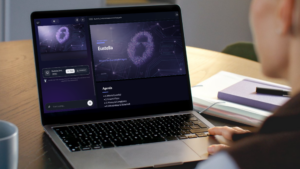
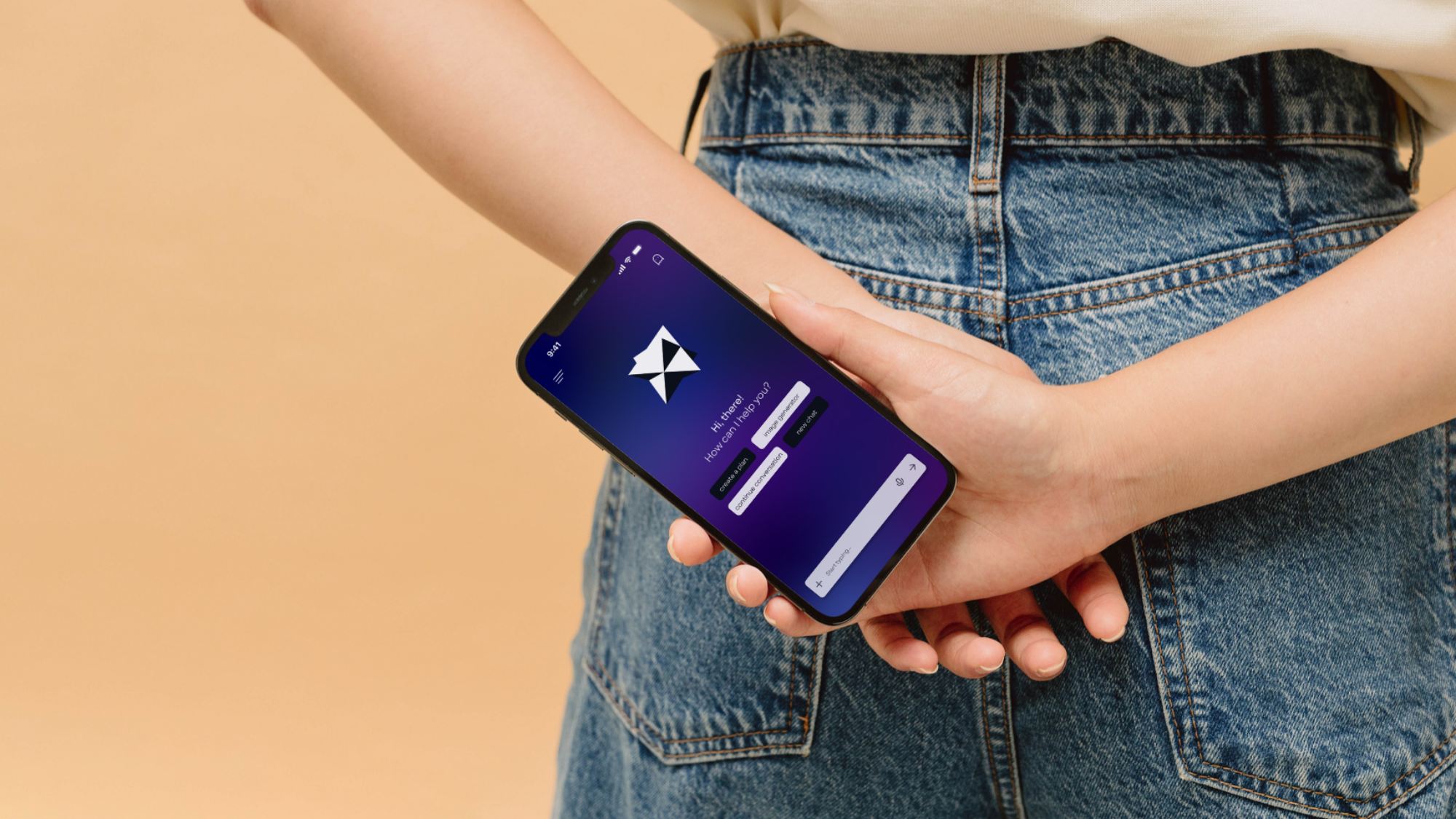
This is precisely where eustella comes in. Our Viennese AI agent for smartphones sees itself as a sovereign European solution — but not as a European cage. eustella can work with Chinese and American models when these deliver the best results for a specific task. What matters is not the origin of the model, but that the user retains control: over their data, their freedom of choice, the transparency of the system. And that everything is open source — meaning verifiable, auditable, modifiable. That is the true core of digital sovereignty: not the flag on the server, but the power over the code.
Three examples from the business world show why this distinction is so important.
First: Airbus. No European company stands more strongly for industrial sovereignty than the aircraft manufacturer from Toulouse. And yet Airbus builds its aircraft with engines from Rolls-Royce and Pratt & Whitney, with electronics from the USA and components from around the world. No one would claim that Airbus is therefore not sovereign. On the contrary: strategic control over design, system integration, and final assembly makes Airbus a European champion — precisely because the company sources the best available parts worldwide instead of losing itself in autarky fantasies.
Second: ASML. The Dutch semiconductor equipment manufacturer is perhaps Europe’s most strategically important company. Its EUV lithography machines are indispensable for global chip production. But ASML is not an autarky project: the optics come from Zeiss in Germany, the lasers from Cymer in the USA, and numerous components from Japan. ASML’s sovereignty lies in the orchestration of this network — and in the fact that without it, no one else in the world can build these machines. Indispensability beats independence.
Third: Ikea. What at first glance seems like “just a huge furniture company is in fact one of the most sophisticated examples of European sovereignty in a globalised economy. Ikea designs in Sweden, manufactures in Poland, China, Vietnam, and a dozen other countries, sources wood from around the world, and sells in 60 markets. The supply chain is radically international. But the power sits in Älmhult and Leiden: that is where design, brand strategy, price points, and product range decisions are made. Ikea dictates the terms to its suppliers, not the other way around. The company is sovereign because it controls the value-adding nodes — design, brand, retail — and sources the interchangeable parts wherever they are produced best and most cheaply. An autarkic Ikea would have gone bankrupt long ago.
These three cases have one thing in common: they show that strategic independence and international cooperation are not opposites. Those who today demand a purely European AI that is based exclusively on European models, running in European data centres on European electricity, are confusing a political longing with a technological strategy. The outcome would be predictable: a second-rate product that no one uses, while the world continues working with the best available tools.
We Apply What Has Historically Made Europe Strong
eustella takes the smarter path. European users get an app that brings together the best of all worlds — under conditions defined by Europe: open source, transparent, data-sovereign. That is no less European than a closed-off approach. It is more European, because it applies what has historically made Europe strong: openness as a principle, rules as a framework, quality as a benchmark.
The real question is therefore not whether European AI may use Chinese or American models. The question is: who controls access, the data, the code? Who can switch off, adapt, audit? Who makes the decisions? If the answer to all these questions is “the European user,” then that is sovereignty — regardless of which model is doing the computing in the background.
Autarky has never been a recipe for success. Sovereignty has. Europe should not confuse the two.
Anyone who wants to be among the first 5,000 users of eustella can sign up for the beta phase via this link.