Microsoft Stays Biggest Shareholder but Surrenders Grip on OpenAI


Set Trending Topics as a preferred source on Google.
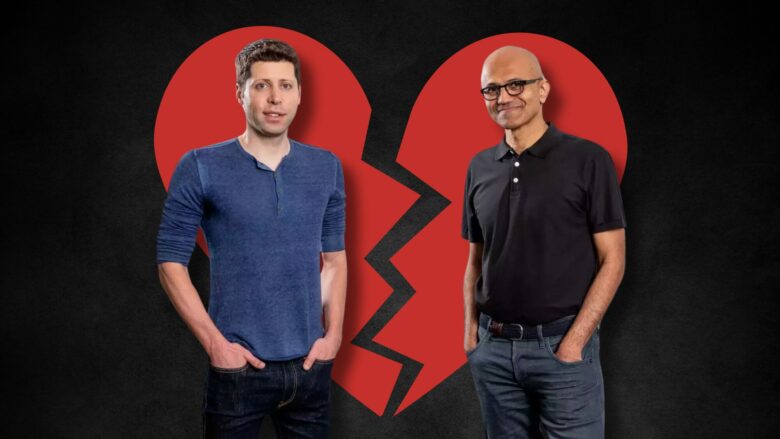
The biggest divorce in the tech industry continues: the collaboration between OpenAI and Microsoft is being fundamentally restructured. Both companies have announced a revised agreement that grants OpenAI significantly more freedom while simultaneously redefining Microsoft’s long-term role. This is already the second major adjustment to the deal within less than a year.
No longer the exclusive cloud partner
One of the central points of the new agreement concerns cloud infrastructure. Microsoft remains OpenAI’s primary cloud partner, and new products are still to be delivered first via Microsoft’s Azure platform. However, this now applies only under one condition: if Microsoft can and is willing to provide the necessary technical capacity.
If that is not the case, OpenAI will in future be permitted to work with any other cloud providers, including Amazon Web Services. In addition, OpenAI can now fundamentally deliver its products to customers via any cloud provider. The previous exclusivity — which, according to reports, had even prompted Microsoft to consider legal action against a planned AWS deal — is thus a thing of the past.
Revenue share to be abolished
The financial structure of the partnership is also changing significantly. Microsoft will no longer pay a revenue share to OpenAI. Payments in the other direction will continue until 2030: OpenAI will continue to remit a share of its revenues to Microsoft, though now independently of the company’s technological progress and subject to an overall cap.
Previously, the agreement provided that payments could end once an expert panel determined that OpenAI had achieved so-called artificial general intelligence (AGI). This clause is eliminated under the new arrangement. Payments will now run on a fixed, capped schedule until 2030.
Microsoft remains the largest shareholder
Microsoft retains its licence to OpenAI’s technology and products until 2032. However, this licence is also no longer exclusive. OpenAI can therefore make its models and products directly accessible to other partners or customers as well, without being bound by the previous restrictions.
Despite the relaxed terms, Microsoft remains closely tied to OpenAI. The company continues to hold approximately 27 percent of OpenAI, making it the largest individual shareholder. Analysts largely view the new agreement positively for both sides.
Background: A partnership in transition
The changes now announced are already the second major revision of the partnership in a short space of time. In October 2025, both companies had restructured their agreement in the course of OpenAI’s reorganisation into a for-profit company. The current adjustment follows approximately six months later and reflects the growing room for manoeuvre that OpenAI is asserting as an independent company.
At the same time, OpenAI faces further significant developments. On the same day, jury selection began in the trial between Elon Musk, OpenAI, and company chief Sam Altman, in which Musk is seeking to reverse OpenAI’s restructuring (more on that here).