Wayve Raises $1.5 Billion, Valuation Reaches $8.6 Billion

Set Trending Topics as a preferred source on Google.
British self-driving startup Wayve has completed a funding round of $1.2 billion and secured an additional $300 million from Uber to expand the deployment of Wayve-powered robotaxis globally. The Series D values the company at $8.6 billion. The round is led by Eclipse, Balderton, and SoftBank Vision Fund 2. Microsoft, Nvidia, and Uber, as well as automakers Mercedes-Benz, Nissan, and Stellantis, are also participating.
The investor roster demonstrates broad interest in Wayve’s platform approach: Big Tech, legacy automakers, and global financial investors are betting on the scalability of end-to-end AI technology. Nvidia, which had already invested in the $1.05 billion Series C, was reportedly evaluating a strategic stake of up to $500 million. CEO Alex Kendall confirmed Nvidia’s participation but did not disclose the exact amount.
Uber CEO Dara Khosrowshahi announced: “We are very proud to continue to deepen our partnership with Wayve, with plans to deploy together in more than 10 markets around the world. Wayve’s powerful end-to-end approach is purpose-built for scale, safety, and effectiveness,”
End-to-End AI as a contrarian approach
Wayve deliberately positions itself against the mainstream of the autonomy industry. Since its founding in 2017, the company has relied on end-to-end deep learning rather than HD maps and sensor-specific systems. “We took a very contrarian view on the technology side. We were the first to build end-to-end deep learning for autonomous driving.” The software layer uses a neural network that trains vehicles through data-driven learning—independent of specific hardware or map material. The system runs on existing chips from OEM partners and processes data from any sensors.
Last year, Wayve demonstrated that its autonomous driving software can be deployed without local customization: tests in more than 500 cities across Europe, North America, and Japan required no city-specific training. The foundation is an AI foundation model trained on data from over 70 countries.
The Gen-3 platform, based on Nvidia’s Drive AGX Thor, supports both L2+ assistance features with hands-free driving capability and L4 features for largely autonomous driving in urban and highway settings. Microsoft CEO Satya Nadella emphasizes: “Wayve is pushing the frontier of embodied AI for autonomous driving, and Azure supports the scale, reliability, and safety needed to bring that innovation into the real world.”
Licensing model instead of own fleet
Unlike Waymo or Tesla, Wayve neither operates robotaxis nor builds its own vehicles. Instead, the company licenses its AI Driver software directly to automakers and mobility platforms. “With $1.5 billion secured, we are building for a total addressable market that spans every vehicle that moves”, says Kendall. “Autonomy will not scale through city-by-city robotaxi deployments alone. It will scale through a trusted platform that automakers and fleets can deploy globally and improve continuously”
Uber is not only investing in the Series D but also bringing additional capital for multi-year robotaxi deployments on the Uber network. Wayve provides the L4-capable software, while Uber operates fleets of production vehicles from participating automakers.
Market launch for consumers from 2027
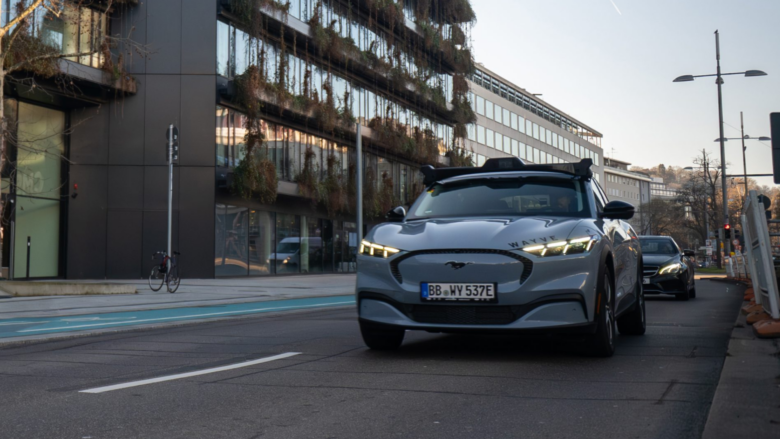
The commercial roadmap is clearly scheduled: 2026 marks the start of robotaxi trials with Uber in London, followed by rollout in over ten markets. From 2027, consumers should be able to purchase vehicles with Wayve’s AI Driver—beginning with L2+ systems under driver supervision.
Nissan has already confirmed it plans to deploy the software in its ADAS systems from 2027. Stellantis and Mercedes-Benz are also investing in the technology. Nissan CEO Ivan Espinosa explains: “This investment deepens our partnership with Wayve and supports Nissan’s plans to advance autonomous driving through scalable end‑to‑end AI.” The British government backs the initiative: Transport Secretary Heidi Alexander announces that Wayve will be given the opportunity to test “their driverless technology on our roads later this year.”