Forterra: Autonomous military vehicles deployed in Ukraine

Set Trending Topics as a preferred source on Google.
Forterra, a US manufacturer of autonomous vehicles, announced according to TechCrunch that more than 100 of its self-driving off-road vehicles have been deployed in conflict zones in Ukraine over the past nine months. This represents the largest deployment of autonomous ground vehicles in combat operations by a US DefenseTech company to date.
Forterra vehicles need real military deployments
Scott Sanders, Chief Growth Officer at Forterra, told TechCrunch that it is essential for any defense technology to be used in real combat situations. Forterra is receiving financial support from the US military for the project.
Ukraine is already building its own unmanned ground vehicles to transport supplies and ammunition or evacuate wounded soldiers. However, these are typically battery-powered and can carry only up to 250 kilograms, according to a Ukrainian army soldier who has worked with the vehicles.
1,100 missions for “Lancer”
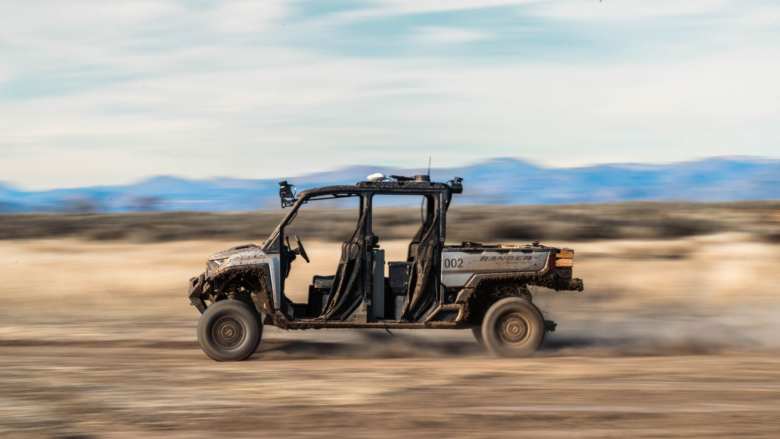
Forterra’s “Lancer” vehicles, which are based on Polaris off-road vehicles and equipped with a custom sensor and computing system, run on gasoline. They can carry 750 kilograms of cargo and feature a Starlink satellite internet antenna.
Since their arrival in Ukraine last October, the vehicles have covered more than 4,000 kilometers across more than 1,100 missions. In doing so, they have transported a total weight of more than 350,000 kilograms and carried out 52 casualty evacuations. Some have been lost in combat, particularly when they became stuck in deep mud or other terrain.
Vehicles mostly still remote-controlled
Forterra says it has gained valuable insights from the deployment. The company has raised more than $500 million in venture capital to date from funds including XYZ Venture Capital and Moore Strategic Partners.
So far, the vehicles are primarily operated by Ukrainian soldiers via remote control in combat zones. This is partly because they are too valuable to lose, and partly because autonomous vehicles are not yet fully ready for the realities of war.
While the vehicles can, for example, navigate autonomously across varied terrain, they are not yet capable of detecting unexpected enemy forces and responding appropriately.
Generative AI to improve technology
Forterra, which began working on autonomous vehicles 20 years ago, is exploring how autonomous vehicle algorithms can be combined with newer generative AI software. The goal is to enable machines to respond to their surroundings in a general way. As with other autonomous systems, one of the biggest obstacles is capturing the right data.
Competitors in this space are tackling similar challenges — among them Scout AI, which raised $100 million earlier this year to train foundation models and develop a range of autonomous platforms for the military, including autonomous ground vehicles. Other startups such as Field AI and Overland AI are testing such vehicles alongside the US military.