“Sloppy”: OpenAI Rewrites Pentagon Deal to Ban NSA from AI Usage


Set Trending Topics as a preferred source on Google.
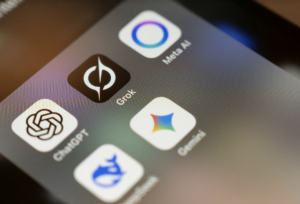
It is perhaps the most critical phase of the company since the turbulence surrounding Sam Altman himself: the ChatGPT maker’s deal with the US Department of Defense. As reported, it led to a growing number of users deleting their ChatGPT accounts, while main competitor Anthropic (which canceled its Pentagon deal) shot to the top of app store charts in some countries (while simultaneously having to deal with outages).
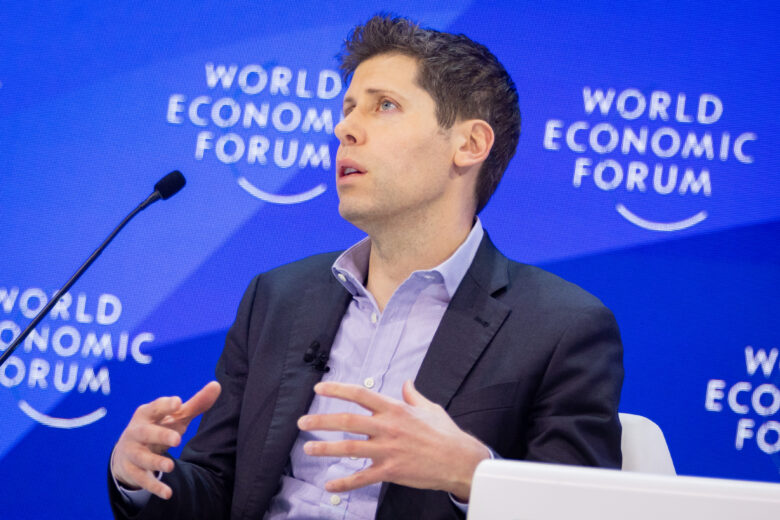
OpenAI CEO Sam Altman has now announced changes to the recently concluded contract with the US Department of Defense and acknowledged that the publication of the deal was rushed. In an internal memo shared on X, he outlined the improvements and the background of the agreement.
New contract clauses against surveillance
OpenAI will expand the contract to include explicit protective provisions for US citizens. The new wording stipulates that the AI system may not be used for domestic surveillance of US persons and nationals. This applies in accordance with applicable laws, including the Fourth Amendment, the National Security Act of 1947, and the FISA Act of 1978.
According to Altman, particularly noteworthy is the clarification regarding commercially acquired data. The Department of Defense understands the restriction to prohibit the intentional pursuit, surveillance, or observation of US persons, including through the acquisition or use of commercially acquired personal or identifiable information.
Exclusion of intelligence agencies
According to Altman, the Department of Defense has also confirmed that OpenAI’s services will not be used by intelligence agencies such as the NSA. Any services for these agencies would require a subsequent contract modification.
Altman admits mistakes
The OpenAI chief acknowledged a strategic oversight. The deal should not have been rushed out on Friday. The issues are extremely complex and require clear communication.
“We really tried to de-escalate things and avoid a much worse outcome, but I think it just looked opportunistic and sloppy,” Altman wrote.
The announcement came on Friday just hours after US President Donald Trump instructed federal agencies to stop using AI tools from competitor Anthropic, and shortly before Washington conducted airstrikes against Iran.
The conflict with Anthropic
The background to the controversy lies in a failed agreement between Anthropic and the Department of Defense. Anthropic was founded in 2021 by former OpenAI employees who left the company over disagreements about its direction. The company positions itself as a “safety-first” alternative.
Following an initial contract last year, Anthropic was the first AI lab to deploy its models on the Department of Defense’s classified network. Later, however, the company demanded guarantees that its tools would not be used for purposes such as domestic surveillance in the US or for the operation and development of autonomous weapons without human control.
The dispute began after it became known that Anthropic’s Claude was used by the US military in January during the operation to arrest Venezuelan President Nicolás Maduro. The company had not publicly protested this use.
Unclear reasons for different treatment
Why the Department of Defense accepted OpenAI’s demands but rejected those from Anthropic remains unclear. Government representatives had, however, criticized Anthropic for months for being overly concerned about AI safety. Defense Secretary Pete Hegseth stated on Friday that Anthropic would now be classified as a supply chain risk—a designation typically reserved for Chinese companies (e.g., Huawei).
Altman emphasized in his memo that he had reaffirmed in weekend conversations that Anthropic should not be classified as a supply chain risk and that OpenAI hopes the Department of Defense will offer Anthropic the same terms.
The OpenAI CEO had also argued that with OpenAI he essentially stepped into the breach in the dispute between the US administration and Anthropic. “The reason for the rush is an attempt to de-escalate the situation. I think the current course is dangerous for Anthropic, healthy competition, and the US. We negotiated to ensure that all other AI labs are offered similar terms,” he wrote.
Technological limits and democratic processes
The OpenAI chief also pointed to the limits of technology. There are many things the technology is not yet ready for, and many areas where the compromises required for safety are not yet understood. These will be worked through slowly with the Department of Defense, using technical safeguards and other methods.
Altman also underscored OpenAI’s position on democratic decision-making processes. The government should make the important decisions about society. OpenAI wants a voice and a seat at the table to share its expertise and fight for principles of freedom. He made clear that he would rather go to prison than follow an order he considered unconstitutional.
User reaction to the deal
The timing of OpenAI’s contract with the Department of Defense sparked online criticism. According to reports, many users switched from ChatGPT to Claude in app stores, with ChatGPT uninstalls rising by 295 percent.