SK Hynix: Second-Largest Listing of All Time Becomes a Stress Test for AI Stocks on Friday

Set Trending Topics as a preferred source on Google.
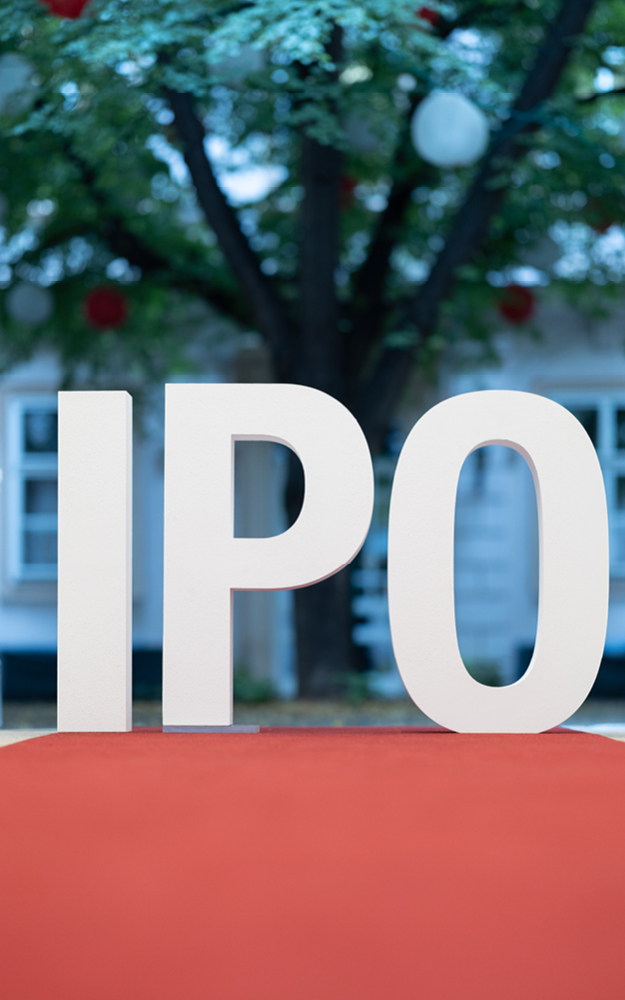
South Korean memory chip giant SK Hynix is bringing its American Depositary Receipts (ADRs) to the Nasdaq on Friday – and depending on final pricing, could raise between $24.5 and $28 billion. That would make it the second-largest equity offering in history, behind only SpaceX’s IPO in June. The timing is delicate: the listing lands in the middle of a semiconductor stock correction and is widely seen as a gauge of how much appetite institutional investors still have for AI infrastructure.
It is a deal of superlatives: SK Hynix, the second-largest stock on the Seoul exchange by market capitalization, is issuing 17.79 million new shares – around 2.5 percent of its share capital – which will trade on the Nasdaq in the form of 177.9 million ADRs under the ticker SKHY. Ten ADRs correspond to one common share, which should put a single ADR at around $150 – a price level deliberately reminiscent of Nvidia or Micron, designed to boost accessibility for US investors.
If the offer price is set close to the closing price in Seoul, SK Hynix will take in around $24.5 billion; up to $29 billion had originally been on the table before the stock corrected sharply in recent weeks. For comparison: only SpaceX has ever raised more capital in one go, with its June 2026 IPO (around $75 billion, up to $85.7 billion including the over-allotment). Among US listings by foreign companies, SK Hynix would rank just behind Alibaba’s $25 billion IPO from 2014.
An important caveat: strictly speaking, this is not a classic initial public offering but a secondary listing combined with a capital increase – SK Hynix has been listed on the Korea Exchange for decades. That does little to change the record-breaking character of the deal.
Seven Times Oversubscribed – Despite the Chip Sell-Off
Demand is enormous: according to Bloomberg, the order book was more than seven times oversubscribed, with total orders reportedly reaching around $171.5 billion – from long-only funds, tech funds, sovereign wealth funds and Asia specialists. As cornerstone investors, UK asset manager Baillie Gifford (a SK Hynix shareholder since 2000), US hedge fund Coatue Management and Situational Awareness Partners – the AI fund founded by former OpenAI researcher Leopold Aschenbrenner – have indicated interest in up to $7 billion. Goldman Sachs, Citigroup, Bank of America and JPMorgan are acting as lead underwriters.
At the same time, the environment is anything but comfortable. SK Hynix shares are trading around 30 percent below their record high from late June, and US rival Micron has also corrected sharply. The market is openly debating whether the AI capex cycle has peaked. UBS is even recommending an arbitrage trade to clients: buy the ADRs, short the Korea-listed shares – fueling concerns in Seoul about capital outflows. Whether the listing succeeds despite this backdrop will therefore be read as a signal far beyond SK Hynix itself: does institutional demand for AI infrastructure stocks hold, or is sentiment turning?
For SK Hynix, a re-rating is also at stake. The stock trades at a forward P/E of around 6 – a discount to Micron and a textbook case of the “Korea discount.” The Nasdaq listing also opens the door to potential inclusion in the Nasdaq-100 at the index review in December, which would trigger passive inflows from ETFs such as the Invesco QQQ.
The Largest IPOs and Listings of All Time
| Rank | Company | Year | Exchange | Gross proceeds (approx.) |
|---|---|---|---|---|
| 1 | SpaceX | 2026 | Nasdaq | $75.0bn (up to $85.7bn incl. greenshoe) |
| 2 | SK Hynix* | 2026 | Nasdaq | $24.5–28bn (expected) |
| 3 | Saudi Aramco | 2019 | Tadawul | $25.6bn (up to $29.4bn incl. greenshoe) |
| 4 | Alibaba | 2014 | NYSE | $25.0bn |
| 5 | SoftBank Corp | 2018 | Tokyo | $23.5bn |
| 6 | Agricultural Bank of China | 2010 | Shanghai/Hong Kong | $22.1bn |
| 7 | ICBC | 2006 | Shanghai/Hong Kong | $21.9bn |
| 8 | AIA Group | 2010 | Hong Kong | $20.5bn |
| 9 | Visa | 2008 | NYSE | $19.7bn |
| 10 | General Motors | 2010 | NYSE | $18.1bn |
*SK Hynix: secondary listing with a capital increase, not a classic IPO; final proceeds depend on pricing. Figures vary by source depending on whether the over-allotment option (greenshoe) is included; not adjusted for inflation.
What Does SK Hynix Actually Do – and for Whom?
Alongside Samsung and Micron, SK Hynix is one of the world’s three major memory chip manufacturers – and the market leader in the segment that matters most right now: High Bandwidth Memory (HBM). These stacked, extremely fast memory chips sit right next to the GPUs in AI data centers and are the bottleneck of the entire AI boom. Without HBM, there is no training and no running of large AI models – and the industry’s capacity is sold out years in advance.
The most important customer groups at a glance:
- Nvidia is by far the largest buyer: SK Hynix supplies HBM3E and HBM4 memory for the GPU market leader’s AI accelerators and is considered its preferred supplier, ahead of Samsung and Micron.
- AMD and Broadcom source HBM for their AI chips – Broadcom primarily for the custom chips (ASICs) it develops for hyperscalers such as Google.
- Cloud giants like Microsoft, Google, Amazon and Meta are major customers both indirectly and directly: through the AI servers equipped with SK Hynix memory, as well as through server DRAM and enterprise SSDs for their data centers. The latter also come from US subsidiary Solidigm, which SK Hynix acquired from Intel in 2021.
- Smartphone and PC manufacturers, including Apple, buy mobile DRAM and NAND flash memory – the classic, more cyclical business that has taken a back seat during the AI boom.
The proceeds will flow entirely into capacity expansion in South Korea: around $20.5 billion is earmarked for the first fab at the new Yongin semiconductor cluster, roughly $12.5 billion for the P&T7 advanced packaging plant in Cheongju, and around $7.9 billion for EUV lithography machines from Dutch equipment maker ASML. SK Group chairman Chey Tae-won will personally ring the opening bell at the Nasdaq – aiming to reposition the company from a cyclical commodity manufacturer to an indispensable AI infrastructure player. Whether the market buys that narrative will become clear starting Friday.