EU Bets €200 Million on Small Nuclear Reactors


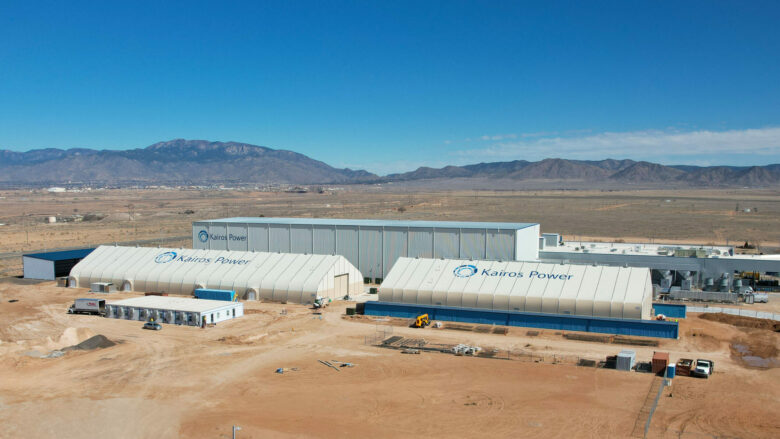
In the wake of the AI boom, they have become an enormously hot topic with regard to the power supply of data centers: small nuclear reactors, usually simply called SMRs for short. While as reported Big Tech companies like Meta, Amazon, or Google are already investing massively in this area, Europe has so far been rather hesitant on the subject. The EU Commission wants to change that now and is pushing hard for SMRs.
The European Commission has presented a strategy for the development and deployment of Small Modular Reactors (SMRs) in Europe. The document provides for, among other things, financial support of 200 million euros to accelerate the commercialization of this new reactor technology.
What are Small Modular Reactors?
SMRs are nuclear reactors that are smaller than conventional nuclear power plants and can be built modularly. This means that components are prefabricated in factories and then transported to the construction site. The Commission distinguishes three categories: light water SMRs (based on proven technology), Advanced Modular Reactors (AMRs) with innovative cooling concepts, and micro reactors with a power output below 10 megawatts.
SMRs are also subject to criticism because there are many technical, economic, safety-related, and environmental problems (more on that here). Approvals are still pending, and SMRs have repeatedly experienced setbacks. In Austria, Emerald Horizon from Graz has specialized in SMRs and is currently preparing its stock market listing on the ATX Prime (more on that here).
Planned Areas of Application
According to the strategy, SMRs should not only produce electricity but also provide heat for industrial processes. The Commission names concrete use cases:
- Chemical industry: provision of steam at temperatures between 200 and 550 degrees Celsius for production processes
- District heating: supply of modern heating networks operating at 70 to 120 degrees Celsius
- Data centers: power supply for energy-intensive AI infrastructure that could consume approximately 115 terawatt-hours by 2030
- Hard-to-decarbonize sectors: steel, refineries, maritime applications, and defense
The 200 Million Euro Funding
The Commission plans a temporary increase in the InvestEU program of 200 million euros through 2028. These funds are intended to specifically support the deployment of the first commercial units of innovative nuclear technologies, including light water SMRs, AMRs, micro reactors, and fusion energy.
The funding is designed as a risk mitigation instrument. It is intended to mobilize private investments by cushioning high initial costs and lengthy approval procedures. According to the Commission, this is necessary because the business model of SMRs, despite theoretical advantages through shorter construction times and smaller investment amounts, has not yet been proven in practice.
Rationale for Funding
The Commission cites several strategic reasons for supporting SMRs:
Energy Security and Decarbonization
SMRs are intended to contribute to supply security by reducing dependence on fossil fuels and complementing renewable energy. They can provide baseload, low-carbon electricity while simultaneously contributing to grid stability.
Industrial Competitiveness
The strategy emphasizes the potential of SMRs to mobilize entire value chains in Europe, from engineering to advanced materials to robotics. The Commission sees in this an opportunity to create highly qualified jobs and build long-term export capacities.
Global Competition
The document points to massive investments in other countries: the United States has allocated 900 million US dollars for SMR projects, Canada is investing 3 billion Canadian dollars, and the United Kingdom has established a fund of 385 million pounds. First SMRs are already in operation in China and Russia.
Technological Leadership
The Commission argues that Europe must leverage its decades of research and expertise in nuclear technology to remain competitive in the emerging SMR market. Advanced Modular Reactors in particular are intended to secure Europe’s technological leadership position.
Timeline and Expectations
The strategy aims to bring the first SMRs online in Europe in the early 2030s. Preliminary estimates suggest an installed SMR capacity of between 17 and 53 gigawatts by 2050, for both electricity generation and other purposes such as heat, hydrogen, and synthetic fuels.
Additional Support Measures
In addition to direct financing, the strategy provides for further instruments:
- Use of the Innovation Fund for projects in the pre-commercialization stage
- Development of an Important Project of Common European Interest (IPCEI) for innovative nuclear technologies
- Possibility of designating certain areas as “SMR Valleys” under the Net-Zero Industry Act to accelerate approval procedures
- State aid under the Clean Industrial Deal State Aid Framework
- Support through the new Scaleup Europe Fund for innovative start-ups
Challenges and Conditions
The Commission emphasizes that success depends on several factors: access to capital, pooling of knowledge and resources, harmonization of regulatory frameworks between member states, shortening of approval times, standardization of designs, and development of strong supply chains.
A central point is the focus on a limited number of promising projects. The European Industrial Alliance on Small Modular Reactors, founded in September 2025, is intended to coordinate industrial activities and ensure that resources are used efficiently. The Commission also calls on member states to develop communication and awareness measures to promote public understanding and confidence in SMRs.