Helsing Raises $1.8 Billion in Series E Round – Valuation Climbs to $18 Billion


Set Trending Topics as a preferred source on Google.
Munich-based defense technology company Helsing has closed a Series E funding round of $1.8 billion. The new valuation stands at $18 billion. This places Helsing alongside Quantum Systems in a small group of European defense tech companies that have closed billion-dollar rounds at double-digit billion valuations in recent weeks.
The round includes new and existing investors, among them Dragoneer Investment Group, Lightspeed Venture Partners, Disruptive, Iconiq, Growth Equity at Goldman Sachs Alternatives, JPMorganChase, Canada Pension Plan Investment Board (CPP Investments), General Catalyst, Plural, and Stepstone. Existing backers include Prima Materia, Accel, and Greenoaks. According to the company, investor demand significantly exceeded the round’s available volume.
Helsing emphasizes that it remains majority European-owned. Its board of directors remains unchanged: Daniel Ek and Tom Enders hold the co-chair, with Jeannette zu Fürstenberg and Denis Mercier as further members alongside Helsing’s founders. According to the company, the fresh capital will go toward building new AI platforms and integrating them into the defense capabilities of a growing number of partner countries.
CA-1 Electronic Attack: Helsing’s latest product unveiling
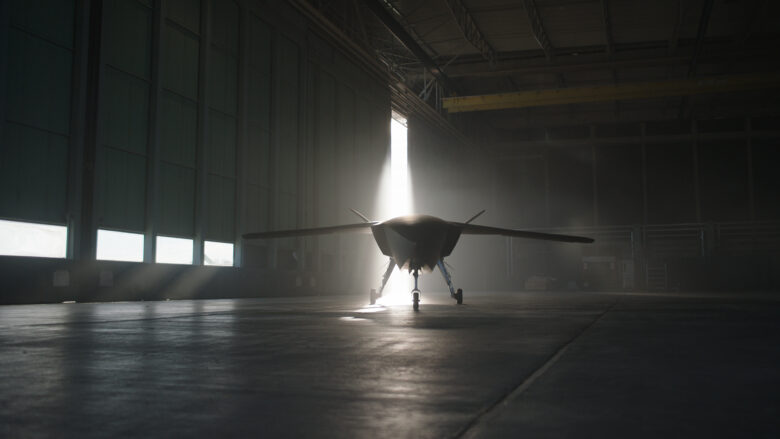
About a month before the funding round, on June 10, 2026, Helsing presented the CA-1 Electronic Attack (CA-1EA) at an international air show — a new autonomous aircraft designed for electronic warfare. The CA-1EA is a further development of the CA-1 Europa platform, whose original strike version is now designated CA-1KA (Kinetic Attack).
The CA-1EA is designed to jam enemy radar and detection systems from the air, creating safe corridors for combat aircraft flying behind it — regardless of whether those are unmanned systems like the CA-1 Europa or manned jets such as the Eurofighter. The CA-1KA and CA-1EA share the same airframe, propulsion system, autonomy software, and ground control infrastructure; the main difference lies in the payload. This modular design is intended to keep production and maintenance costs down and make it easier to scale the platform across different mission profiles.
The CA-1 platform is built by Helsing subsidiary Grob Aircraft in southern Germany. First flights of the strike version, CA-1KA, are planned for early 2027, with initial operating capability (IOC) targeted for 2029. For the CA-1EA, IOC is planned for 2031.
Comparison with the Quantum Systems round
Helsing’s funding round comes just weeks after one of the largest deals in European defense tech history: Munich-based drone maker Quantum Systems closed a Series D round of $1.2 billion in early July 2026, led by Blackstone, Noteus, Airbus, and Advent. Quantum Systems’ post-money valuation now stands at roughly $8 billion — more than double its previous round from late 2025, when the company was valued at around €3 billion.
By direct comparison, Helsing’s round is significantly larger both in volume ($1.8 billion versus $1.2 billion) and in the resulting valuation ($18 billion versus $8 billion). That said, the two companies address different parts of the market: Quantum Systems positions itself primarily as a maker of reconnaissance drones and unmanned systems, with ambitions to become a next-generation “neo-prime” rivaling established defense contractors like Rheinmetall or Lockheed Martin. Helsing, by contrast, positions itself more as a software company for AI-driven defense platforms, increasingly moving into manned/unmanned aviation systems with its CA-1 family.
What the two rounds share is a similar mix of international capital paired with an emphasis on European ownership structure, as well as the assessment among market observers that the war in Ukraine and Europe’s debate over defense capability are the central drivers of rising investor interest in European defense tech. Quantum Systems and Helsing are widely seen as the two most prominent German examples of this investment boom.