Meet Chris Schnabl, the 25-Year-Old Austrian Investing Partner at Andreessen Horowitz



Set Trending Topics as a preferred source on Google.
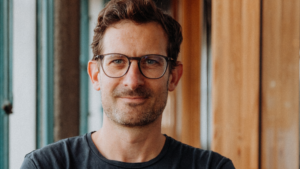
At an age when most people are finishing a master’s degree, Chris Schnabl helps decide where millions of dollars go. The Lower Austrian is 25 and an investing partner at Andreessen Horowitz, the fund built by Marc Andreessen and Ben Horowitz that ranks among the most influential addresses in global startup finance, with early bets on Facebook, Coinbase and OpenAI. Partner titles at that level usually go to people with two exits or fifteen years of Bay Area history behind them. An Austrian in his mid-twenties who was writing angel cheques out of Cambridge and then got a phone call: even by Silicon Valley standards, that is rare.
Schnabl’s path ran through robotics competitions at the HTL technical college in Wiener Neustadt, a computer science degree at TU Munich, and research stints at Berkeley and Cambridge. Today he invests in AI applications at seed and Series A stage, and travels the world doing it. In this interview he explains how a dinner turned into a job offer, why founders’ soft skills are underrated, how he reads the bubble debate, and what he thinks Vienna is capable of.
Trending Topics: What exactly do you do at Andreessen Horowitz?
Chris Schnabl: A quick overview first. As a venture capital firm, you invest in startups building technology that should have a large impact on people. The business model works like this: you want to find the companies that can become truly enormous. The Dropboxes, the Facebooks, the DoorDashes, the Googles, OpenAIs, Cognitions and Cursors of this world, because those can reach billion-dollar valuations and return the money our investors gave us. Specifically, I am an investing partner on an early-stage team focused on AI applications. So I invest from seed to Series A, mostly in anything that is an application of artificial intelligence. And applications cover a lot of ground: voice, agentic systems, computer use. For each of these new capabilities there are very good use cases across countless industries. With robotics and more foundation models coming, there will simply be more problems we can solve with AI. We invest in the US and globally.
Your key stations are Wiener Neustadt, TU Munich, Cambridge and the University of California. How did that happen?
Those are the academic rounds where I got polished, yes. I grew up in Lower Austria and was lucky to get into the HTL in Wiener Neustadt. Lucky because they had a very strong robotics program. There is one teacher in particular who made a big difference in my life, because he spent an enormous amount of extracurricular time with students on robotics competitions. I started building robots at 14 or 15. We won the European competition and got to fly to the US. At 16 I was in L.A. for the first time, at the robotics world championship. That is funny in hindsight, because I ended up spending a lot of time with people from Los Altos High School, a well-known high school in Silicon Valley. I knew a few of them from those robotics competitions, and that was part of the initial spark.
How much time did that take?
Around 20 hours a week, and considerably more before competitions: building robots, programming, studying the rulebook, planning trips, raising money. The atmosphere at our school was: if you handle your work well, we won’t be too strict when you’d rather be in the robotics lab than in class. By now it has become an established institution there. When I look at many of my Austrian friends who also live abroad, I see the same pattern. There are a handful of schools in Austria with a handful of teachers who put in extraordinary effort, and for some students that changes their lives.
And after that?
The question was: where can you study computer science really well, where is the technical education strong, where is there a lot of entrepreneurship? Alongside school I had already worked at Willhaben, where I also did a two-month internship instead of taking the nine weeks of summer holidays, because our head of department made an exception. Please don’t read that as advice to every technical school student. I ended up at TU Munich. During that time I did a research internship at the University of California, Berkeley, in 2023, just as AI was taking off. That was the year of GPT-3 and its first big applications. I had been doing more systems and backend engineering before, and I thought: I need to understand AI properly. So I started doing research and writing papers, which took me to Cambridge, where I began a master’s with the intention of finishing a PhD. The PhD never happened.
What was the turning point toward venture capital?
Throughout that whole time I kept having business ideas and working on ventures with friends. We did a lot of AI consulting starting in 2023 and built products out of it. And I invested much of what we earned into friends’ startups. That is how Andreessen became aware of me. There is a scout program: you get a budget, a few hundred thousand dollars, to invest in startups on their behalf. From where I sit at Andreessen today, that program is extremely valuable for gaining access to talent, companies and deals we would otherwise never see. I was in that scout program, invested happily and diligently, and then one day I got a call: let’s have dinner again. I thought, sure, let’s have dinner. That dinner turned into a hiring conversation, and a few days later into a flight to California with a full day of interviews.
Can you reveal where you invested back then?
Unfortunately not yet.
But it went well enough that they wanted you as an investing partner.
Yes, and it moved fast. The whole thing happened within about a year to a year and a half. One thing worth adding: seen through a European lens, you assume investors studied business. Here in the Bay Area, almost everyone studied STEM, computer science, mathematics, natural sciences. That technical background matters a lot, because without it, it becomes very hard to judge how much of what you are being pitched is just a wrapper and how much is genuinely first-class technical work at the frontier.
What is your investment thesis in AI? For a long time the story was that the application layer mattered most, now many people say infrastructure is the next big thing.
What I see is this: building software has become far easier, a hundred to a thousand times easier, as anyone who codes will confirm. That makes it even more important who the teams behind the ideas are and how well they execute. Early stage has always been very focused on people and founding teams, because at the beginning there isn’t really a company yet. But now it is far more polarized than before.
On themes, what excites me right now is that we are seeing infrastructure and the application layer merge. A lot of application-layer companies are building their own models together with their customers, with model providers and with neo labs. One example is Harvey, a portfolio company that went a very long time without building its own models. Instead they integrated extremely deeply into their customers’ product stack, capturing everything from document review to long-running tasks. And now that they are that deep in the stack, they have the data, the benchmarks and the reinforcement learning environments to take commoditized off-the-shelf models and make them much better, and usually much cheaper as well.
That opens up a lot of options for startups. They can build custom models for enterprises, or build up those enterprises’ data and benchmarks and sell them on to model companies. It also helps close the gap between “we can solve one of the millennium problems” and the reality inside companies, where everyone is spending tokens and nothing lands. What I am most excited about is having teams that manage to build custom models inside enterprises and solve workflows so specifically that more of that token usage actually shows up in outcomes, in productivity, in company processes.
Many observers say custom AI models won’t be worth much because they will become a commodity. You see room for differentiation.
Yes, and it goes further, all the way to self-distillation and continual learning: models that keep what came before while continuing to learn during use and updating their own weights to get better. Maybe that won’t hold in two years, but for the coming year I firmly expect it. There is also a lot to gain on cost. Looking back, last year everyone was token-maxing: we have to use AI, we have to use as many tokens as possible. That has changed.
So you are presumably a fan of open-weight models, since they can serve as the basis for custom models?
I think it is good that there is a wide mix of different models. There is a good place for frontier intelligence, and frontier intelligence will keep becoming more customizable too. Both will happen.
You said the focus on founders has intensified. How do teams convince you? Do you spend weeks in a room with them?
I should say that it is often the other way around: I am the one who has to convince the founders. And it starts much earlier, usually during their university years, by building a relationship. Ideally you find out very early what is happening at the strong universities and inside the strong companies, at Ramp, at Cognition. Good talent comes in many shapes and sizes, and it keeps shifting. You want to be early and understand who the good people are. Who at xAI actually built Grokbot? Hundreds of people at X will claim they built Grokbot, when it was probably a handful. Then you try to work out what makes them special and how to reach them. You do that even when they have no intention of starting a company. In the Bay Area there is a strong culture of paying it forward, and you really do try to build positive long-term relationships. And hopefully, when they do start something, they call you.
To answer the question more directly: obviously it matters whether they are strong technically and on product, whether they can do go-to-market, all those hard skills. What often gets underrated is how much soft skills matter. And by that I don’t only mean whether you are a nice person, but above all: how badly do you want to build this company? Building a company, especially one that can get very large, is extremely hard. Founders can spend years without any positive external feedback. You need a very good reason to keep going, particularly when things aren’t working.
So the ability to endure bad times matters more than being a fair-weather founder?
Absolutely. With OpenCode, for example, it took seven years or more of working on a problem before any breakthrough happened. And my assumption is that even among the 100 most intelligent people, many would not last seven years.
Does the merging of application and infrastructure mean business models are moving toward verticalization?
That remains open, it is somewhat my own thesis. But the more of the stack and the expertise you own, the more likely it currently looks that you can capture the value creation as well.
What does the work at Andreessen Horowitz look like day to day? Most people in the ecosystem know Marc Andreessen and Ben Horowitz from the big stage.
With Ben and Marc we have regular all-hands with the whole investment team. Beyond that I would separate the work into marathon mode and sprint mode. Sprint mode is when a deal is happening: all hands on deck, and the priority is getting the deal over the finish line. You spend a lot of time with the founders, figuring out what is possible and where the common ground is. Marathon is everything else. What is happening in Silicon Valley, where are the best people going right now, what is happening with the technology? You meet a lot of people, you spend a lot of time at your desk, and a lot of time with the team understanding how our decisions went last year and how our process worked. So a lot of process improvement. Right now that also means asking how we can improve and automate our own workflows and tools. There is fierce competition between VC firms on that, because the more you can automate, the more time you have for the human part of the job, which is the part that actually matters.
When you pitch Andreessen Horowitz to potential investments, what do you emphasize?
First, it is worth highlighting how many genuinely outstanding funds there are in the Bay Area, and how much support and capital is available to the best founders. What my team and I try to do is give people fewer presentations about all the things we will do for them. We just do them, even before we work together. We let our actions speak and use fewer words.
What I do hear back from my portfolio companies is this: outside the investment team we have more than 500 people on our platform team, whose entire job is to support portfolio companies with the cross-functional work that would otherwise distract founders from their core mission. That ranges from recruiting to accounting to go-to-market. On go-to-market, colleagues spend a lot of time with executives at large companies, making introductions, organizing roundtables, attending conferences, effectively taking on part of the selling. Recruiting works the same way, especially when a company has just raised and now needs to hire 20 people. That model works well at a fund size like ours: we can afford to invest heavily in our operating team.
By now it goes as far as providing compute, meaning data center capacity, to our companies. Even if we invest, if you can’t run your models and your software, then your customers get nothing out of it, you get nothing out of it, and neither do we. So we try to free up capacity in data centers for portfolio companies.
So companies outsource the tedious parts, like accounting, to you?
I would call it support with cross-functional work. If you are a 20-year-old prodigy who is excellent at AI, you have probably never set up a pension plan for employees. And you shouldn’t be spending your time on it either, it isn’t your core expertise. On top of that we help with recruiting and go-to-market. But I wouldn’t overstate it: the founders do the vast majority of the heavy lifting. If we were good entrepreneurs, we would build the companies ourselves, we wouldn’t need founders, and we would own more of the equity.
In Austria, an early-stage round is often in the low to mid six figures. What do your cheques look like?
We are in the seven to eight figure range on ticket size. Valuations have risen over the past year, and the market is more polarized than before. A company being valued at more than 100 million in its first priced round is no longer far-fetched. It happens more and more often.
Many observers call the AI scene overheated and a bubble, given the multiples between revenue and valuation. What is your perspective? My impression is that Andreessen Horowitz has not made the single giant AI bet.
We have made several large bets, from OpenAI to xAI to Cognition most recently. Looking at the macro picture, venture as an asset class is very small, maybe around a trillion dollars, which is tiny compared to traditional finance or private equity. The technology sector has grown strongly over time, and if you assume that doesn’t change much, and that was already true before AI, then a major shift seems unlikely.
One thing we learned this year, and it convinced me strongly, is that progress is moving much faster than anyone could have expected. Coding models have become far better. Agents improved far faster than people thought. Mathematics now looks within reach as well, in the sense that we can solve a lot of large problems. Video models will only get better. And we will hopefully see something similar in robotics and physical AI, with more AI in factories and in manufacturing. That may take a bit longer. But from where I sit it seems very unlikely that we will see less progress or that progress will stall. It may get harder from time to time, yet when I think back over the past few weeks alone and what the large labs announced, there appears to be no end in sight.
Some people find that pace alarming, and warnings are getting louder. Does an investor sometimes have to draw a line and say this is too risky to fund, in the largest sense, too risky for humanity?
As investors we are of course very optimistic about technological progress. I am personally optimistic too, because having internet access, being able to program and play games made my own life much better and much easier. On the risks, our view is that we want the Western world to lead in AI research. If AI is going to have a large impact on humanity, you would rather it carry the values you associate with yourself than those of some other superpower. I have many friends working in AI safety who do excellent work. The labs are heavily focused on progress and do important safety work, but above all they train models. To answer your question: we invest in nothing that would obviously harm humanity, and there are very clear rules on that.
Andreessen Horowitz is famous for “Software is eating the world.” The website now leads with “It’s time to build” in larger type. Is that a shift from software toward hardware?
That is a fair reading. The new motto came as part of the rebrand a while back, and I would have to look up all hundred inputs that went into it. The main difference is that we are very optimistic about technological progress that happens beyond software and the internet, reaching into many areas of life. And “It’s time to build” also signals a more active stance: we build things, rather than software simply doing its thing. It reflects the scale as well. The fund has grown a lot since then, and that shows up in the ambition.
Besides AI, aerospace, defense, public safety, education, housing, supply chain, industrials and manufacturing are major focus areas. What kind of future world do you assume when you invest there?
That is a separate fund at our firm. The motivation behind it is that more manufacturing will happen domestically again, in Europe as much as in the US, and that AI can bring more production and industrialization back into the country. The assumption is a world that is somewhat less global than the world of 20 years ago, and you want to be positioned for that. I often wonder how many robots there will be in this world in five or ten years. Somebody has to manufacture those robots, and right now the capacity isn’t there. The same applies to self-driving taxis and all the other hardware we will have. It has to be built somewhere, and in the US, and in Europe perhaps even more so, there is simply too little capacity to scale that up. At the same time, AI research and data centers need energy, and that energy has to reach them somehow.
So at its core it is nearly all about AI and robotics?
Essentially it is about the physical infrastructure required to advance technological progress. There is one of my favorite charts on this: there are no wealthy countries with high energy costs.
You are travelling in Europe right now, I believe you are in Stockholm. Is Andreessen Horowitz actively looking for investments in Europe?
We announced a few weeks ago that we are putting more time and more energy into our global partnerships. A good share of our investments goes into international founders in the US, and outside it as well. There are a handful of hubs where I spend time every few months. It is fair to say that opportunities globally are becoming exciting. AI has also made it easier to make significant progress in other parts of the world. And some industries will probably not be won first by US companies, with local companies holding a far bigger advantage.
Which hubs in Europe interest you?
Above all Stockholm and London. I know Munich fairly well personally, but the big Lovables and Legoras out of Munich haven’t happened yet. London and Stockholm remain the major European hubs. London especially, because the research there is excellent, both in industry with DeepMind and at universities that are world class.
What about Vienna?
There are many talented Austrians living abroad who build companies or work in research. It is in the nature of things that a smaller country finds it much harder to reach critical mass in talent, capital and, above all, market. If your initial market is ten times smaller than Germany’s, it becomes harder to reach a certain scale, and you have to expand earlier.
Even so, I believe some exciting companies will emerge in Vienna. Vienna has a few ingredients that could make that possible: very good market access to Eastern Europe, which is considerably easier from Vienna than from Germany, and probably very strong talent that costs less than a Silicon Valley software engineer, which lets you work far more efficiently with capital. So I wouldn’t rule out one or two exciting companies coming out of Vienna. And maybe there will soon be something to do there.
Final question: what are your personal plans? Where do you want to be at 30 or 35?
Right now I learn a great deal every day, and I expect to keep living in California for the coming years and spending time with the best founders. In what capacity that will be in five to ten years, I find hard to predict. I would assume not much changes, and at the same time I look back at my life and see that a lot changed very often. My closing thought, to borrow a Bay Area word, is serendipity. You put yourself in the right room, in the right environment, and things happen. My current job was impossible to predict. I couldn’t have planned it. The same probably goes for many other things that might happen, whether investments or other opportunities. So we stay at the frontier of what is happening technologically, close to the most interesting people. And then we’ll see what five or ten years brings.
And with your own investments, what is the crowning moment, an IPO or a big exit?
My private investments, from before my time at the firm, were mostly in friends. So every time they raise a round, I am delighted. From a shareholder’s point of view you eventually want real returns rather than paper money, and an IPO is still what companies aim for. Then again, private companies keep getting larger and staying private longer before they ever go public. I am also perfectly happy when my friends do well, build very large companies and hold on to them for a while rather than selling or listing.
Thank you for the interview.