Solar Eclipse to Cut 9.7 GW of Solar Power Across Europe


Set Trending Topics as a preferred source on Google.
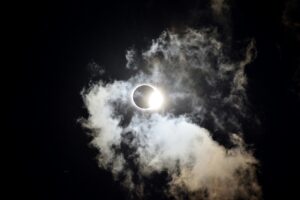
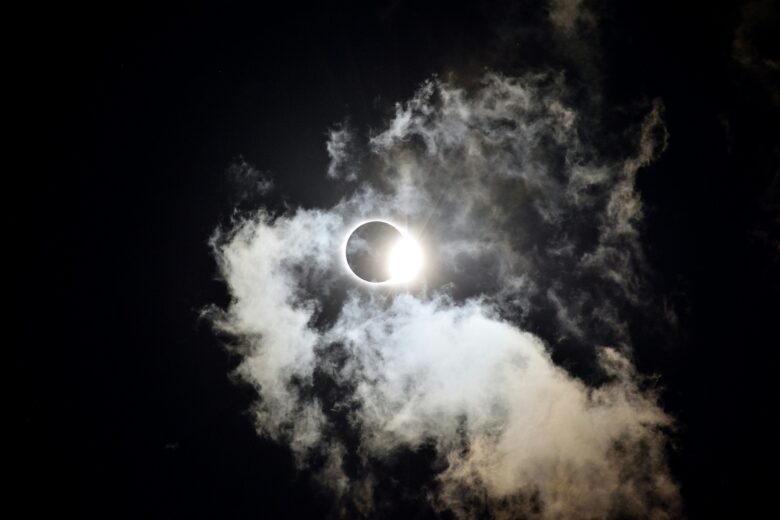
On the evening of 12 August 2026, the moon will slide in front of the sun – and with it, for around two hours, in front of a significant share of Europe’s photovoltaic capacity. Grid operators from Portugal to Romania have prepared for the event, and one British supplier is actively asking customers to cut back on consumption. In Austria, by contrast, the effect will barely register.
For astronomy fans it is the event of the year: on Wednesday evening the moon’s umbra will sweep across Iceland and northern Spain, while large parts of Europe experience a partial eclipse. For the operators of the power grids it is above all a predictable, but closely watched, special case – because solar output disappears within a short window and returns just as quickly.
Up to 9.7 gigawatts less solar power
The eclipse will only be total over northern Spain and the north-eastern corner of Portugal. Across much of the UK, France and northern Italy, however, obscuration will still exceed 90 percent.
Europe-wide, grid operators expect around 9.7 gigawatts of photovoltaic capacity to drop out at the peak of the eclipse – roughly the output of several large power station units. The estimate originally comes from French transmission system operator RTE and was confirmed last Friday by the European association ENTSO-E; for France alone, RTE puts the figure at about 1,800 megawatts.
In Spain, where obscuration is deepest, grid operator Red Eléctrica expects up to 5 gigawatts of solar capacity to be lost – equivalent to around 13 percent of peak demand on a typical Wednesday in August. For Great Britain, system operator NESO is forecasting a drop of roughly 700 megawatts, though based on historical modelling it considers up to 1.3 gigawatts possible. According to a NESO representative, up to 95 percent of the sun will be blocked between 6pm and 8pm local time.
ENTSO-E has convened national experts to assess preparations and the impact on the energy system. Control rooms are standing by to balance the shortfall from other sources.
What matters here is less the volume than the timing: the eclipse falls in the early evening hours, when PV output is already declining anyway. A comparable event around midday would have far greater consequences. The real task for control rooms is therefore not to prevent the drop – it is astronomically predictable to the second – but to absorb the steep output gradients on the way down and back up, while keeping generation and consumption in balance throughout.
Austria: a 19-megawatt difference
In Austria, according to Austrian Power Grid (APG), obscuration begins at 17:22 UTC (19:22 CEST) and ends at 18:13 UTC with sunset. Maximum obscuration will be around 85 percent.
The effect on generation is minimal. Even in a worst-case scenario – clear skies, maximum global radiation, all PV systems online – APG expects a reduction of at most around 19 megawatts. Instead of the forecast 212 megawatts of PV output, it anticipates roughly 193 megawatts. The reason is the time of day: at 7:30pm in August, Austria’s solar installations are already delivering only a fraction of their peak output.
APG says it analysed the event in advance and factored it into its forecasts; during the eclipse it will coordinate closely with system operations and with the European grid operators’ association ENTSO-E. No special measures are said to be necessary, and electricity supply in Austria is secure.
Germany’s transmission system operators – 50Hertz, Amprion, TenneT and TransnetBW – make a similar case: under clear skies they expect a decline of up to two gigawatts, against more than 125 gigawatts of installed PV capacity in Germany. They anticipate no impact on electricity supply. ENTSO-E has nonetheless set up a dedicated working group to keep assessing the situation and intervene at short notice if needed.
Great Britain: supplier pitches load shifting
Britain’s largest household energy supplier, Octopus Energy, is taking a markedly more proactive approach. The company is asking customers to avoid running washing machines and dishwashers between 6pm and 8pm UK time (7pm to 9pm CEST). Those signed up to its rewards programme will receive two free hours of electricity the following weekend in return.
The reasoning: if enough households shift their consumption, British system operator NESO will need to fire up fewer gas-fired power stations to replace the missing solar generation. Octopus puts the theoretical flexibility potential of British households – via smart appliances, EVs and home batteries – at around 13 gigawatts, only a fraction of which is currently being used.
For the supplier, the eclipse doubles as a showcase for its business model: household flexibility as a tradeable resource in the power system.
A tight starting position across Europe
What gives the event its edge is mainly the wider context. Europe is in the middle of a heatwave that is pushing up demand for cooling, air conditioning and fans – while simultaneously straining the generation side. According to the European Commission, power plants in Hungary, Romania, Slovenia, France, Italy and Poland have had to reduce output or shut down entirely because river levels are too low to cool nuclear and coal plants. Several of the affected countries are currently keeping their electricity systems running on imports.
EDF chief executive Bernard Fontana warned last week that the shutdowns would weigh on the state-owned group’s full-year results. The utility plans to bring forward an €8.7 billion programme to adapt its nuclear and hydroelectric plants to higher temperatures.
The continent’s hydropower reserve is shrinking too: reservoirs in Norway, one of Europe’s most important electricity exporters, are at their lowest level in 30 years, according to analytics firm Ably Intelligence. Ably co-founder Thomas Randgaard Larsen puts the probability of them returning to normal levels by the turn of the year at under one percent. He considers the situation serious and Europe inadequately prepared.
In Brussels, weather forecasts are being watched closely as a result. Commission spokesperson Anna-Kaisa Itkonen sees no immediate threat to security of supply but describes the situation as tight. The weekend could bring some relief: rain was expected in Austria, which should lift Danube water levels again.
The real test comes in 2027
Grid operators and analysts largely agree that the eclipse itself poses no danger to security of supply. What it does make visible is a fundamental feature of the energy transition: the higher the share of solar and wind in the system, the more important balancing reserves, storage, interconnectors and flexible demand become.
The more serious stress test is likely to be the next solar eclipse on 2 August 2027. It falls in the early morning hours – precisely the phase when photovoltaic feed-in normally ramps up steeply. Further eclipses follow in 2028 and 2030.