After Kimi K3 Coup: Moonshot AI Aims for Hong Kong IPO Within Six Months

Set Trending Topics as a preferred source on Google.
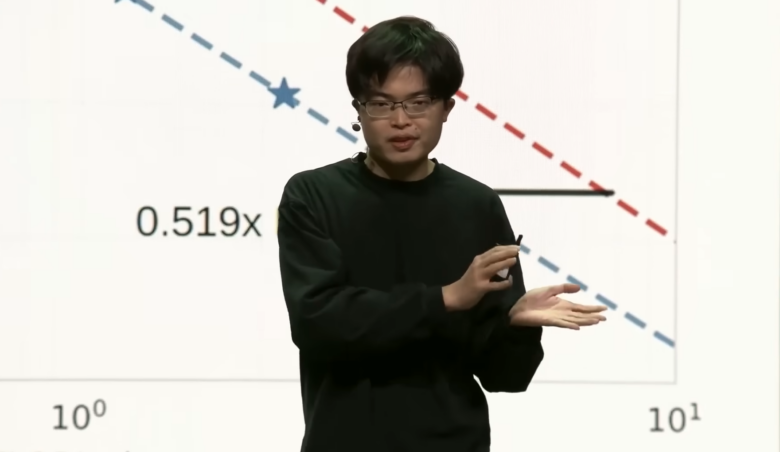
The timing could hardly be better: Just days after Moonshot AI rattled global tech markets with its new open-weight model Kimi K3, the Beijing-based AI startup is pushing ahead with its stock market debut. As Bloomberg reports, citing people familiar with the matter, Moonshot has circulated a shareholder resolution among its investors to secure their approval for a listing on the Hong Kong Stock Exchange. The IPO is set to take place within the next six months – meaning by early 2027 at the latest.
In parallel, the company, founded in 2023 by former Tsinghua professor Yang Zhilin, is close to completing a new financing round that could value it at more than $30 billion. For comparison: In the Meituan-led round in May, the valuation stood at around $20 billion, and at the end of 2025 it was just about $4.3 billion. Its backers include Meituan as well as Alibaba, Tencent and China Mobile. The current round is expected to bring in around $2 billion – although CEO Yang emphasizes that with more than 10 billion yuan (approx. $1.4 billion) in cash reserves, the company is under no pressure to rush.
Kimi K3 as a “New DeepSeek Moment”
The IPO plans are fueled by the success of Kimi K3, which Moonshot unveiled on July 17 at the World Artificial Intelligence Conference in Shanghai. The open-weight model packs roughly 2.8 trillion parameters in a mixture-of-experts architecture and offers a context window of one million tokens. The full open-source release is scheduled for July 27.
On independent benchmark platforms such as Artificial Analysis and Arena.ai, K3 plays in the league of US frontier models – in some demanding benchmarks it even ranks ahead of Anthropic’s Opus, making it the first Chinese open-weight model to beat one of the top US systems. Only Anthropic’s Claude Fable 5 and OpenAI’s GPT-5.6 remain out of reach overall. On coding benchmarks, K3 took the top spot.
Markets reacted swiftly and severely: US semiconductor stocks like Nvidia and AMD fell, the Nasdaq lost 1.5 percent, Taiwan’s benchmark index plunged more than 6 percent, and Japanese equities dropped 4 percent. Traders spoke of a “new DeepSeek moment” – a reference to the sell-off triggered by DeepSeek’s R1 model in early 2025. Bitcoin also came under pressure amid the risk-off mood.
Business is booming for Moonshot as well: Annual recurring revenue (ARR) rose from $200 million in April to $300 million in June. Demand for Kimi K3 was recently so strong that Moonshot had to temporarily suspend new subscriptions. Notably, to qualify for the Hong Kong listing, the company is dismantling its offshore VIE structure – the legal setup Chinese firms have traditionally used to route foreign capital around ownership restrictions – and replacing it with a joint venture model, in line with guidance from China’s securities regulator.
Zhipu and MiniMax: Stock Rockets With a Long Way to Fall
The two “AI Tigers” Zhipu AI (known internationally as Z.ai) and MiniMax have already demonstrated how lucrative Chinese AI IPOs can be for investors. The two unicorns went public on the Hong Kong Stock Exchange back to back on January 8 and 9, 2026: Zhipu gained a moderate 13 percent on its first trading day, while MiniMax doubled its share price on debut day and raised $620 million.
From there, things went steeply uphill: Driven by the model releases GLM-5 and MiniMax M2.5, the stocks at times traded more than 500 percent (Zhipu) and around 470 percent (MiniMax) above their offer prices, and their combined market capitalization exceeded 300 billion Hong Kong dollars in February – surpassing the market value of JD.com. Both companies are now also preparing secondary listings on the Chinese mainland, with Zhipu targeting the Science and Technology Innovation Board (STAR Market).
The Kimi K3 launch, however, also exposed the flip side of the hype: Zhipu lost as much as 30 percent in a single day after the rival model was unveiled – its steepest drop since going public. MiniMax fell 16 percent, and even Alibaba lost 4 percent. The rivalry among China’s AI labs is now playing out on the stock market in real time.
DeepSeek Also Pushing Toward the Trading Floor
And the next candidate is already waiting in the wings: DeepSeek, which triggered the first big China AI shock with its R1 model in early 2025, is also preparing an IPO, according to Bloomberg. The Hangzhou-based company is reportedly working with auditors to complete full financial statements by the end of December 2026 – a prerequisite for the IPO filing, which could be submitted in late 2026 or early 2027. The listing itself would follow in 2027, with Shanghai’s STAR Market under discussion. That would give Beijing its first AI model developer on its tech exchange – a stated goal of the government.
What’s remarkable is the pace at which DeepSeek is transforming from a self-funded outfit into a capital markets player: It was only in June that the lab, spun out of hedge fund High-Flyer, closed its very first external financing round – around $7 billion at a valuation of about $50 billion, with Tencent and battery giant CATL on board; founder Liang Wenfeng himself put in around $3 billion. Just weeks later, DeepSeek is already negotiating its next round: at least 10 billion yuan (approx. $1.4 billion) is to be raised at a valuation of roughly $71 to $74 billion – an increase of more than 40 percent within six weeks.
For Moonshot AI, the window is clear: Whichever Chinese AI lab goes public next can capitalize on the hype before DeepSeek grabs the spotlight with what could be China’s biggest tech IPO in years. The AI Tigers’ race for investors’ capital has only just begun.