A.I. Agents Threaten Advertising as We Know It


Set Trending Topics as a preferred source on Google.
An A.I. agent does not click on banners and cannot be tempted by a sponsored search result. That is exactly what makes it a problem for an industry that has lived for 25 years on people looking at screens. If Muse, ChatGPT or Gemini start comparing, booking and paying on their own, the moment in which advertising works disappears. Competitive advantage is shifting “from owning user interfaces to being selected by AI agents,” according to an analysis in the Harvard Business Review.
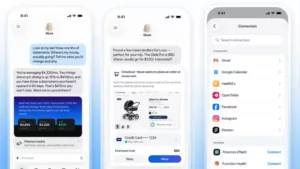
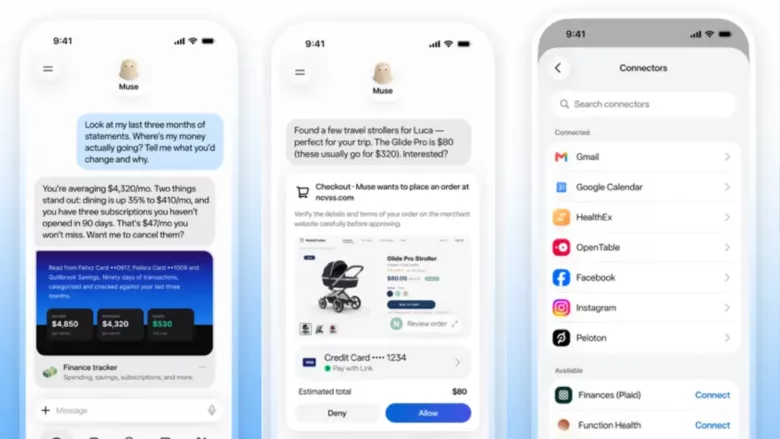
Meta, of all companies, shows how serious this is. The company makes almost all of its money from advertising, yet it is betting on a different model for its new agent, Muse. Muse is free for a large number of tokens, and Meta plans to earn money through a small fee on every transaction the agent completes for users. On top of that comes the new Meta One subscription, which unlocks more A.I. features across Facebook, Instagram, WhatsApp and Meta AI starting at $2.99 (about 2.55 euros) a month.
Early Signs: Amazon Shuts the Door
Amazon recently showed that other platforms are taking the threat seriously, too. The company blocked Meta’s Muse agent from its online store. Officially, the issue was security: third-party applications that shop on behalf of customers should “operate openly and respect service provider decisions.” But according to Forbes, more is at stake: Amazon’s advertising business recently brought in about $68 billion (roughly 58 billion euros), around 10 percent of the company’s revenue. An agent that jumps straight to the shopping cart never sees sponsored products. Amazon is already in court against Perplexity’s shopping agent.
Media companies are feeling the shift as well. According to Chartbeat data analyzed by the Reuters Institute, Google traffic to more than 2,500 news sites fell by a third worldwide within a year, and by 38 percent in the United States. The media executives surveyed expect to lose another 43 percent over the next three years. Fewer visits mean fewer ad impressions.
The Counterpoint: Advertising Keeps Growing
So far, the ad giants’ own numbers show no collapse. Google’s search advertising grew 17 percent in the second quarter, and the A.I. Mode in Search has more than one billion monthly users, according to Alphabet. A.I. is driving “an expansionary moment” with more search queries, says CEO Sundar Pichai.
Use of autonomous agents is also still low. According to a survey by NIQ, 42 percent of U.S. consumers used A.I. tools while shopping in the past month, but only 5 percent let a fully autonomous agent place an order. And OpenAI shows that advertising can work inside A.I. assistants: ads in ChatGPT reached an annualized revenue run rate of $1 billion in fewer than 200 days, according to OpenAI.
What is more, for most purchases the human remains the final decision-maker for now. “AI is not replacing the consumer, but it is dramatically reshaping how choices are made,” says NIQ executive Liz Buchanan. Advertising inside agents therefore makes sense, especially at the top of the funnel: building brand awareness, sparking desire and making products appealing before the agent even starts comparing. After all, no agent will buy something its user never considered in the first place.
Subscriptions, Commissions or Pay for Results
How else can A.I. agents make money? Three models are emerging:
- Subscriptions: Perplexity dropped ads entirely because users “would simply start to doubt everything,” and relies on subscriptions starting at $20 a month. Anthropic has also decided against ads in Claude.
- Commissions: Meta wants to earn a share of purchases made through Muse. The agent is free for a huge number of tokens “with the expectation that over time we will profit by taking a small fee from transactions,” Mark Zuckerberg said, according to Trending Topics. OpenAI, by contrast, shut down its own checkout in ChatGPT after half a year, while Google is pushing payments directly in A.I. Mode through its Universal Commerce Protocol.
- Pay for results: For its business agents on WhatsApp and Instagram, Meta wants to charge along the lines of its ad business. “We will get paid when we deliver results for those businesses,” Mr. Zuckerberg said, according to TechCrunch.
What Agents Do to Prices
An agent compares dozens of retailers in seconds, weighing shipping, return policies and reviews alongside price. That increases price pressure. The pricing software company Omnia Retail expects retailers to respond with their own pricing agents that adjust prices continuously, and to lean more on bundles, because packages are harder to compare directly.
A warning from the financial world shows how far this could go. Apollo’s chief economist Torsten Slok believes banks could lose a large share of their cheap deposits if agents automatically move household money from checking accounts paying 0.1 percent into higher-yielding alternatives, CoinDesk reports. Where convenience allows higher prices or lower interest rates today, the agent could close that gap.
How Protocols Address Agents and Where Ads Plug In
For agents to shop at all, a new technical infrastructure is taking shape. Instead of designing websites for people, retailers expose their products, prices and checkouts through standardized interfaces. Those interfaces are exactly where the new ad slots are emerging:
- Universal Commerce Protocol (UCP): Google developed the standard together with Shopify, Etsy, Wayfair and Target. It aims to create a “shared language between AI agents and commerce systems,” from the product catalog to checkout, and works alongside other agent standards such as MCP and A2A. Google attaches advertising directly to it: with the Direct Offers ad format, retailers can surface exclusive discounts in A.I. Mode as soon as the A.I. detects that a shopper is close to buying. Bundles and free shipping are to follow.
- Shopify Catalog: Shopify makes its merchants’ product catalog queryable for agents through an open interface, with no approval needed, just an API key. It has already announced “promoted placements,” paid positions that are meant to let agent developers earn revenue when their applications drive sales.
- Agentic Commerce Protocol (ACP): OpenAI and Stripe developed this open standard. Retailers provide product feeds, the agent triggers the purchase through an interface, payment runs through a secure token, and the retailer remains the merchant of record. Although OpenAI shut down its own checkout, the standard lives on. Inside ChatGPT, OpenAI is testing sponsored agents: paid conversations with brands’ agents, clearly labeled and kept separate from regular answers.
- Trusted Agent Protocol: Visa, working with Cloudflare, introduced a standard that lets agents identify themselves to retailers with a cryptographic signature. In the process, they transmit the purchase intent, whether the person is already a customer, and payment details. Mastercard uses a similar approach with Agent Pay. For retailers, this means they will know exactly which agent is shopping for whom and can respond with their own terms.
- Ad Context Protocol (AdCP): On the other side of the market, buying ads is itself becoming automated. Yahoo, PubMatic, Scope3 and other companies launched the open protocol, built on MCP. It lets advertisers’ and publishers’ agents negotiate campaigns directly with each other instead of bidding on individual impressions.
Advertising in the agent era is thus aimed less at the customer’s eye and more at the agent’s decision: a discount at the right moment, a paid placement in the catalog, a better offer for known customers. Critics, according to an analysis by the consultancy Rise, see a risk of a discount arms race that ultimately squeezes retailers’ margins.