California Jury Dismisses Musk’s Lawsuit Against OpenAI After Two Hours


Set Trending Topics as a preferred source on Google.
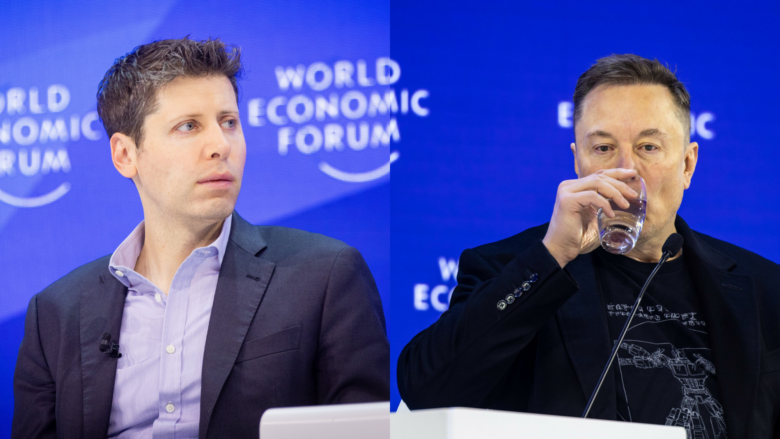
A California jury has dismissed Elon Musk’s lawsuit against OpenAI, its co-founders Sam Altman and Greg Brockman, and Microsoft. After just two hours of deliberation, nine jurors unanimously concluded that Musk’s claims fell outside the statutory statute of limitations. The verdict brings to a close one of the most high-profile technology trials in recent history.
What was the legal dispute about?
Musk accused Altman and Brockman of having “stolen” a nonprofit organization. OpenAI was founded in 2015 as a nonprofit research laboratory in which Musk had invested around $38 million before leaving the company in 2018 following an internal power struggle. He argued that Altman and Brockman had broken their original agreement by transforming OpenAI into a for-profit company.
Musk sought sweeping consequences in court: he demanded damages of up to $134 billion from OpenAI and Microsoft, the removal of Altman and Brockman, and the reversal of the conversion into a for-profit entity. His expert witness estimated the defendants’ unlawful gains at Musk’s expense at between $78.8 billion and $135 billion.
Why did Musk lose?
The decisive reason for the defeat was not substantive but procedural: the jurors found that Musk had filed his claims too late. Different deadlines applied depending on the count — for example, August 5, 2021 for the first count, or November 14, 2021 for the third. However, the evidence on which Musk’s lawyers relied related to events that occurred well before those deadlines.
Musk’s lawyers argued that he had only learned of the breach of contract in 2022, when reports emerged of a multibillion-dollar Microsoft investment in OpenAI. The jurors rejected this argument, however, siding with OpenAI’s account that Musk had known significantly earlier about the shift toward a for-profit structure.
“There was substantial evidence supporting the jury’s finding. That is why I was prepared to dismiss the case immediately,” said Judge Yvonne Gonzalez Rogers on the verdict.
Reactions to the verdict
OpenAI’s lead attorney Bill Savitt described the lawsuit as “a hypocritical attempt to sabotage a competitor.” Microsoft welcomed the verdict and reaffirmed its partnership with OpenAI. Musk himself interpreted the procedural basis of the ruling as a moral victory in a tweet and announced he would appeal to the Ninth Circuit Court of Appeals.
“I will appeal because setting a precedent for the looting of nonprofits would be incredibly damaging to charitable giving in America,” Musk wrote on X.
Significance of the verdict
The ruling has far-reaching consequences for OpenAI: the possibility of a forced restructuring of the company is now off the table. This clears the way for OpenAI’s planned initial public offering, which is expected to be one of the largest IPOs in history. The company is currently valued at around $852 billion.
Despite the legal victory, the trial was also costly for OpenAI: internal emails, diary entries, and text messages from prominent Silicon Valley figures were made public, including a 2017 diary entry by Brockman in which he weighed personal financial ambitions alongside questions about the future of humanity. On the witness stand, Brockman stated that his personal stake in OpenAI is today worth around $30 billion.