Dream Security Raises $260 Million at $3 Billion Valuation, Plans Munich Office

Set Trending Topics as a preferred source on Google.
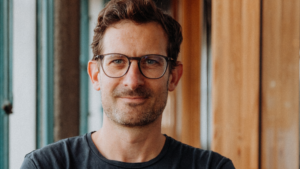
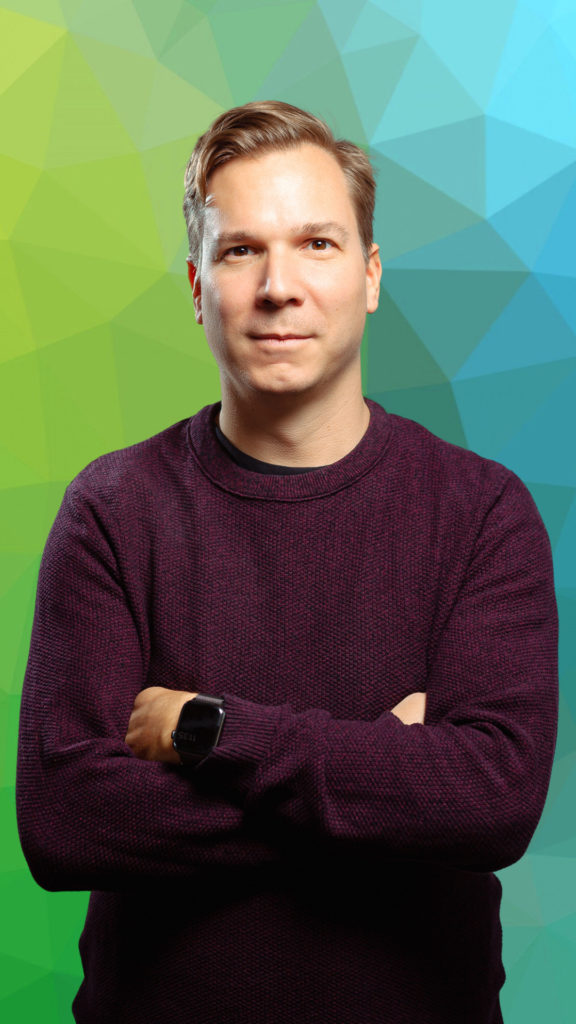
Dream, the Israeli cybersecurity and AI company co-founded by former Austrian Chancellor Sebastian Kurz, has closed a new financing round. In a Series C round, the company raised $260 million, lifting its valuation to $3 billion – roughly three and a half years after its founding and a good year after it reached unicorn status.
The round is led by venture capital firms Bicycle Capital and Group 11. Other participants include Bain Capital, Tru Arrow Partners – the firm of financier James Rothschild – as well as Norwegian tech investor Antler and, according to the company, further global backers. Group 11, run by Israeli-American investor Dovi Frances, has been on board since the company’s founding, and Bain Capital already took part in the previous round; Bicycle Capital and Antler are new investors. With this round, Dream’s valuation has nearly tripled compared with February 2025, when a $100 million round first pushed the company past the billion-dollar mark.
Munich office planned
The fresh capital is earmarked for global expansion – including into Germany. “We want to open an office in Munich later this year,” co-founder Sebastian Kurz told Handelsblatt. The former Austrian chancellor says he holds just under 15 percent of the company; on paper, that stake would be worth around $450 million.
At the same time, Dream is broadening its offering. Until now, the start-up has positioned itself as a provider of cybersecurity solutions for governments, utilities and private companies. Going forward, it plans to add AI-powered data analysis tools. That puts Dream in direct competition with US group Palantir, considered the leader in this segment.
The business model rests on the promise of “sovereign” AI infrastructure: Dream aims to enable states to own, operate and control their own AI systems. “The decisive question for states is no longer whether they will use artificial intelligence, but whether they will also own, operate and fully control it,” Kurz said. Otherwise, he argued, they would enter into a “critical dependency” on other states such as China or the US. Kurz ruled out a return to politics for now; over the longer term, he named an IPO as an option.
Background: NSO founder as CEO
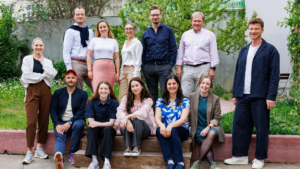
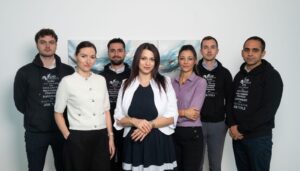
Dream was founded in January 2023 by Shalev Hulio, Sebastian Kurz and AI expert Gil Dolev. Hulio – now CEO – was previously a co-founder of NSO Group, which made international headlines with its Pegasus spyware. Kurz serves as president and co-founder, Dolev as chief technology officer. The company is headquartered in Tel Aviv and operates offices in Vienna – its European headquarters – as well as in Abu Dhabi. Dream says it employs roughly 250 to 320 people and serves public-sector clients across Europe, the Middle East and Southeast Asia.
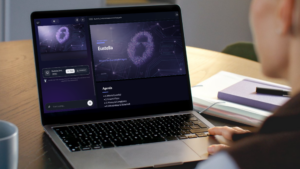
It is the largest financing in the company’s history to date. In 2023, Dream raised a combined $54 million across two early rounds; in 2025, a further $100 million followed under the lead of Bain Capital. Among the products developed so far is a language model specialized in security operations (Cyber Language Model).
Anthropic ban: “The beginning of a global race for sovereign AI”
Dream’s sovereignty narrative has been given a tailwind by a recent development in the US. On June 12, the US government, citing national security interests, issued an export control directive barring all access to Anthropic’s flagship models Fable 5 and Mythos 5 by foreign nationals – including Anthropic employees without US citizenship. Anthropic subsequently disabled both models worldwide for all of its customers in order to comply. The company publicly objected to the measure, calling the underlying rationale a misunderstanding, and says it is working to restore access. According to several observers, it was the first time the US applied an export control not to chips, but to access to an AI model itself.
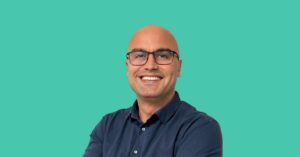
Dream co-founder and CEO Shalev Hulio used the episode to reinforce his company’s core thesis. The events, he said, would “accelerate one of the biggest shifts in modern history.” States had until now assumed that access to leading AI models such as Fable would remain permanently secure – the ban, he argued, was a reminder that access and ownership are not the same thing. When something is critical to a country’s economy, security and future, mere access is not enough.
In doing so, Hulio said, the US is doing what any nation would do: protecting its interests and its citizens. But the lesson for the rest of the world is equally clear, he argued: no state would accept having its healthcare, financial or defense systems controlled by a third party – and AI has earned a place on that list. “Smart governments no longer see AI as software, but as critical infrastructure,” he said. Critical infrastructure must remain available when it matters most. His conclusion: the episode is not the end of a story, but “the beginning of a global race for sovereign AI.”