False AI Intelligence Report Nearly Triggered a U.S.-China Military Clash


Set Trending Topics as a preferred source on Google.
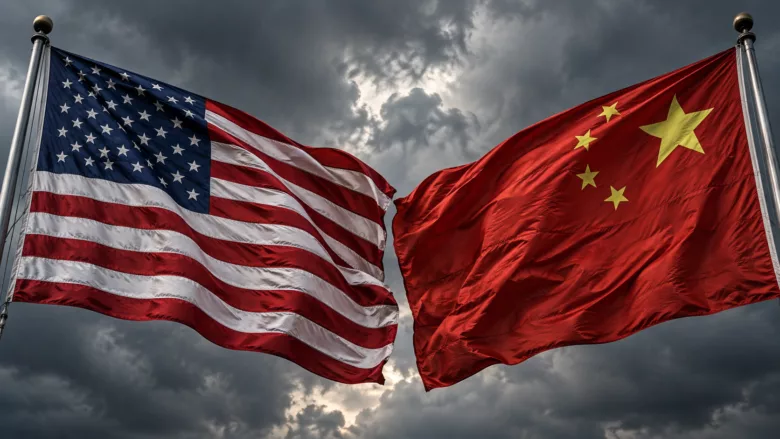
An intelligence report created with the help of artificial intelligence nearly led the U.S. military to launch an operation against a Chinese ship. CNN reported the story as an exclusive, citing four sources familiar with the incident. According to the report, a document circulated within the U.S. military this spring, in the midst of the war with Iran, claiming that a Chinese vessel in the Middle East was transporting components of a nuclear weapons program.
The military then moved to intercept the ship. According to two sources, armed service members were preparing to board it, and military aircraft were already in the air. Only shortly before the planned operation did officials take a closer look at the report and discover that it had been produced with the help of AI. A chatbot had misidentified the ship’s cargo. CNN was unable to learn what the vessel was actually carrying.
One source told CNN the report was “entirely false” but that it “almost started a war.” Any U.S. operation against a Chinese ship would have carried the risk of an armed escalation between the two superpowers.
How the Error Happened
According to CNN, an analyst at U.S. Special Operations Command had asked a chatbot about intelligence reporting on the ship’s manifest. That information originated with Special Operations Command Pacific, based in Hawaii. It remains unclear whether the tool was a commercial AI product or one built by the U.S. government. A former senior U.S. official told CNN that “the internal tools are mostly just copies of the commercial stuff wearing lipstick.”
The chatbot combined open-source information with classified signals intelligence and reached its fateful conclusion. The analyst then used AI again to package the findings into a standard intelligence report, a format that military decision-makers typically trust. Neither Special Operations Command Pacific nor the Pentagon responded to CNN’s request for comment. Democratic lawmakers are now calling for an investigation into the incident.
According to one source, such “hallucinations” have occurred repeatedly since AI tools began spreading across the intelligence community. Veteran intelligence officers describe growing pressure to deliver analysis ever faster, and younger analysts in particular are said to trust the tools uncritically. “AI allows you to get to a bad idea faster,” one source said.
AI Is Moving Into Nearly Every Corner of the Military
The incident comes as the U.S. military and intelligence agencies are adopting AI at high speed. Applications range from analyzing vast volumes of raw intelligence and selecting targets for strikes to budgeting, logistics and supply chains. Supporters argue that AI can help commanders make battlefield decisions faster, such as which targets to hit or where to move forces. In their view, the United States cannot afford to fall behind in case it one day has to fight China or another adversary.
Earlier this year, Secretary of War Pete Hegseth unveiled the department’s “Artificial Intelligence Acceleration Strategy.” “We will unleash experimentation, eliminate bureaucratic barriers, focus our investments and demonstrate the execution approach needed to ensure we lead in military AI,” Hegseth said when presenting the plan. The goal is to put leading AI models in the hands of the department’s roughly three million civilian and military personnel at all classification levels.
According to several U.S. officials, however, the rollout is decentralized. Different parts of the government use different tools under different orders and safety standards, and there is no single set of rules for verifying information generated by AI. CNN reports that the military is increasingly relying on AI for targeting in particular. “AI in targeting is definitely something that is ramping up and there is no real guidance for how having a human in the loop will prevent civilian casualties or fratricide,” another source said.
Trump Wants an “AI Force”
At the same time, President Donald Trump is pushing for even more speed. On Saturday, he announced on Truth Social that he plans to create an “AI Force” and appoint an “AI Czar.” He cited as his model the Space Force, which he established during his first term in 2019 and called “a tremendous SUCCESS.” The Space Force was the first new branch of the U.S. military since 1947. For the czar position, Trump said he wants “only High I.Q. individuals.” David Sacks previously held the role, but his tenure as a special government employee ended in March.
“We will not in any way hinder or stifle the Growth of this incredible Industry. Rather, we will cherish it, help it, and watch over it, as it grows!” Trump wrote. He described AI as “the next Industrial Revolution, or Internet,” saying it could account for up to 25 percent of U.S. economic output. He dismissed warnings about a runaway superintelligence as a “hoax,” arguing that any problems could be handled through the existing criminal and civil justice system.
The announcement comes amid an intense debate in Washington. Leading figures in the AI industry, including Sam Altman of OpenAI and Dario Amodei of Anthropic, have recently called for slowing the development of the most powerful models and placing them under federal regulation. Trump rejects that approach and points to the race with China. “Whoever wins AI, wins,” is his motto, as Trending Topics reported.
What an AI Force Could Mean for Military AI
What exactly the AI Force will look like remains unclear. Trump’s announcement leaves open whether he means a separate military branch modeled on the Space Force, a task force within the government or some other structure. A new military branch would also require an act of Congress, as the Space Force did.
If it does become a military unit, the consequences would be far-reaching. A dedicated AI service would consolidate expertise, budgets and personnel that are currently spread across the Army, Navy, Air Force and intelligence agencies. Supporters could see this as a chance to unify what has so far been a fragmented approach to AI and to introduce common standards for reviewing and approving AI output, precisely the gap exposed by the Chinese ship episode.
Critics, on the other hand, are likely to worry that a dedicated AI Force would further accelerate the use of AI in intelligence and targeting while questions of human control remain unresolved. Trump’s signal that he will not slow the industry down and Hegseth’s push to remove bureaucratic barriers both point toward speed rather than additional safeguards. The near miss highlights a very immediate risk: people under time pressure making consequential decisions based on flawed machine analysis.