Inside Meta’s Plans to Provide Every User with an Personal AI Agent


Set Trending Topics as a preferred source on Google.
If you plan to provide each of your users with a (paid?) AI agent, what do you actually need for that? Exactly: massive AI data centers full of AI chips. And not just to train the models, but to have them compute around the clock. How they will be used is also already clear: namely, through the AR/AI glasses that Meta has been developing for some time now in collaboration with Ray-Ban, for example.
Meta Platforms has therefore concluded two major agreements with chip manufacturers AMD and Nvidia to massively expand its AI infrastructure. The deals illustrate the enormous capital requirements of tech giants in the race for artificial intelligence and simultaneously reveal new financing models in the semiconductor industry.
AMD Deal: Chips for Company Shares
Meta has reached a multi-year agreement with AMD that could reach a total volume in the double-digit billions, up to $100 billion. The social media company will acquire custom-made chips with a total capacity of six gigawatts. AMD CEO Lisa Su explained that each gigawatt of computing power has a value in the double-digit billions.
Particularly unusual is the structure of the deal: AMD has issued Meta a performance-based warrant that gives the Facebook company the option to acquire up to 160 million AMD shares at an exercise price of just $0.01. Meta receives these shares in tranches once certain processor orders are completed. The first tranche is to be handed over in the second half of 2025 when the first gigawatt of chips is delivered.
The warrant conditions are tied to specific stock price thresholds, reaching up to $600 for the final tranche. The option expires in February 2031. Should Meta exercise all tranches, the company could hold a stake of up to ten percent in AMD. AMD shares rose by up to 14 percent following the announcement of the deal, giving the company a market capitalization of $342 billion.
Nvidia Agreement: Millions of Chips Over Several Years
Parallel to the AMD deal, Meta has also concluded a long-term supply agreement with market leader Nvidia. The contract includes the delivery of millions of AI chips over several years. Industry analysts estimate the total value of this agreement at around $50 billion.
The agreement includes both the current Blackwell architecture and the upcoming Rubin generation of AI accelerators. Additionally, Nvidia supplies standalone installations of its Grace and Vera central processors, which are based on ARM technology. These CPUs are designed to enable approximately 50 percent reduced power consumption for certain tasks.
Meta ranks among the four largest customers, which accounted for approximately 61 percent of Nvidia’s revenue in the most recent business quarter. The announcement was made strategically one week before the release of Nvidia’s quarterly results.
Supply Chain Diversification
Santosh Janardhan, Meta’s infrastructure chief, emphasized the diversification strategy: „We don’t believe that a single silicon solution will work for all of our workloads. There is a place for Nvidia, there is a place for AMD, and there is a place for our own custom silicon technology. We need all three.“
The AMD chips, a customized version of the MI450 series, are intended to be used primarily for inference workloads, that is, for operating AI models after their training. The required six gigawatts of power correspond to the annual consumption of five million U.S. households.
Meta Subsidiary Manus as a First Step Toward AI Agents
What services in the area of AI agents could Meta ultimately plan? A preview of this already exists: Meta subsidiary Manus, acquired for around two billion dollars only at the end of December 2025, is now actively entering the growing market for AI agents.
With the new service „Manus Agents,“ the Chinese-Singaporean company brings full-fledged AI capabilities directly into messaging platforms – starting with Telegram, with WhatsApp and other services such as Slack, LINE, and Discord to follow in the coming weeks. Unlike classic chatbots, the system features persistent memory, learns the writing style and preferences of its users, and independently executes multi-step tasks – from presentation creation to calendar management via linked services such as Gmail or Notion.
The strategic direction is clear: Manus positions itself as a low-barrier alternative to offerings like OpenClaw, which for many users involves complex setup and unpredictable costs. For the next thirty days, a co-founder has announced far-reaching expansions – including specialized agents for group chats, native apps for Windows and Mac, as well as a feature that allows the AI to directly control the user’s computer.
Record Investments in AI Infrastructure
Meta plans to nearly double its spending on AI infrastructure in the current year to up to $135 billion. To finance these massive investments, the company issued bonds worth $30 billion in October 2024, the largest bond issuance in the company’s history.
Meta CEO Mark Zuckerberg formulated the ambitious goal of providing every person in the world with personal superintelligence using the ordered technology. However, the company has fallen significantly behind the competition with its own AI models and may want to abandon the path of open large language models it started with Llama.
The Hyperion Project: $30 Billion for Louisiana
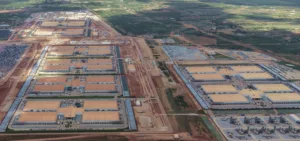
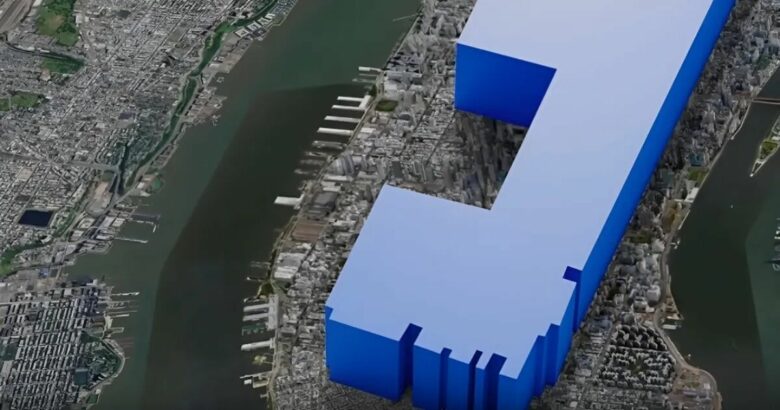
Parallel to the chip deals, Meta is advancing the construction of a gigantic data center. In Holly Ridge in the U.S. state of Louisiana, the „Hyperion“ project is being built, an AI-optimized data center with an investment volume of approximately $30 billion. The facility is intended to reach an area equivalent to a quarter of Manhattan.
Unusual Financing Structure
The financing of Hyperion takes place through a complex structure that has raised concerns about possible bubble formation in the AI sector. Meta is working with private credit firm Blue Owl Capital. The ownership structure is divided as follows:
- Meta holds 20 percent of the shares in the data center
- Blue Owl Capital owns the remaining 80 percent
- Blue Owl assumes the majority of external financing
- The debt does not appear on Meta’s balance sheet
Blue Owl has created a separate legal entity called Beignet Investor LLC for the project, which has sold bonds worth $27 billion to Wall Street investors. The repayment of these bonds is to be made through rental income, as Meta leases the data center.
Energy Supply as a Limiting Factor
The enormous power consumption of the planned data centers is increasingly becoming a limiting factor. Some U.S. states are already considering restrictions on new data centers. U.S. President Trump recently urged AI companies to build their own power supply independent of public networks.
Meta emphasizes that it wants to build the world’s largest AI infrastructure while relying on energy-efficient technology to significantly increase performance per watt.
The Hyperion facility alone would require enormous amounts of electricity. In addition to the processors, Meta has also ordered extensive quantities of Ethernet switches from Nvidia to optimize the networking of its data centers.
Background: Leadership Change at Meta AI
The aggressive investment strategy has also led to personnel changes. Yann LeCun, long-time AI chief at Meta, has left the company. LeCun holds the view that current transformer models will not lead to superintelligence and that world models based on a different architecture must be developed instead. He has founded a corresponding startup with AMI Labs.
Meta, on the other hand, has come to the conclusion that significantly more computing power is necessary to improve AI models. Another factor is inference: if billions of users worldwide use Meta AI multiple times daily, the company needs corresponding computing power for processing.