Iran Plans Bitcoin Tolls for Oil Tankers Crossing the Strait of Hormuz

Set Trending Topics as a preferred source on Google.
Iran intends to collect transit fees in cryptocurrency from oil tankers passing through the Strait of Hormuz. The Financial Times reported this on Wednesday, citing a spokesperson for Iran’s oil, gas, and petrochemical exporters’ association. The move illustrates how digital assets are increasingly being used in geopolitically sensitive contexts to bypass traditional banking channels.
The Planned Fee Model
Hamid Hosseini, spokesperson for the Iranian exporters’ association, outlined the basic features of the planned system to the Financial Times. Under the scheme, shipping companies would be required to submit details of their vessels’ cargo to Iranian authorities by email. The authorities would then communicate how the fee is to be paid in digital currencies. Hosseini explicitly named Bitcoin as a possible payment method.
According to the report, the tariff is set at one US dollar per barrel of oil. Empty tankers would be permitted to pass free of charge, while fully laden vessels would have to complete the full reporting and payment process before receiving clearance to transit.
“Once the email arrives and Iran has completed its assessment, ships will have a few seconds to pay in Bitcoin, thereby ensuring that payments cannot be tracked or seized due to sanctions.”
Hamid Hosseini, spokesperson for Iran’s oil exporters’ association, speaking to the Financial Times
Security Control as a Stated Goal
Hosseini justified the initiative not solely on economic grounds. Iran wants to ensure that the two-week ceasefire is not exploited for arms deliveries, the Financial Times reported. Each vessel is to be assessed individually.
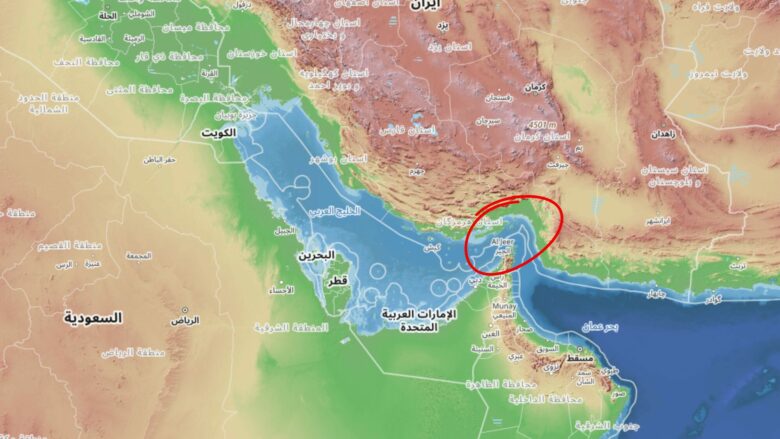
Hosseini also indicated that Tehran could direct shipping traffic along the northern route of the strait, i.e. closer to Iran’s coastline. The Financial Times noted that this raises questions about whether Western and Gulf-based shipping companies would be willing to use that route.
Cryptocurrencies as a Tool for Sanctions Evasion
The recourse to digital means of payment is not a new phenomenon for states subject to Western sanctions. Russia has used cryptocurrencies as part of broader efforts to circumvent sanctions. In Iran’s case, Tehran is also exploring digital payments because the country seeks to free up funds for rebuilding war-damaged infrastructure without relying on conventional banking channels.
The Bitcoin payment model for Hormuz transits thus represents a concrete real-economy use case that goes far beyond the speculative use of digital assets and carries direct geopolitical implications.
Reactions from the Shipping Industry
Western shipowners were taking a wait-and-see approach on Wednesday, according to the Financial Times. Barely any vessels are currently passing through the strait, apart from two ships with ties to Iran. The shipping company Maersk, the world’s second-largest shipping firm, told the Financial Times it was working “actively” to clarify the precise conditions.
Industry experts estimate, according to the report, that 300 to 400 ships are waiting for safe passage. Martin Kelly, head of the advisory division of maritime intelligence group EOS Risk, told the Financial Times that at most 10 to 15 ships per day could pass through the strait, as the process is “very time-consuming.” Before the war, the figure had been 135 ships per day.
Geopolitical Flashpoint
The question of who exercises control over the Strait of Hormuz is considered one of the most sensitive issues in the ongoing negotiations over extending the ceasefire. US President Donald Trump stated on Tuesday evening that the ceasefire was contingent on Iran opening the strait fully and immediately, as the Financial Times reported, citing a social media post by Trump.
Gulf states such as Saudi Arabia, Qatar, and the United Arab Emirates firmly reject Iranian control over the waterway. Ali Shihabi, a commentator close to the Saudi royal family, told the Financial Times that any form of Iranian control over the strait was a red line for Riyadh.
Analysts also warn, according to the report, that Iranian control over Hormuz could fundamentally alter the balance of power within Opec+, as Tehran would thereby gain an effective veto over the exports of rival member states.