Meta’s Muse Wonder Overtakes GPT-6 and Gemini 4



Set Trending Topics as a preferred source on Google.
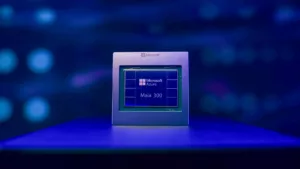
After spending billions on talent and data centers, Mark Zuckerberg now has to deliver: Meta has just introduced two new A.I. models, Muse Wonder and Muse Wonder Full, which according to its own benchmarks match or beat the latest flagship models from OpenAI and Anthropic. An independent ranking at least partly confirms this: The strongest version leaves GPT-6 and Gemini 4 behind. “These are true frontier models, competitive with the best models in the world,” Alexandr Wang, the head of Meta Superintelligence Labs, told Axios. One question that Meta used to answer for itself remains open, though: whether the models will be freely available.
Memory and Stamina for A.I. Agents
The models, developed under the internal code name “Watermelon,” were trained in Meta’s gigawatt-scale data center Prometheus. Meta highlights two capabilities that matter most for A.I. agents:
- Active Memory: The model remembers important information about users across multiple conversations and retrieves it when needed.
- Active Focus: An agent stays on track during long tasks, tries alternative approaches and adapts to obstacles.
The models are also said to be strong at coding and at specialized tasks in law, finance and medicine. Muse Wonder is available through Meta’s Model API and the coding tool Muse Code, while the more powerful Muse Wonder Full is reserved for Muse Code subscribers. Muse Wonder is also set to power Meta’s A.I. agent Muse, initially for paying customers.
Independent Ranking Confirms the Leap
Meta published benchmark comparisons in which the new models are on par with or ahead of the flagships from OpenAI and Anthropic. The independent benchmarking firm Artificial Analysis confirms this, at least for the strongest version. In its Intelligence Index, which combines ten individual tests ranging from coding to agentic office work, the top of the ranking looks like this:
- Claude Opus 5.5 (Anthropic): 57.6 points
- Muse Wonder Full (Meta): 55.8 points
- Claude Fable 5.1 (Anthropic): 53.4 points
- GPT-6 Astra (OpenAI): 52.7 points
- Gemini 4 Argon (Google): 52.6 points
- Muse Wonder (Meta): 52.4 points
- GPT-6.1 Sol (OpenAI): 51.8 points
At its highest compute setting, Muse Wonder Full is thus a good three points ahead of GPT-6 Astra and Gemini 4 Argon, making it the second-best model in the ranking. Only Anthropic’s Claude Opus 5.5 scores higher. The standard version, Muse Wonder, trails just behind GPT-6 Astra and Gemini 4. For Meta, this is a huge leap: Its previous best model, Muse Spark 1.3, scored 48 points on the same index. Meta has announced a model card, and a detailed technical report is set to follow.
A lot is at stake for Meta. After the disappointing launch of Llama 4 in the spring of 2025, Mr. Zuckerberg completely restructured the company’s A.I. division, brought in the Scale AI founder Mr. Wang as chief A.I. officer and lured researchers with pay packages that in some cases ran into the hundreds of millions of dollars. Muse Wonder is seen as the first real test of whether those investments are paying off.
Open Weights? Not for Now
That leaves the question of openness. For years, Mr. Zuckerberg positioned himself as a champion of open A.I., and anyone could download, modify and run the Llama models themselves. For now, that is not the case with Muse Wonder:
- Muse Wonder and Wonder Full: The weights have not been released. The models run only through Meta’s own interfaces and subscriptions. Meta has not said whether an open version will follow.
- Muse Spark: The first model in the Muse series was already Meta’s first frontier model without open weights when it launched in April. In early September, Mr. Zuckerberg announced on X that an open-weight version would come “soon,” but it has not been released yet.
- Muse Glimmer and Muse Glitter: Only smaller models are open. Meta released Glimmer, with 30 billion parameters, as an open-weight model in August that runs on a computer with a single graphics card. The weights of Muse Glitter followed more recently.
“We’re still committed to open source,” Mr. Wang said. The strategy is clearly split in two: Meta releases its smaller models and keeps its top models to itself, earning money from them through its API and subscriptions. In doing so, Meta is following the path of OpenAI, Anthropic and Google, which also keep their most powerful models closed. Open models at the frontier currently come mainly from China, for example from Moonshot, Alibaba and DeepSeek.