Gemini 4 Matches GPT-6 Astra but Trails Opus 5.5


Set Trending Topics as a preferred source on Google.
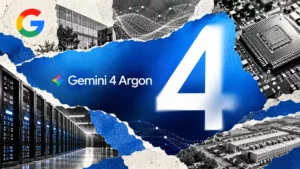
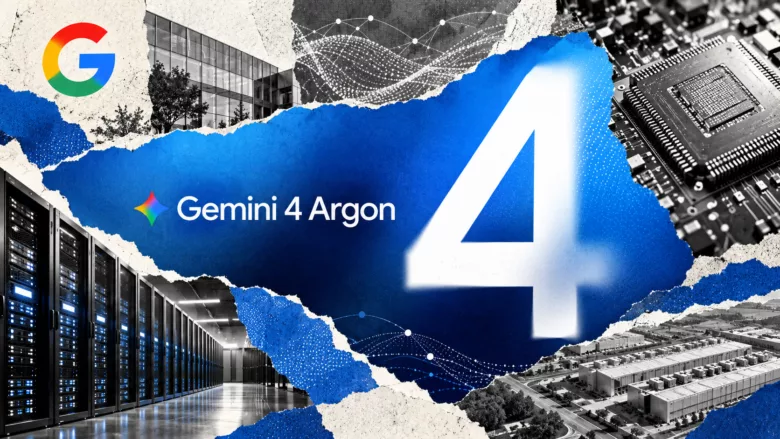
Google did not hold back on self-praise. Gemini 4 Argon, it said, marks “our next era of frontier intelligence,” is fundamentally changing how Google works and delivers frontier performance in coding, knowledge work and cybersecurity defense. The company’s first true flagship model in almost a year can generate up to one million tokens in a single response, and in Google’s own comparison table it came out on top alone in 13 of 19 benchmarks, ahead of Anthropic and OpenAI.
The independent benchmarking firm Artificial Analysis has now reached a far more sober verdict. On its Intelligence Index, Gemini 4 Argon scores 53 points. That puts Google’s new flagship level with OpenAI’s GPT-6 Astra, but clearly behind Anthropic’s Claude Opus 5.5. Bloomberg had already reported internal doubts: according to employees, the model performs worse in practical use, for example on certain coding tasks, than on benchmarks. Its biggest strength may lie elsewhere anyway: price.
Level With OpenAI, Five Points Behind Anthropic
Artificial Analysis’s Intelligence Index combines ten individual tests, from coding tasks in the terminal to scientific reasoning and agentic office work. Gemini 4 Argon scores 52.6 points at the tested “High” compute setting. GPT-6 Astra, at its highest setting, is practically level at 52.7 points. Claude Opus 5.5 reaches 57.6 points at its highest setting, staying about five points ahead. Anthropic’s smaller model Sonnet 5.5 also beats Argon with 56 points. Overall, Gemini 4 ranks eighth, with the top seven spots taken by various compute settings of Anthropic’s models and by GPT-6 Astra.
The individual tests paint a similar picture:
- Terminal-Bench 4.0: On coding in the terminal, Argon scores 57.1 percent. Opus 5.5 reaches 59.6 percent, GPT-6 Astra 59.1 percent.
- Humanity’s Last Exam: On the tough knowledge and reasoning test, Argon’s 57.1 percent beats Astra (54.7 percent) but trails Opus 5.5 (61.4 percent).
- GDPval-AA: On real-world work tasks from 44 occupations, Argon reaches an Elo score of 1,611, ahead of Astra at 1,542 but well behind Opus 5.5 at 1,846.
- SciCode: On scientific coding, Argon scores 61.8 percent, Opus 5.5 66.9 percent and Astra 56.5 percent.
Terminal-Bench is notable: the independent result of 57.1 percent almost exactly matches Google’s own figure of 57.4 percent. Google’s comparison table, however, used the 66.4 percent that Anthropic reported for Opus 5.5 itself. Artificial Analysis measures only 59.6 percent for Opus 5.5, which narrows the gap to Argon considerably. So far, only Argon’s “High” setting has been tested. Whether a higher compute setting would score better remains to be seen.
Price Is Argon’s Strong Suit
Google’s lead is clearer on price. Argon costs $2 (about 1.71 euros) per million input tokens and $10 (about 8.55 euros) per million output tokens. Anthropic charges $4 and $20 (about 3.42 and 17.09 euros) for Claude Opus 5.5, while OpenAI charges $10 and $50 (about 8.55 and 42.74 euros) for GPT-6 Astra. Per token, Argon therefore costs exactly half as much as Opus 5.5 and only a fifth as much as GPT-6 Astra.
Even more telling is what a typical job actually costs, since models use different numbers of tokens depending on how hard they think. Artificial Analysis therefore calculates the cost of an average task from its Intelligence Index:
- Gemini 4 Argon (High): $1.99 (about 1.70 euros) per task
- GPT-6 Astra (Max): $3.26 (about 2.79 euros), about 64 percent more than Argon
- Claude Opus 5.5 (Max): $5.98 (about 5.11 euros), about three times as much as Argon
Anyone who wants performance comparable to GPT-6 Astra pays about 39 percent less per task with Google. The extra five points of Opus 5.5, by contrast, come at triple the price. Part of the reason Argon is cheap, however, is that Google is offering it at an introductory price. The company has not said how long that price will apply.
The Low-Cost Competition
Google is not alone in this price range. OpenAI’s GPT-6.1 Sol costs the same per token as Argon and finishes just behind with 51.8 points. Per task, Sol is even far cheaper at $0.72 (about 0.62 euros), because the model uses tokens more sparingly. Claude Sonnet 5.5 also has the same list prices as Argon and scores higher at its top setting, but it needs so many tokens that a task costs $7.62. Argon itself is rated as fairly verbose by Artificial Analysis: it generated 110 million tokens across the full index, well above the median of 82 million.
Gemini 4 Argon is not broadly available yet in any case. Google is initially giving the model only to selected cybersecurity teams and plans to open it to paying API customers and Google AI Ultra subscribers later.