Meta Taps Space-Based Solar Power to Fuel AI Data Centers



Set Trending Topics as a preferred source on Google.
The energy demands of AI data centers are leading to ever more creative approaches when it comes to tapping new sources. US technology giant Meta has now signed an agreement with the startup Overview Energy to source up to one gigawatt of electricity from a space-based solar system. The energy is intended to power the data centers of the Facebook and Instagram parent company by the end of the decade. The backdrop is the rapidly growing electricity demand driven by the expansion of infrastructure for artificial intelligence.
How Energy from Space Reaches Earth
Overview Energy’s concept is based on satellites in geosynchronous orbit, roughly 35,000 kilometers above the equator. At this altitude, the sun shines almost continuously, without the interruptions caused by night, clouds, or atmospheric losses that limit terrestrial solar installations. The satellites collect sunlight and convert it into low-energy near-infrared light.
This light is then transmitted to Earth as a focused beam, where existing solar farms serve as receivers. The facilities convert the incoming beam into electricity in the same way they process direct sunlight. A key advantage of this approach is that no new ground-based infrastructure or additional land is required. Solar parks that previously sat idle at night could thus generate electricity around the clock.
According to Overview Energy, the company demonstrated the core technology last year by wirelessly transmitting electricity from a moving aircraft to a ground-based receiver. The first full orbital demonstration test is scheduled for 2028. If successful, commercial delivery to the US power grid could begin as early as 2030.
Data Centers on Earth, Not in Space
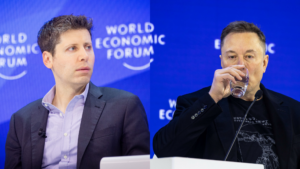
Meta’s approach deliberately differs from ideas of relocating data centers directly into space. SpaceX CEO Elon Musk has recently been publicly advocating for orbital AI infrastructure. Shortly before Meta’s announcement, however, SpaceX itself warned in a document for potential investors that orbital AI computing may not achieve commercial viability.
Meta is instead pursuing the principle of generating energy in space and using it on Earth. This keeps data centers on the ground, where maintenance, cooling, physical security, and grid connection are significantly easier and more cost-effective to implement. In this model, space serves exclusively as an energy source, not as an operational site.
Long-Duration Storage as a Second Pillar
In parallel with the Overview Energy agreement, Meta announced a partnership with the company Noon Energy. The deal centers on building long-duration storage with a capacity of up to one gigawatt and 100 gigawatt-hours. Noon Energy’s technology uses modular, reversible solid oxide fuel cells along with carbon-based storage media and enables energy storage of more than 100 hours — far beyond the capabilities of conventional lithium-ion batteries.
As a first step, a pilot project with 25 megawatts and 2.5 gigawatt-hours of capacity is planned for 2028. Over the long term, the facility is to be expanded to the full agreed capacity. Meta describes the agreement as one of the largest commitments to ultra-long-duration energy storage in the industry.
Assessment and Open Questions
Both technologies are still at an early stage of development. With space-based solar power, questions remain about launch costs, in-orbit maintenance, and economic viability at scale. Commercial operation has not yet been realized.
Meta has structured the agreement with Overview Energy accordingly cautiously. The company will receive preferred access to up to one gigawatt of future capacity once defined technology milestones have been reached. Meta emphasizes that it wants to support the development with planning certainty without committing to unrealistic timelines.
Overall, Meta says it has already contractually secured more than 30 gigawatts of clean energy across 28 US states, including wind, solar, nuclear, and geothermal. The new partnerships add two technologies to this portfolio that are not yet in commercial use but are seen as particularly forward-looking for uninterrupted, emission-free electricity supply.