Siri AI Will Get Daily Usage Limits and Become Partly Paid


Set Trending Topics as a preferred source on Google.
Apple has spelled out in its support documentation how it plans to handle the computing power behind Apple Intelligence: several features that rely on server-side models will get daily usage limits. The most prominent case is the new Siri AI. Anyone who wants to go beyond the included allowance will have to pay for it. Users in the EU face a second restriction, because Siri AI is launching here on only part of Apple’s device lineup.
Which Features Are Affected
Apple describes its list as one that is not exhaustive. The features it names are:
- Siri AI: the rebuilt assistant that understands requests and carries out actions inside apps
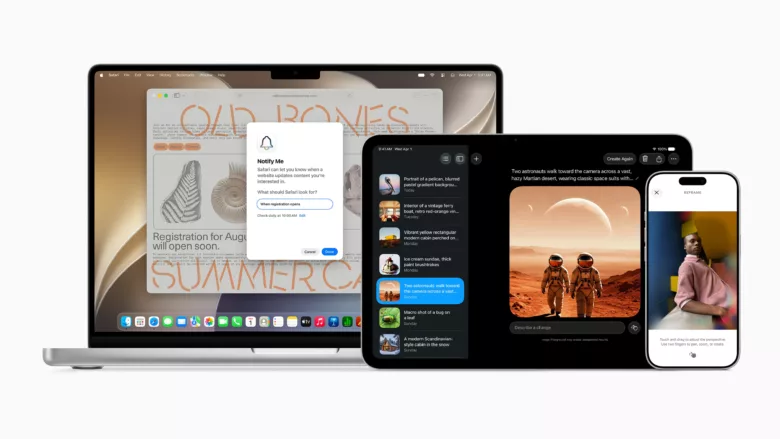
- Intelligent photo editing tools: including Clean Up, Extend and Spatial Reframing
- Image Playground: the image generation feature
- AFM 3 Cloud and AFM 3 Cloud Pro: the large models that can be wired into the Shortcuts app
- Developer apps: any app that calls Apple Foundation Models through Private Cloud Compute
According to Apple, the limits will vary by feature, by the complexity of a request, by current system demand, by system policies and by other factors. The company gives no specific numbers. Once a limit is reached, the feature in question becomes available again after a timeout period, while every other feature keeps working. The rules are set to take effect with the 2027 software releases, meaning the round after the current release cycle.
The Reason Lies in the Architecture
Apple Intelligence runs on two tracks. Smaller models work directly on the device, while compute-heavy requests travel to Apple’s own server infrastructure, Private Cloud Compute. That is where a cost arises for every request, and that is where capacity has a ceiling. Apple’s official reasoning is that it wants to ensure a high-quality, reliable experience for everyone. In economic terms, it is the same logic that has pushed OpenAI, Google and Anthropic toward tiered allowances: cloud inference does not scale for free, and Apple has sharply increased its data center spending.
There is a second cost block that often gets lost in the discussion. The Apple Foundation Models are not a pure in-house development, they are distillations of Google Gemini. Apple secured access to a custom Gemini model with a reported 1.2 trillion parameters and derived its own model family from it, ranging from AFM 3 Core on the device to AFM 3 Cloud Pro in the server infrastructure. For that access, Apple pays roughly one billion dollars a year according to Bloomberg reporter Mark Gurman, under a contract that runs for several years, as Trending Topics reported. Billions therefore flow to Mountain View before a single user request has been answered. An allowance model with caps and paid extensions fits that cost structure.
On-device processing stays outside the scope of the limits. Anyone using Siri in the classic way for timers, calls or smart home controls will barely notice the caps in daily use. The ceiling becomes relevant for generative tasks: images, longer text summaries or multi-step assignments handed to the assistant.
In the EU, It Runs on the Mac Only
A special rule applies to the European market, one Apple announced over the summer: Siri AI will initially skip iOS, iPadOS and watchOS in the EU. On macOS the feature is available, as it is on visionOS. The iPhone, by far the most widely used Apple device, stays out of the picture in Europe for now, while the same technology works on the Mac.
The background is the dispute over the Digital Markets Act. The European Commission requires that competing assistant systems receive equivalent access to system functions and user data. Apple considers that a security risk and has proposed a so-called Trusted System Agent as an intermediate layer, paired with a transition period of 18 months. Brussels turned it down. As Trending Topics reported, Tim Cook’s talks with the European Commission have so far produced no result, and there is no timeline for an EU launch on iPhone and iPad.
The Paid Tier Is Likely to Run Through iCloud+
In its support document, Apple states that increased access to the affected features will be available for a fee in the future. The form it will take remains open. Much of the evidence points to the existing iCloud+ service. Tim Cook has already suggested on an earnings call that heavy users of Siri AI would need to move to paid iCloud+ tiers, as 9to5Mac reported, among others.
A template for this already exists. In the Home app, the number of cameras that get AI video summaries is tied directly to the iCloud+ plan. The 2 TB plan covers one camera, the 6 TB plan two, and the 12 TB plan five. Apple notes that this tiering may change over time.
That points to how Apple intends to monetize its AI features: a base allowance comes with the price of the device, and usage beyond it moves into the subscription. Apple has not yet named prices for additional AI allowances. It is also unclear whether the limits in the EU will match those in the US, where Siri AI launches across every platform.