SpaceX IPO? “We Find Other Publicly Listed Space Companies More Interesting”

Set Trending Topics as a preferred source on Google.
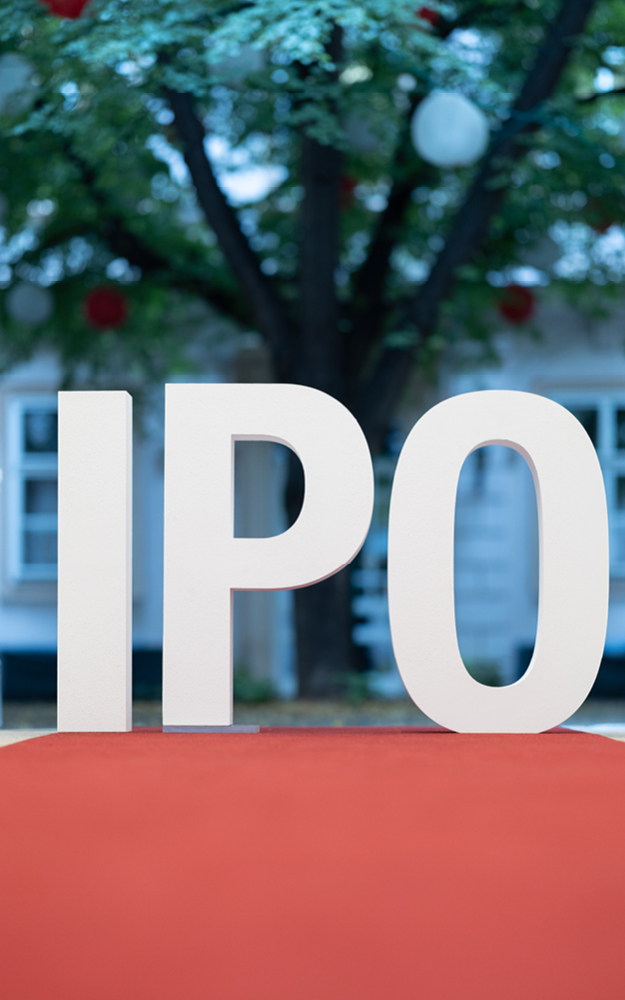
With a valuation of $1.8 trillion or more, Elon Musk’s SpaceX intends to go public in roughly two weeks and raise $75 billion — more than any other company before it. Via ETFs, the stock will quickly find its way into circulation and soon land in the portfolios of retail investors too — whether they want it or not. Audun Wickstrand Iversen, portfolio manager at DNB Asset Management, however, sees more exciting SpaceTechs on the market, as he analyzes in this guest contribution.
Artificial intelligence has its first stock-market phase behind it. The obvious winners are well known, and many valuations reflect that. The second phase will now be more interesting: Who delivers the memory chips, optical networks, cooling, sensors, batteries, satellite links, and autonomous systems without which AI cannot scale?
In 2019 we spoke of the coming “decade of disruption.” Today that thesis has become an investment cycle. What matters is no longer whether AI is being used productively, but where it requires real capacity. The next stage of disruption is not happening only in the data center. It is showing up in factories, underwater, and in orbit. That is precisely where we look for opportunities: at companies that don’t just talk about AI, but deliver the infrastructure, components, and systems without which AI cannot scale in the physical world.
The S-Curve as an Investment Compass
When selecting companies, we work heavily with so-called S-curves. They help us understand where a technology stands in its adoption cycle. At the beginning is the innovation phase. Young companies have to prove their technology and their business model. Many of them sit in the “Valley of Death”: they burn capital, have no stable cash flows yet, and depend on banks or investors.
The most attractive phase begins when a company leaves this valley and moves into scaling. That is when technological feasibility can turn into a profitable business model. More mature companies like Alphabet or Nvidia remain relevant, but are already in a later phase of the S-curve. The larger asymmetric opportunities often lie with specialists whose technology is just beginning to scale commercially.
We apply this approach across various themes: robotics, drones, autonomous vehicles, self-driving trucks, satellite communications, storage technology, and AI infrastructure. Often we invest more broadly in a new theme first. As the market matures and the stronger companies emerge, we concentrate the positions.
Drones: A Market at the Start of the S-Curve
Another theme we have built up more heavily is drones. The market is still early in the adoption curve, but the structural drivers are becoming clearer. Defense demand is especially important. The U.S. Department of Defense has announced a drone program worth $75 billion over the coming years. That is likely to create an ecosystem of small and mid-sized drone companies in the U.S. For investors this is relevant because a niche theme can turn into an industrial procurement cycle.
Drones, in this context, are not only flying devices. Underwater systems belong to the category as well. One example is Kraken Robotics, a Canadian company developing underwater drones for surveillance, sensing, and inspection. The original demand came from oil and gas. Today it is increasingly also about protecting critical infrastructure, fiber-optic cables, energy facilities, military applications, and resource exploration. Countries with a lot of underwater infrastructure, such as Norway, have an obvious interest in such systems. Underwater drones require sensors, batteries, propulsion, data processing, and communication systems. That combines defense, energy, raw materials, and automation into a single theme.
AI Infrastructure: More Than Nvidia
The AI boom began on the stock market with the big winners in compute power. Nvidia was the most obvious beneficiary. But the bottlenecks are now shifting. Alongside compute, memory, networking, cooling, and energy are becoming decisive. One example is Micron. The company benefits from the rising demand for memory in AI data centers. Memory was historically a cyclical business with boom-and-bust phases. Today the industry is considerably more consolidated. At the same time, AI requires enormous amounts of memory, because models have to retain context, process data, and draw complex inferences. When demand rises faster than supply, prices rise. Because of the high operating leverage, that has a strong effect on profits. That’s why we also see Micron well positioned in the coming quarters.
SanDisk fits this picture too. Many know the name from memory cards. Today memory is a critical component of AI infrastructure. With rising investment in data centers, memory is becoming a bottleneck. Only a few providers can deliver sufficient capacity, and the buildout takes time. That is exactly what creates pricing power and profit leverage.
Another example is Lumentum. When data centers grow larger and models move more data, network traffic rises sharply. Data has to be transferred faster between processors, memory, and servers. That increases demand for optical networking technology. Lumentum supplies optical components and lasers that enable precisely these higher transmission speeds. So AI needs not only chips, but also the interconnect infrastructure between the chips.
Efficiency Becomes the Bottleneck
The larger AI data centers grow, the more important energy efficiency becomes. GPUs are expensive, energy-intensive, and generate a lot of heat. Companies that make compute processes more efficient or improve cooling can therefore benefit strongly. One example is Napatech, a small Scandinavian company with a market capitalization of around €300 million. The company develops cards that are installed in servers and can take over simple computing tasks. That frees up expensive GPUs for more complex tasks. This can lower energy consumption, reduce heat, and improve data-center efficiency. The investment case is binary: if the breakthrough with large customers succeeds, the potential is substantial. If it doesn’t, the company remains considerably less exciting.
Cooling is becoming more important too. Vertiv is an example of a company that benefits from liquid cooling. Historically, servers were cooled mainly with air. With AI servers, that is increasingly no longer enough. Liquid cooling can help control temperatures and safeguard system performance. The larger the AI infrastructure cycle becomes, the more important such supposedly “boring” components become.
Satellites as the New Internet Infrastructure
Space is becoming more relevant for investors as well. SpaceX is at the center of attention here. A potential IPO would be one of the biggest technology moments of the coming years. SpaceX could tell the market a story as one of the world’s largest internet providers. Starlink already shows that satellites can provide broadband access even where conventional networks are inadequate. That can put pressure on existing business models. Fiber providers are often regarded as local monopolists with pricing power. If satellite internet becomes a real alternative in certain regions, that advantage could shrink. A few customers switching won’t yet be a problem. But if thousands of households cancel their fiber contracts, prices and margins come under pressure.
Even so, SpaceX would not automatically be a buy for us. Valuation is the deciding factor. A possible valuation could be as high as $2 trillion. Such an IPO would likely go smoothly on a technical level, because global passive funds would have to buy. For us, though, that would be more of an index and liquidity story than a classic valuation investment. We find other publicly listed space companies more interesting.
These include AST SpaceMobile, Rocket Lab, and Redwire. AST SpaceMobile works closely with European and American telecom companies. These cooperation models could be more successful than pure competition models. Rocket Lab and Redwire are further specialists in an emerging space economy.
Europe Shouldn’t Write Itself Off
A common reflex is to associate disruptive technologies almost exclusively with the U.S. and China. That is too simplistic. Japan and South Korea are strong in robotics, memory, and industrial technology. Over the past six months, South Korea has formulated two relevant policy goals: an important role in the space economy and a leadership position in robotics, particularly in humanoid robots. Samsung remains a central starting or end point of technological development in South Korea. We are invested in Samsung. Alongside it there are smaller specialists like Rainbow Robotics.
Japan has decades of experience in industrial robotics. When factories are built, robotic arms and stationary systems are already central today. This experience will matter for humanoid robots. One of the open questions is: How long does a robotic arm last? 10,000 movements? 100,000? Japanese and German industrial companies have exactly these empirical benchmarks.
Germany has a strong robotics culture. One promising example is Neura Robotics. Switzerland also has competencies in precision robotics, medical technology, and industrial automation. The UK remains an important AI hub with DeepMind, even though Google has acquired the company. The decisive question is whether Europe can cooperate faster, allow competition, and shape regulation so that innovation isn’t stifled. In some places Europe needs a “Control-Alt-Delete”: fewer silos, more competition, more capital for scaling, and more willingness to accept technological upheavals early.
The Second Phase Is Physical
The coming years will be shaped not only by an AI boom, but by a shift in the entire technological infrastructure. Machines will become more productive, more autonomous, and more tightly connected to the physical world. For investors, this means: the most exciting opportunities often lie not where the buzzword is loudest, but where a bottleneck is being solved. Memory chips, optical networks, server cards, liquid cooling, underwater drones, satellite links, and robotics components sound less glamorous than chatbots. But without them, the AI world doesn’t work.
We remain optimists. Not because the change is without risk — it isn’t. Regulation, ethics, security, and societal consequences will remain central topics. But technology is the strongest force for change of our time. Anyone who wants to invest should therefore not only ask which app is currently popular. What matters is which machines, networks, and infrastructures will enable the second phase of AI.
About the author: Audun Wickstrand Iversen is a portfolio manager at DNB Asset Management.