500 Patriot Missiles for Ukraine, but Delivery Only After 2030


Trending Topics auf Google als bevorzugte Nachrichtenquelle festlegen.
The good news is an invoice for $2.1 billion, the bad news a delivery date that falls only after the winter after next.
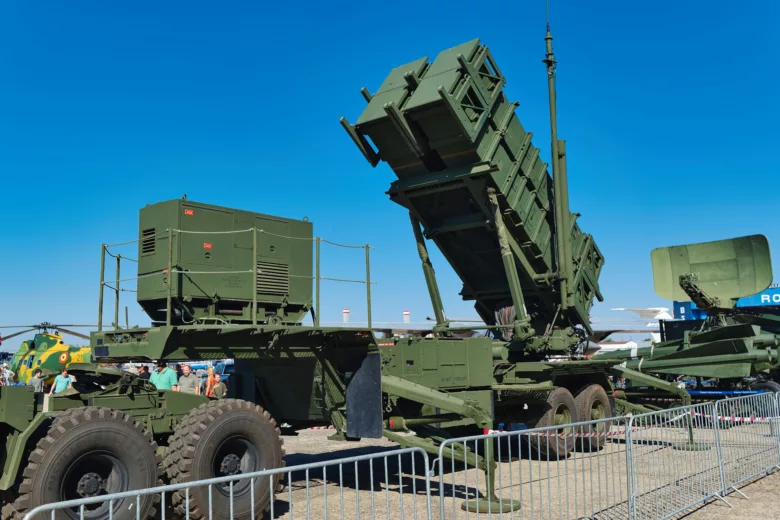
Last Friday, the U.S. State Department approved the possible sale of up to 500 Patriot PAC-3 MSE interceptors to Ukraine, along with spare parts, telemetry kits, ground support equipment and logistics. The estimated value is $2.1 billion (about €1.87 billion), or roughly $4.2 million (about €3.7 million) per missile. The manufacturer is Lockheed Martin. Congress still has to review the sale before contracts can be signed. It is one of the largest arms approvals for Kyiv since the start of Donald Trump’s second term, and it comes almost a month after President Volodymyr Zelensky made the request.
Who Pays
The United States itself is not putting up any money. The purchase is financed through the JUMPSTART program, under which allies pay for American weapons for Ukraine: Canada, Germany and Norway are contributing funds, along with Ukrainian state funds from the EU’s Ukraine Support Loan. Through the same mechanism, Ukraine already bought 3,350 air-launched cruise missiles for $825 million in August. The PAC-3 MSE is the most advanced version of the Patriot missile and can intercept Russian Iskander-M missiles and the aero-ballistic Kinzhal, precisely the weapons Russia is currently using against Ukrainian power plants and substations. According to Ukrainian government data, there were more than 30 coordinated attacks on electricity generation and the transmission grid in the second half of October alone, and on Thursday at least 14 people died in a drone strike on a railway platform in Dnipro.
Why the Approval Won’t Help This Winter
The problem is the calendar. The 500 missiles have not been built yet; they are coming from new production, not from U.S. stocks. Two people briefed on the decision told ABC that delivery is not expected until “a couple of years into the 2030s,” and diplomatic sources told the Kyiv Post it would begin after 2030. Zelensky welcomed the approval but wrote that deliveries could begin “ONLY IN A FEW YEARS”: “We are asking our American partners to find a solution for the time when there is a real danger.” His proposal: The United States and European allies release missiles from their stocks now and replenish them later from the production that has been ordered. Ukraine had asked for 100 PAC-3 missiles per month for the winter, and the 500 units would have covered the coming months. According to CNN, Ukraine’s supply ran dry in early October.
The shortages are not only a Ukrainian problem. The PAC-3 MSE is scarce worldwide because demand has outstripped production for years and the United States itself used up large numbers of interceptors in the war against Iran. In July, Lockheed Martin received a U.S. Army framework contract worth up to $58.6 billion and plans to triple capacity to 2,000 units a year by the end of 2030, while investing up to $9 billion in supply chains and assembly lines abroad. Until those lines are running, the new missiles go to a long queue of customers, in which Ukraine now stands at the very back. A license for Ukraine to produce its own Patriots, announced by Trump in July, is on ice according to CNN, with the Pentagon still reviewing it.
The Political Backdrop
The approval comes at a time when Washington and Kyiv are struggling with each other. Trump recently announced a deal allowing Russian diesel exports and waived sanctions for it. He criticized Zelensky for Ukrainian attacks on Russian refineries and threatened to withhold intelligence. In addition, the Ukrainian military’s access to the Starshield satellite system was throttled for a time, on Elon Musk’s personal orders according to the Wall Street Journal, and was only restored last week. Observers see the Patriot approval as a signal that the administration cannot ignore pressure from Europe and Congress without committing its own money or its own stocks.
From the administration’s point of view, there are reasons for restraint: U.S. stocks of interceptors have themselves been depleted after the Iran operation, and every missile that goes to Ukraine now is missing in the Pacific or the Middle East. Radio Liberty correspondent Alex Raufoglu nonetheless sums up the deal soberly: It does “virtually nothing” to resolve the acute deficit before winter. On paper, Ukraine has now ordered more Patriot missiles than ever before, and for the winter that is beginning now, not a single one more.