“Ai Siri”: Apple Agrees to $250 Million Settlement Over Misleading AI Feature Claims


Set Trending Topics as a preferred source on Google.
Apple has agreed to pay approximately $250 million (around €184 million) to U.S. iPhone buyers to settle a class-action lawsuit. At the center of the legal dispute is the allegation that Apple misled consumers with false promises about its artificial intelligence features, known as Apple Intelligence.
The Settlement and Who Benefits
The settlement was filed on Tuesday at a federal court in California. Apple denies any wrongdoing but agreed to pay in order to close the case. Eligible are U.S. buyers who purchased an iPhone 15 Pro or a model from the iPhone 16 lineup between June 10, 2024, and March 29, 2025. Depending on the time of purchase and model, those affected may receive between $25 and $95.
An Apple spokesperson stated that the legal dispute had focused on “the availability of two additional features” within a comprehensive Apple Intelligence offering. She further stated: “We have settled this matter so that we can focus on what we do best: delivering the most innovative products and services to our users.”
The Allegations: Advertising Features That Didn’t Exist
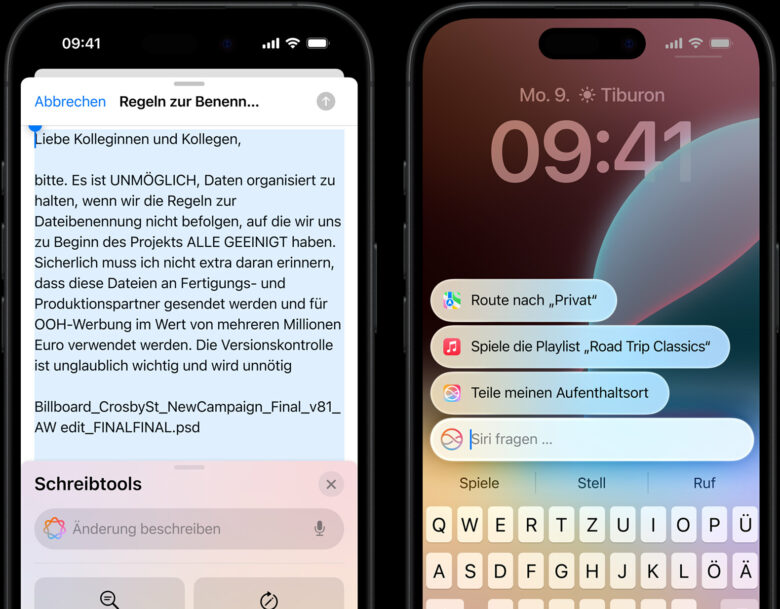
The plaintiffs accused Apple of deliberately advertising AI capabilities that did not exist at the time of marketing. Particularly in focus was the announced advancement of the voice assistant Siri, which was supposed to evolve from a simple voice control into a fully capable, personal AI assistant.
“Apple advertised AI capabilities that did not exist at the time, do not exist today, and will exist in two or more years, if at all — all under the guise of groundbreaking innovation.”
Specifically, the plaintiffs criticized the fact that the iPhone 16 was shipped without the advertised Apple Intelligence features. Some AI-powered features were only added weeks after the market launch. The announced, improved version of Siri is still not available to this day. The U.S. national advertising watchdog (National Advertising Division) also recommended in April 2024 that Apple revise or discontinue its claim that Apple Intelligence was “now available.” Apple also withdrew an advertisement in which actress Bella Ramsey demonstrated the AI-powered Siri.
Why the New Siri Continues to Be Delayed
Behind the delays lies a fundamental technical and strategic problem. Apple finds itself in intense competition with other technology corporations as well as emerging AI companies such as OpenAI and Anthropic. According to the plaintiffs, this competitive pressure drove Apple to market features that were not yet technically mature.
The announced, deeply improved Siri is intended to enable users, with the help of Google’s Gemini, to access personal data such as calendars, messages, and apps in a context-aware manner. The technical implementation of such an integration requires considerable development work and is significantly more complex than simple voice commands. Apple has announced plans to introduce this feature during 2026, though the company has not yet specified an exact date.
Background: Pressure on Apple in the AI Race
Apple’s still-CEO Tim Cook has faced criticism for years for leading the company with too little innovation. The hype surrounding generative AI, triggered by the success of ChatGPT, put Apple under considerable pressure to catch up quickly. Analysts and observers see the Apple Intelligence campaign as an attempt to make up lost ground against the competition without having fully laid the technical foundations.
The settlement still needs to be approved by a court before payments can flow to eligible buyers. While the payment is financially manageable for Apple, the reputational damage in an area that is strategically crucial for the company could weigh more heavily in the long term.