Lula Wins a Fourth Term as Bolsonaro’s Son Seeks to Annul Brazil’s Vote


Set Trending Topics as a preferred source on Google.
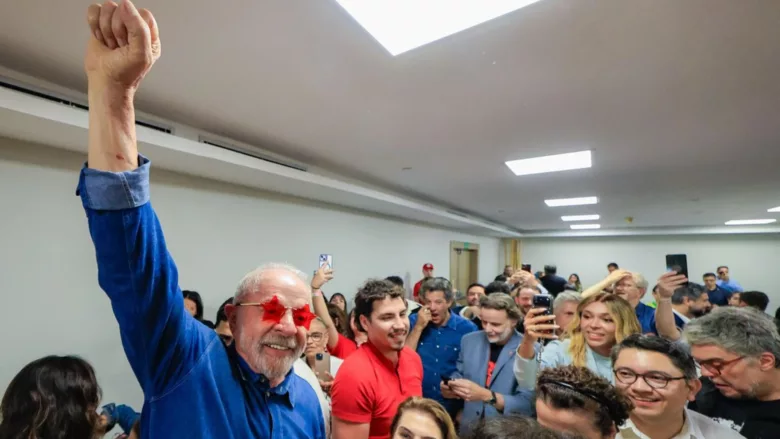
Written off, back again and victorious: Luiz Inácio Lula da Silva will remain Brazil’s president. In Sunday’s runoff, the incumbent won 51.79 percent of the vote, according to the Superior Electoral Court, defeating Flávio Bolsonaro, the son of former President Jair Bolsonaro, who received 48.21 percent. Mr. Lula drew about 64.3 million votes and his challenger about 59.8 million. His margin of roughly 4.4 million votes is about twice as large as in his narrow victory over the elder Bolsonaro four years ago.
A Historic Comeback
The win stands out for several reasons. Mr. Lula, who is about to turn 81 and will now serve a fourth term, trailed after the first round in early October, when Flávio Bolsonaro took 47 percent to his 45 percent. Since the end of the military dictatorship in 1985, no candidate in Brazil had ever won the presidency after finishing second in the first round.
The betting markets got it wrong, too. On the crypto platform Polymarket, where about $185 million (about €165 million) was wagered on the outcome, traders gave Flávio Bolsonaro a 77 percent chance of winning a week before the vote. The final polls had shown him about two percentage points ahead, within the margin of error.
Refusing to Accept the Result
Flávio Bolsonaro is refusing to concede. On election night, the senator said it was impossible to recognize the result given the circumstances in which the vote took place, according to InfoMoney. His campaign plans to ask the electoral court to annul the runoff.
At the heart of the dispute is a decision made three minutes before polls were due to close. Cristiano Zanin, a Supreme Court justice, extended voting by two hours. Mr. Lula’s camp had requested the extension because of bus problems in São Paulo and Salvador, while Mr. Bolsonaro’s camp had asked for it because of heavy rain in the country’s south. Flávio Bolsonaro argues that the extension came too late in some regions, where ballot boxes had already been closed. He also objects that the ruling came from a Supreme Court justice and not from the electoral court, and that Justice Zanin was once Mr. Lula’s lawyer. He has not yet presented evidence for his claim that monitors from his Liberal Party were removed from the vote-counting room.
The refusal recalls 2022. Back then, Jair Bolsonaro never openly conceded his defeat to Mr. Lula, and in early 2023 his supporters stormed government buildings in Brasília. The former president has since been sentenced to 27 years in prison for a coup attempt and is barred from running for office until 2030. During the campaign, his son had promised to seek an amnesty for him.
Markets Brace for a Sell-Off
Investors had firmly expected the right-wing candidate to win. Since the first round, the benchmark Ibovespa index had gained nearly 7 percent, and the real had risen more than 4 percent against the dollar. The first reactions, which came before trading in São Paulo resumed, were correspondingly harsh. Real futures plunged about 9 percent, according to Bloomberg Línea, and an Ibovespa E.T.F. listed in Tokyo lost almost 13 percent. Economists at Bloomberg Economics had projected that a Lula victory could send the real down about 11 percent. The true scale of the sell-off will only become clear once regular trading opens on Monday.
Trump, Tariffs and Rare Earths
Mr. Lula’s victory also carries geopolitical weight. He is a vocal critic of President Trump, whose administration has imposed steep tariffs on Brazilian exports. During the campaign, Mr. Lula warned against U.S. interference and vowed that Brazil would not be anyone’s “backyard.” Flávio Bolsonaro, by contrast, touted his closeness to the White House and promised better trade deals, including on rare earths. Brazil’s deposits are estimated at up to 21 million tons, second only to China’s. Mr. Trump himself did not endorse a candidate.
Governing With a Right-Leaning Congress
The fourth term will not be easy. Mr. Bolsonaro’s Liberal Party remains the largest force in both the Chamber of Deputies and the Senate, so Mr. Lula will continue to depend on alliances with centrist parties to pass reforms. On the campaign trail, he promised debt relief for small businesses, free public transit on weekends and an end to the six-day workweek. His new term begins in early January.