Google Sets 2029 for Q-Day: How Banks, Ethereum and Bitcoin Are Affected


For a long time, the so-called Q-Day — the moment when quantum computers will be capable of breaking common encryption methods — was considered a problem of the distant future. Experts spoke of 2030, some even of 2035 or later. But now Google has significantly tightened the timeline: the technology giant has set itself a deadline of 2029 to migrate all of its authentication services to quantum-safe cryptography. An announcement that is making considerable waves in the security and cryptography world.
What is Q-Day and why is it drawing closer?
The term Q-Day refers to the point in time at which a so-called Cryptographically Relevant Quantum Computer (CRQC) exists that is powerful enough to break the encryption standards in use today. Current encryption methods are based on mathematical problems that classical computers cannot solve within a reasonable timeframe. Quantum computers, by contrast, exploit the laws of quantum mechanics to accelerate these calculations exponentially.
Specifically, quantum computers can solve the prime factorization of large numbers in minutes via the so-called Shor’s algorithm — a task that would take a classical computer longer than the age of the universe. This makes asymmetric encryption methods such as RSA or elliptic curve cryptography (ECDSA) vulnerable, and these underpin a large part of the world’s digital security infrastructure.
Google attributes its decision to bring the migration timeline forward to 2029 to concrete advances in three areas: quantum hardware, quantum error correction, and resource estimates for factorization. Google’s security team stated it unequivocally: quantum computers “will pose a significant threat to current cryptographic standards, particularly for encryption and digital signatures.”
Google’s measures: From Android to Chrome
Google sees itself as a pioneer in both quantum computing and post-quantum cryptography (PQC). With the announcement of the 2029 timeline, the company is taking on a role-model function and aims to create clarity and urgency for the entire industry.
Implementation is already underway on several levels. Android 17 integrates quantum-safe digital signature schemes based on ML-DSA, a method standardized by the US National Institute of Standards and Technology (NIST). The Chrome browser already supports post-quantum key exchange, and Google Cloud offers enterprise customers corresponding PQC solutions.
Particular emphasis is placed on the threat posed by so-called “store-now-decrypt-later” attacks: encrypted data is intercepted and stored today, to be decrypted at a later point in time once powerful quantum computers are available. This threat is not hypothetical — it is already relevant today.
“Quantum computers will pose a significant threat to current cryptographic standards, particularly for encryption and digital signatures. The threat to digital signatures requires the transition to PQC before a cryptographically relevant quantum computer emerges,” said Heather Adkins, VP Security Engineering at Google.
Erste Group: How a major European bank is preparing
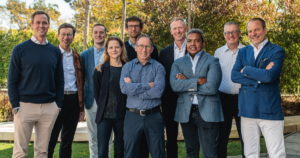
While Google is addressing the threat through software migration, Austria’s Erste Group is taking its own approach. The bank has integrated a commercial quantum encryption solution into its critical infrastructure, making it a pioneer in the European financial sector.
In a pilot project in Vienna, an entanglement-based Quantum Key Distribution (eQKD) solution from Austrian deep-tech startup zerothird is running over the fiber-optic infrastructure of telecommunications group A1. This technology is based on the Nobel Prize-winning research of Austrian physicist Anton Zeilinger and encrypts financial data with quantum keys that even future quantum computers cannot break, since the security rests on the laws of quantum physics rather than mathematical complexity.
According to the “Quantum Index,” Erste Group thereby positions itself among the top 20 financial institutions worldwide in the field of quantum technology and among the top 3 in the EU. CEO Peter Bosek emphasizes the strategic dimension of the project:
“Europe and Austria should not underestimate their potential. Together with A1 and zerothird, we are showing what can be achieved. We are preparing our infrastructure for the era of quantum communication — an era in which classical digital encryption will no longer provide adequate protection,” said Peter Bosek, CEO of Erste Group.
The bank plans to gradually upgrade its international infrastructure with quantum-safe solutions. In the EU-funded project QUAPITAL, the consortium of Erste Group, A1, and zerothird is aiming for a world record: a quantum-safe connection between Vienna and Frankfurt. The distance represents an enormous challenge for QKD systems due to the physical signal attenuation in fiber-optic cables. Felix Tiefenbacher, CEO of zerothird, describes the undertaking as “a strategic step toward genuine digital sovereignty.”
Bitcoin: An existential threat without a coordinated response
Particularly pressing is the question of what Google’s timeline means for Bitcoin. The world’s largest cryptocurrency uses ECDSA (Elliptic Curve Digital Signature Algorithm) for transaction signatures — precisely the category of cryptography that Google has classified as requiring migration. A sufficiently powerful quantum computer running Shor’s algorithm could derive the private key from a public key, thereby enabling the spending of any bitcoin whose public key is visible on the blockchain.
How many bitcoin are at risk?
According to an analysis by ARK Invest in cooperation with crypto analytics firm Unchained, around 35 percent of the total bitcoin supply is theoretically vulnerable to quantum computers. Specifically affected are approximately 1.7 million BTC from the early days of Bitcoin that are considered lost, as well as around 5.2 million BTC held in insecure addresses. However, analytics firm CoinShares puts this in perspective: only around 10,200 BTC are held in sufficiently concentrated, vulnerable address types such that their theft could trigger “noticeable market disruptions.”
Five stages to the threat
ARK Invest outlines a gradual path to the threat that does not envision a sudden Q-Day event, but rather a step-by-step escalation:
- Stage 0 (Today): Quantum computers exist but are commercially useless and pose no threat to Bitcoin.
- Stage 1 (Commercial viability): Quantum computers become useful in areas such as chemistry or materials research, but remain irrelevant for cryptography.
- Stage 2 (First encryption is broken): Outdated or weak cryptosystems become vulnerable; Bitcoin remains secure.
- Stage 3 (Bitcoin becomes vulnerable): Quantum computers could break Bitcoin’s elliptic curve cryptography, albeit slowly. Quantum-vulnerable coins on old, reused addresses come under threat for the first time.
- Stage 4 (Critical threshold): Quantum computers can break access keys faster than Bitcoin’s 10-minute block time. At this point at the latest, a protocol upgrade would be urgently required.
Ethereum prepares; Bitcoin stays silent
The contrast between the two largest blockchain networks could hardly be starker. The Ethereum Foundation has been working for eight years on a detailed, multi-stage migration plan for post-quantum security. More than ten client teams are delivering weekly devnets as part of the so-called PQ Interop program. The roadmap includes concrete milestones across four upcoming hard forks, ranging from post-quantum key registration to full PQ consensus. This week, the Ethereum Foundation also launched pq.ethereum.org, a dedicated hub for its post-quantum security efforts.
Bitcoin, by contrast, has no comparable coordinated approach. There is no agreed-upon roadmap, no multi-team engineering program, and no fork milestones. Nic Carter, prominent Bitcoin advocate and co-founder of crypto fund Castle Island Ventures, said openly this week what many are thinking:
“Elliptic curve cryptography is on the verge of obsolescence. Whether it’s three or ten years, it’s over, and we have to accept that. The only thing that matters is how quickly blockchain developers realize they need to build cryptographic agility into their networks,” said Nic Carter.
Carter described Ethereum’s approach as “best in class” and Bitcoin’s approach as “worst in class.” There is currently a group working on a quantum-related proposal that has received “zero support from leading developers,” while developers point to isolated research papers as evidence of progress without pursuing a coherent strategy.
What investors and users can do now
For Bitcoin holders, simple protective measures are already available today. The most important rule is: never use the same receiving address twice. Once a transaction has been sent from an address, the public key is visible on the blockchain and theoretically vulnerable. Modern wallets, including hardware wallets such as those from Ledger or Trezor, automatically generate new addresses for each transaction.
Anyone who has used addresses multiple times in the past can secure their bitcoin by making a simple transfer to a new, unused address. Address types considered secure include P2PKH, P2WPKH, P2SH, and P2WSH.
Assessment: How close is Q-Day really?
Despite the heightened urgency, the precise timeline remains disputed. The institutional consensus, supported by Google, IBM, and NIST, places 2035 as the earliest possible point for a serious threat. Germany’s BSI recommends that German companies complete migration by the end of 2031. Crypto pioneer Adam Back, whose work is cited directly in the Bitcoin whitepaper, sees the danger as even more distant, estimating that quantum computers could become a genuine threat at the earliest in 20 to 40 years — if at all.
What is decisive, however, is not the exact date, but the fact that migrating complex systems can take years or decades. Google’s 2029 deadline is therefore less a forecast for Q-Day itself than an expression of the recognition that preparation must begin now. Whether Bitcoin, with its decentralized governance structure and without a central coordinating authority, will be able to respond in time remains the open question that will preoccupy the crypto world in the years to come.