Why Google Lets Its AI Rival Into Google Workspace, and What It Means for Your Company
Set Trending Topics as a preferred source on Google.
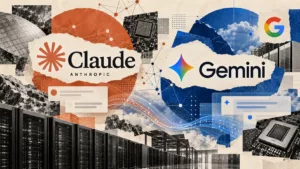
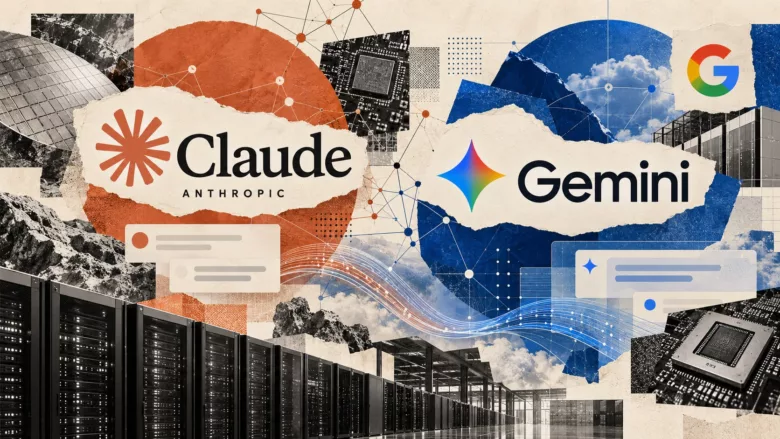
This week Claude started to work inside Google Workspace, right next to Gemini. In this guest post, Ting Wasner-Lian explains why Google allows it, the business rule that decides which platforms open up to AI agents, and what European companies should do before their next AI contract.
On 6 October, Anthropic put Claude directly inside Google Docs, Sheets and Slides: Claude sits in a sidebar next to your file, reads what you have open, and edits it in place. You can approve each edit before it lands, right next to Google’s own Gemini. Why would Google let its biggest AI rival into its own product?
Google Sells the Seat, Not the Gate
Google is an investor in Anthropic, but that is not the main reason. Google Workspace earns money by subscription per user, per month, whether that user works with Gemini or Claude. Blocking Claude would gain little and push loyal Claude customers towards Microsoft 365. So Google opens the door on its own terms: Claude comes in as a Marketplace app that administrators can remove.
China’s Office Works the Same Way
Alibaba owns DingTalk, China’s leading workplace collaboration app, and develops its own flagship LLM, Qwen. In 2024, DingTalk explicitly opened the platform to outside foundation models, officially integrating direct competitors like MiniMax, Moonshot, Zhipu AI, 01.AI and Baichuan AI.
Alibaba recognizes that to keep DingTalk competitive, it has to let an enterprise use Zhipu for coding and Moonshot for document analysis if it wants to. If it restricts AI choice, enterprises will migrate to other platforms like ByteDance’s Feishu. By supporting a multi-model ecosystem, DingTalk retains the enterprise’s daily workflow and data regardless of which AI model is currently superior. China’s consumer super apps made the opposite call, as I described in my last column.
Europe’s Own Test Case: SAP
SAP shows that this choice is not always that simple, even for a subscription business. Companies trust it with their most valuable operating data, and SAP is investing heavily in its own AI assistant, Joule, and its own data layer.
Munich-based Celonis has taken SAP to court in California, arguing that customers should be able to share their own data with third-party tools without paying high fees.
My Take: Watch Whether the Gate Can Be Billed
Platforms open the gate when they cannot charge for it, and close it when the gate itself becomes a product. Google cannot easily bill for Claude in a document. SAP can bill for ERP data, because every business agent needs it.
And this will matter more. Workflows used to be designed around people. To become AI-agent-native, companies need to redesign their workflows around AI agents. To do so, they need direct read and write access to their own data. I expect more vendors to follow SAP rather than Google: open in principle, but with a price on every agent that comes in. Google’s open door is the exception, not the rule.
What European Companies Should Do Now
- Get agent access in writing: Do not assume standard API access means free agent access. Ask every core vendor whether an AI agent of your choice can read and write your data, how and at what cost. Put those terms directly into the contract.
- Map your gates: Identify exactly where your agent-critical data lives and who technically controls the access layer. That map is your actual AI strategy.
- If you build AI agents, read the business model before the API: A platform that can bill for the gate is a future toll collector.
About the Author
Ting Wasner-Lian is the founder of SE Incubator Consulting in Vienna and helps European decision-makers understand Chinese AI.