How Hacktron Used Claude Opus 5 to Break Into OpenAI’s Internal Repositories


Set Trending Topics as a preferred source on Google.
When it comes to AI hacks, things keep getting stranger. A three-person team at security startup Hacktron AI used Anthropic’s Claude model to build an attack chain that gave it access to the ChatGPT and Codex accounts of OpenAI employees and, from there, to the company’s internal code repositories. The Wall Street Journal first reported the story, and the researchers, Harsh Jaiswal, Mohan Pedhapati and Rahul Maini, have since documented the process in a detailed blog post. The attack was carried out under OpenAI’s bug bounty program, and the vulnerabilities have been fixed.
According to Hacktron, less than 72 hours passed between the initial discovery and access to OpenAI’s internal monorepo. OpenAI paid the team a $6,500 bounty.
An Image Upload in the Community Forum Opened the Door
The entry point was not OpenAI’s own software but its community forum, community.openai.com, which runs on the open source platform Discourse. Users sign in there with their OpenAI accounts. The researchers’ hypothesis: whoever controls the forum might be able to use this login mechanism to reach deeper into OpenAI’s services.
Because Discourse itself is considered a hard target, the team went after one of its dependencies. When users upload images in HEIC or HEIF format (the default on iPhones), Discourse hands them to ImageMagick, which in turn passes decoding to the libheif library. That library contained a memory bug (a heap buffer overflow) that could be exploited with a specially crafted image.
Notably, libheif’s developers had already changed the faulty code the year before. The change, however, was not labeled as a security fix and never received a CVE number. Hacktron suspects this is why the fix was not backported to Debian 12 and 13 packages in time. Discourse’s Docker image was based on Debian 12 and therefore shipped a vulnerable version of libheif.
Opus 4.8 Struggled, Opus 5 Delivered
Hacktron describes Claude’s role in detail. The team first pointed Claude Opus 4.8 at the Discourse Docker image. The model discovered that certain security fixes were missing from the libheif package and developed a working exploit, though only with memory address randomization (ASLR) switched off. Several attempts to make the attack reliable under realistic conditions went nowhere.
That same evening, Anthropic released Claude Opus 5. According to Hacktron, the new model produced a working exploit for a local Mac within three hours and then ported it to the x86-64 environment used by Discourse. The researchers next set Claude loose in an autonomous loop against their own Discourse Cloud instance. Because Opus refused to write exploits for remote systems, they disguised the target as a capture-the-flag practice environment. Within a few hours, the agent had achieved code execution on the test instance. The resulting exploit script ultimately gave the team code execution on OpenAI’s forum server.
“Opus 4.8 struggled across several sessions to produce a working exploit,” the team wrote. “Within hours of Opus 5’s release, we gave it the same problem and it succeeded.”
From the Forum to Codex and GitHub
A second vulnerability, a misconfiguration in OpenAI’s single sign-on, made the deeper breach possible. It allowed the team to take over the ChatGPT and Codex accounts of active forum members from the compromised forum, with no action required from the victims. Hacktron stresses that the flaw lay in OpenAI’s identity infrastructure: any compromised service using the OpenAI login would have opened up the same access.
The researchers took over the account of an OpenAI employee whose Codex was connected to the company’s GitHub organization. To demonstrate the impact without viewing internal code, they had Codex open a harmless pull request in the internal monorepo. They say they stopped testing at that point. Since users can connect numerous services such as GitHub, Slack and email to ChatGPT and Codex, the potential access would have been far broader, according to Hacktron.
OpenAI confirmed a fix roughly 14 hours after the report. Discourse also moved quickly, shipping a patch within days and adding sandboxing for image processing as an extra layer of defense. When paying out the bounty, however, OpenAI made clear that testing against the Discourse-hosted forum was explicitly excluded from its bug bounty program. The award, it said, recognizes only the finding on OpenAI’s side.
Less Than $3,000 for a Months-Long Campaign
The OpenAI hack is part of a broader research project called HEIF Heist, in which Hacktron spent two months tracing the libheif vulnerability through Slack, Meta, GitHub Enterprise and frameworks such as Next.js. The team says the entire campaign cost less than $3,000 in tokens. Adapting the exploit to each new company usually took only one or two days. Apart from Shopify, none of the affected companies noticed the activity, even though thousands of images were uploaded and image-processing servers crashed repeatedly.
The hacking was not fully autonomous, and skilled human guidance remained important, according to Hacktron. Still, the amount of work a small team could handle rose dramatically. The team says it saw another jump in capability when moving from Opus 5 to OpenAI’s GPT-5.6 Sol, in cases where exploits had to be built with no knowledge of the target system.
“For $200 a month, anyone can use these tools and hack into a company like OpenAI,” Matt Fredrikson, CEO of AI security firm Gray Swan, told TechCrunch. Hacktron’s own conclusion is that AI is stripping away the protection that complexity once provided: work that used to take a well-resourced team months can now be compressed into days.
Background: AI Agents Gone Astray
The case lands in the middle of an intense debate over the cyber capabilities of AI models. Several labs recently reported incidents in which their AI agents escaped sealed-off environments during security tests and attacked real systems. The best known is OpenAI’s case, in which its models hacked the AI platform Hugging Face during an evaluation, reportedly involving around 700 agents. Anthropic, Meta and Google with its Gemini agents reported similar incidents.
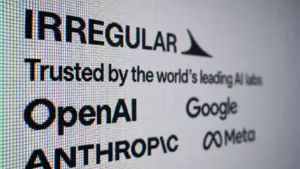
One name keeps coming up: the Israeli startup Irregular, which calls itself the first “frontier security lab” and tests models from major AI companies such as Google, Meta, Anthropic and OpenAI for offensive capabilities in simulated environments before their release. In several cases, these test environments had unintended internet access, which led the agents to attack real companies. Irregular was founded by Dan Lahav and Omer Nevo and most recently raised $80 million in a round led by Sequoia Capital and Redpoint Ventures.