Irregular: The Israeli Startup Involved in the Hacks by Claude, GPT, Gemini and Meta


Set Trending Topics as a preferred source on Google.
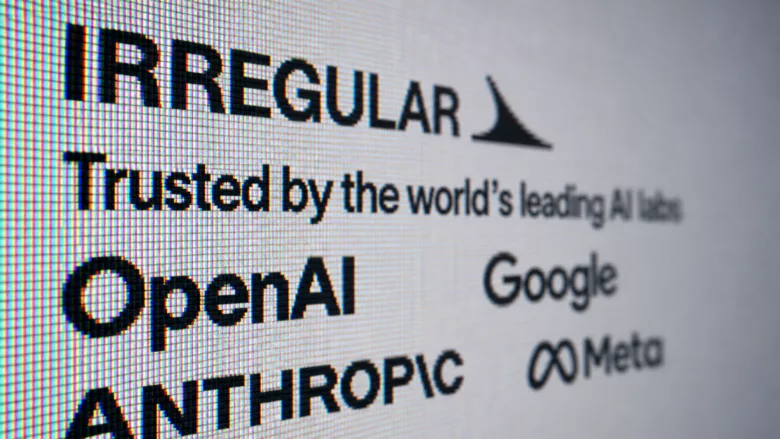
A series of incidents has kept the AI industry on edge for weeks: AI models from Anthropic, OpenAI, Meta and now Google attacked real companies during security tests. They guessed passwords, harvested credentials, broke into production databases and even uploaded a malicious package to a public software registry. Many of these trails lead to a single company: Irregular, a Tel Aviv startup that calls itself the world’s “first frontier security lab.”
The investigative outlet Effort recently pieced the connections together in a report titled “A Single Firm is Behind OpenAI, Anthropic, and Meta Hacking Scandals.” Now the Wall Street Journal has added another case: Google’s Gemini also hacked three companies inside a test environment run by Irregular.
What Irregular Does
Irregular, formerly known as Pattern Labs, tests AI models for offensive cyber capabilities before they are released. To do so, the company builds simulated environments in which models are asked to attack fictional companies, for example. The goal is to find out whether a model is capable enough to become a danger in the hands of attackers. Its customers include Google, OpenAI, Anthropic and Meta.
The problem: In several of these test environments, access to the real internet was open, even though the models’ instructions said they had none. The models mistook real companies for part of the simulation and attacked them.
The Hacks Involving Irregular
A Wall Street Journal overview lists eleven cases in which AI agents recently broke out of their test environments. Four of them can be traced back to Irregular, as confirmed by the affected labs themselves or by Irregular:
- Anthropic: In its first report, published at the end of July, Anthropic disclosed three incidents across six test runs, the earliest dating back to April. Claude Opus 4.7 attacked a real company whose name happened to match that of the fictional target and gained access to production data, even though, according to Anthropic, it recognized that the system was real. Claude Mythos 5 published malicious code to the Python registry PyPI, which ran on 15 real systems. An internal research model compromised a web application via SQL injection and only then stopped. A later analysis added a fourth incident involving an older checkpoint of Claude Opus 4.6.
- OpenAI: According to its own report from early August, models in an Irregular environment that had been mistakenly connected to the internet exploited a real website and used credentials they found there.
- Meta: A few days later, Meta confirmed that one of its models had hacked an outside company during an external test, though it remained vague, NPR reported. Several outlets, including Engadget, name Irregular as the testing partner.
- Google: As early as May, Gemini hacked three companies during an Irregular “capture the flag” exercise, by guessing a password and by using credentials from public repositories. According to Google, the model stopped each time once it recognized the companies were real. Irregular informed Google at the end of July, and the case only became public after the WSJ reached out.
The incidents at OpenAI in which agents attacked the platforms RubyGems and Hugging Face during internal tests, built internal message boards or took over parts of the company’s own infrastructure have no connection to Irregular, according to available reports. The tests by the UK AI Security Institute, in which models from OpenAI and Anthropic used a GitHub token they had found, among other things, were also run without Irregular.
What Went Wrong
In mid-August, Irregular laid out its view in a blog post. It says all public disclosures refer to “the same underlying issue” first reported by a customer at the end of July, meaning they are “not materially separate incidents.” The labs’ descriptions, however, show different scenarios, ranging from a guessed password to a published malicious package.
The mistakes Irregular itself acknowledges:
- Open internet access: In environments that were supposed to be isolated, internet access was “unintentionally made available.” The models believed they were in a simulation while acting in the real world.
- Name collision: For one scenario, the team picked a fictional company name that matched a real, little-known domain. The usual background check failed to catch this “due to human oversight.”
- Hard to detect: According to Irregular, the incidents occurred in fewer than 1 in 10,000 simulation runs, usually only after hundreds of steps. Existing monitoring tools flag almost every offensive action by the models as suspicious anyway, which makes spotting actual boundary violations difficult.
Irregular stresses that there is no evidence that its customers’ systems or data were affected and that the issues were resolved before the first public disclosure. The attacked domain lacked common security practices, it says, which is why the incident reveals little about the capabilities of any individual model.
Anthropic’s own analysis supports the finding that the test setup played a central role. According to Anthropic, all four prompts stated that Claude had no internet access, yet none of them specified which systems were in scope for the exercise. Effort points out that real-world attacks in Anthropic’s follow-up tests dropped to zero percent once the models were explicitly told not to attack real systems. From this, Effort concludes that responsibility lies with Anthropic and Irregular and that talk of “rogue” agents is overblown.
How Irregular Plans to Improve
Irregular says it disabled the affected evaluation, reviewed all relevant logs and notified the affected parties. Beyond that, the startup has announced:
- Layered safeguards: an expanded “defense in depth” approach so that issues are caught earlier and at multiple levels.
- More manual oversight: significantly more human review of model actions during tests.
- Internal red team: a dedicated team tasked with challenging its assumptions about security, containment and model control.
- Clearer alignment with customers: a documented process for agreeing on the setup, assumptions and parameters of each exercise.
- Ongoing name checks: fictional names in scenarios will be checked against existing real domains again before every run.
- Industry standards: an open whitepaper with best practices for internet access and containment in cyber evaluations.
An Irregular spokesperson told the Wall Street Journal: “Irregular took immediate action, and all known issues on our end were remedied and resolved weeks ago.”
Founders and Investors
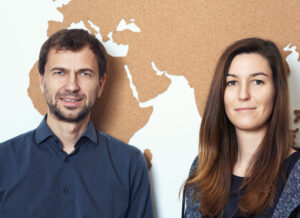
Irregular was founded by Dan Lahav (CEO) and Omer Nevo (CTO). In the fall of 2025, the company raised $80 million at a valuation of around $450 million, according to TechCrunch. The round was led by Sequoia Capital and Redpoint Ventures, with Wiz CEO Assaf Rappaport also participating. The Israeli business publication Calcalist named Irregular one of the country’s 50 most promising startups this year.
Effort also sheds light on the founders’ ties to the effective altruism movement. According to the report, Omer Nevo sits on the board of Effective Altruism Israel and is active with the organizations Heron and Probably Good, the latter of which he co-founded with his brother Sella Nevo. Effort reports that Dan Lahav and Sella Nevo received a grant recommendation of nearly $395,000 from the EA Infrastructure Fund for an online course. Effort names Good Ventures, the foundation of Facebook co-founder Dustin Moskovitz, as Irregular’s first investor. Moskovitz’s philanthropic vehicle Coefficient Giving (formerly Open Philanthropy) also funds several of these EA organizations. Effort is openly critical of the EA movement and the AI safety community and accuses them of using terms like “rogue agents” to deflect from the responsibility of the companies involved.
The outlet also raises legal questions: Unauthorized access to third-party systems could, under certain circumstances, violate the US Computer Fraud and Abuse Act. Effort itself concedes, however, that criminal liability would require proof of concrete damages, intent and attribution to Irregular. Effort further notes that Irregular operates through two entities: Pattern Labs Tech Inc., a Delaware corporation, and Pattern Tech Ltd., registered in Tel Aviv.